A busy 24 hours

Yesterday evening, a Namibian farmer of German descent who relocated here showed me how the thorny branches of the two orange trees salvaged from my failed country growing attempt were in fact suckers, growing from the root stock, and would never contribute anything. I had no idea that orange trees were grafted! So those bits went away first thing this morning.

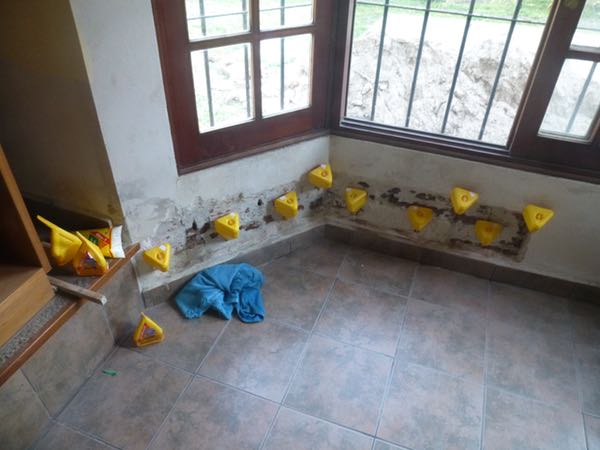
Then to start the rounds: butcher, vegetable stand, plant some squash plants in the campo, report to the glass people that the window they just installed leaks like a ________, take back to Tienda Inglesa a USD 8 LED light bulb that failed in less than a month, and then to the hardware store.

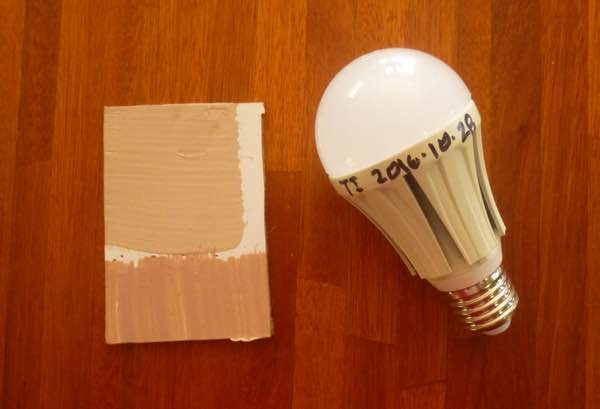
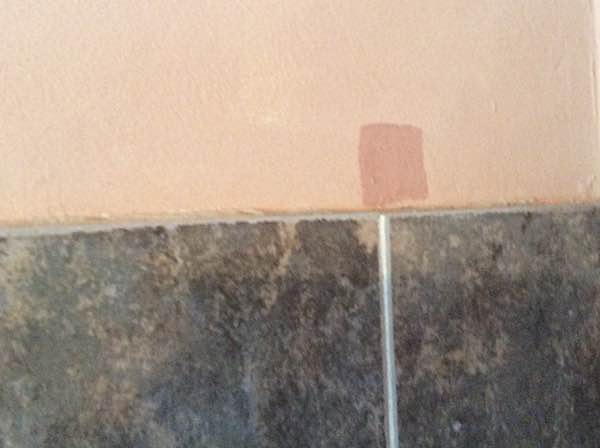
paint swatch and light bulb
When I buy these “good for 20 years“ bulbs now, I label them with the source and date purchased. 20 years=<1 month? Unh hunh.

On the left, a swatch I made from the lovely color we painted the inside of the casita (little house) so I could consider it for the house in the country. The hardware store (ferretería) people were very helpful in instructing me how to mix one liter of brown paint into 18 of white, and so when the casita nearly exhausted our first batch, I prepared a second. Yes, what you see below on that swatch. Completely different color.

I took photos of the successful paint job in the casita, the mess in wife’s office, and the radical difference in color and coverage. I took a picture of a swatch of the second batch painted over the first.

Quality control, paint, Uruguay: the two results from mixing identical ingredients
Sorry, but they are identical. Honest.

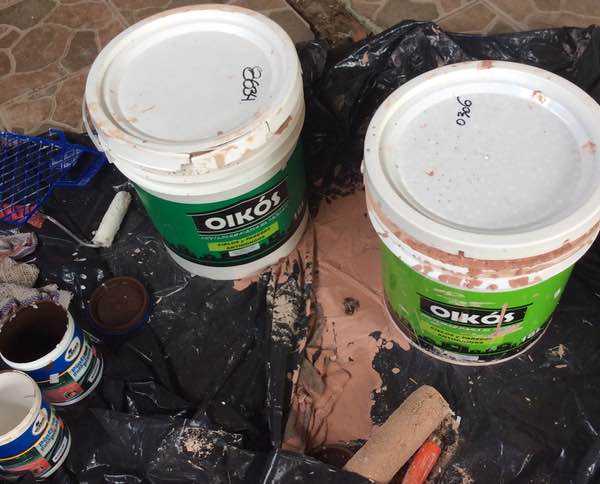
And the paint containers.

paint containers

The reaction of Ferretería Villa de Sol? Never mind different colored labels, never mind different numbers written on top, never mind the radically different results, these are exactly the same product. We don’t know what happened, and we’re really really sorry. Can we offer to help you find a solution? No. Can we contact the distributor or manufacturer? No (are you mad?).

Unfortunately in Uruguay, es loy que hay (it’s what it is). Accept mediocrity, because.

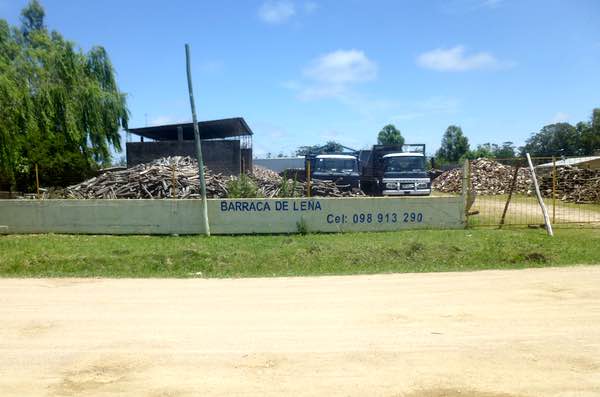
Speaking of which, recall my amusement at the cluelessness of people who obviously (great location!) had firewood, but offered no way to get it. A few years on, apparently a light bulb has illuminated:

firewood
Basic marketing. What an amazing concept.

I will add that perhaps before they did wholesale, but: the retail potential of their location should have been obvious long, long ago.

So, what else?

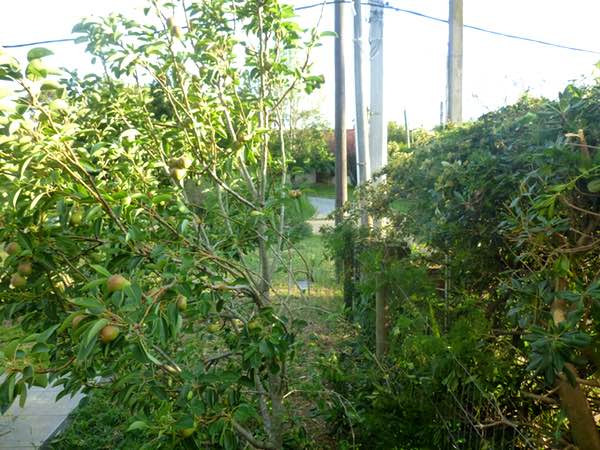
pear tree

Wife pointed out that the fence we installed for dogs in the front yard was based on presence of bushes, not property line. Pear tree we planted is looking bounteous (bleh, crap photo), but it’s as though it’s chemically repelled by those bushes — notice how branches starting to the right reverse direction and grow to the left. With the revelation (what’s this about delayed light bulbs?) that I had an extra half meter to work with, I tore into the bushes. And will do more.

Go, pear tree. go!

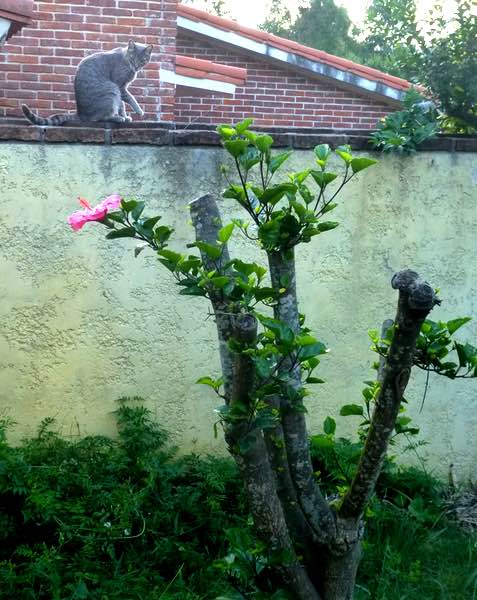
Meanwhile, backyard, the butchered hibiscus offers today a couple flowers, for the first time.

Hibiscus blooming

Ready for a glass of wine, dinner, and read a book. My day in Uruguay.

Modern vs. conventional construction in Uruguay

Friends are buying a lot and want to build a rental house. Recently they visited a construction expo in Montevideo and became fascinated with prefabricated houses imported from Australia. Today we went with them to view a couple of them.

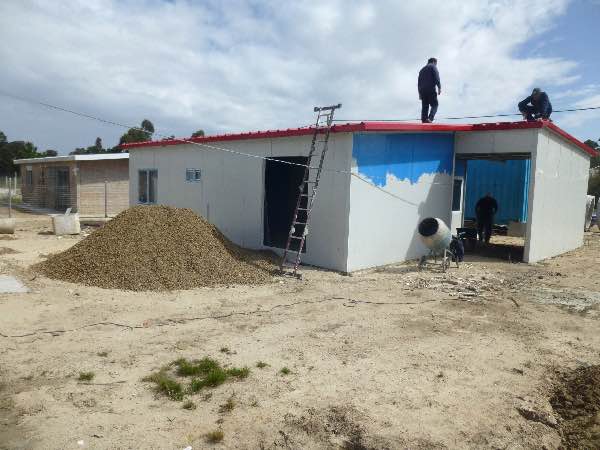
The prefab house in the foreground is built to the same plans as the single-brick house in the background. The one in the foreground is less than a month into construction, and will be complete in less than two months from start. The one in back took two years.

modern construction in Uruguay

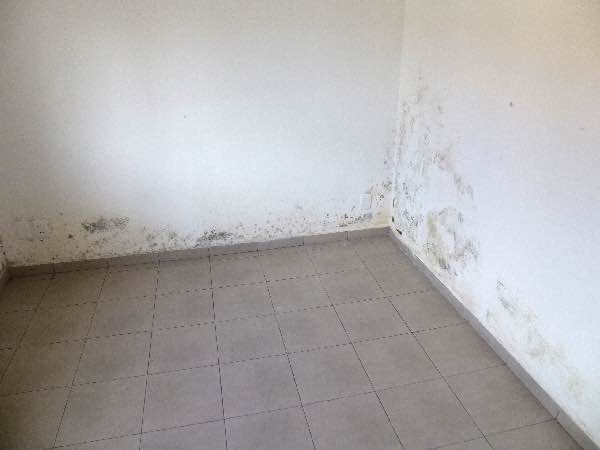
Additionally, the prefab is extremely well insulated. The vertical wall elements are filled with flammable styrofoam, but isolated from one another. In other words, each is its own cell, so even if one caught fire inside, it would not easily spread. Meanwhile, in the “wet” (traditional) construction house, which has never been occupied, the excessive moisture and lack of ventilation has created (typical) mold problems. Again, before people have even been living — and breathing — in that space.

bldg-5

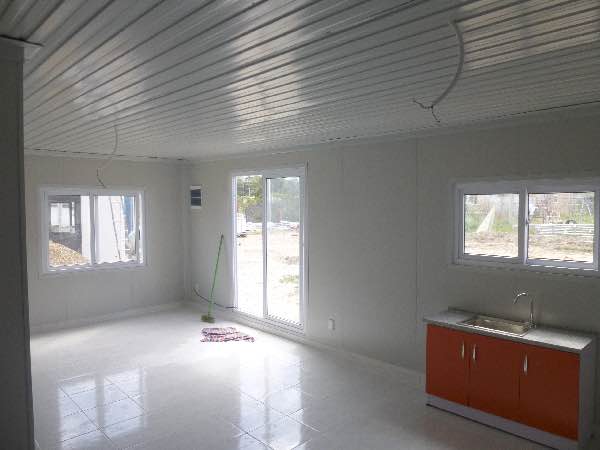
I don’t have comparative costs, but two months versus two years, excellent insulation versus no insulation and moisture problems — should be a no-brainer, eh? Well, there’s something lacking in the warm-and-fuzzy department in the interiors of the prefabs.

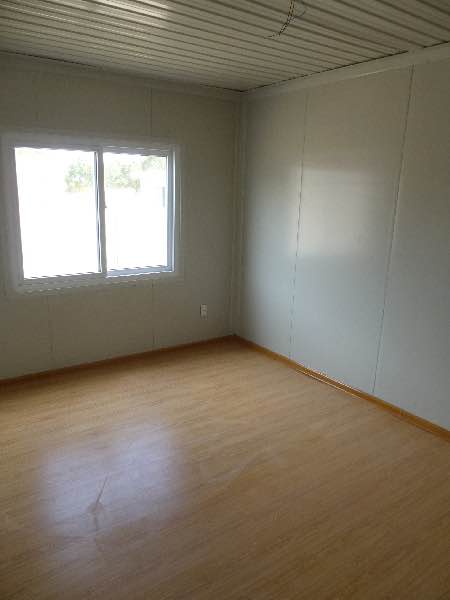
Interior, prefab house, Uruguay

The “wood” floor doesn’t really remediate the shiny walls and industrial ceiling.

Interior, prefab house, Uruguay

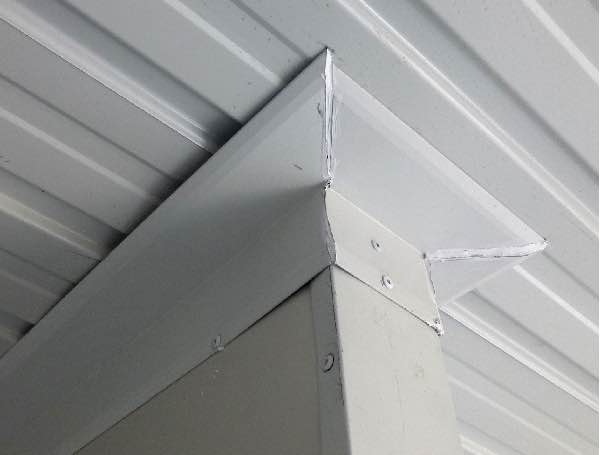
And then the details ….

Interior detail, prefab house, Uruguay

In the end, though, you must consider that this is “cheap for rental” construction. This could be done with an impressive crown molding, but in this case the owner doesn’t give a shit (no offense, Joe). In fact, there’s supposed to be a video on their site, but I didn’t find it on a quick perusal (tonight’s pizza night; I’m on duty). One could easily do a lambriz (thin tongue and groove) ceiling which would be much more simpatico.

You can make the walls much more attractive with textured paint. All a question of cost. Still, pretty exciting stuff, Isopanel.

My Saturday in UY

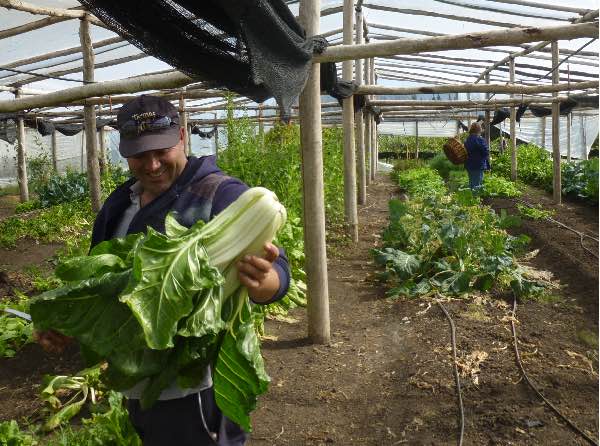
We really appreciate the opportunity, every other week, to buy fresh-as-you-can-get-it organic produce at bargain prices. Here Ricardo has just harvested a variety of acelga (Swiss chard) for us. Acelga is arguably the vegetable in Uruguay — if you order ravioli or canelones con verduras in a restaurant the verduras will be acelga. You can get it year-round. It took us a year or two to realize this was our desirable spinach substitute, since spinach is only occasionally available. And needs much more washing.

Feria Organica near Atlántida, Uruguay

So then off to our chacra nearby where the in-places knee-high grass needed cutting. A couple of wild ducks flew into our tajamar, but decided the noise of the lawn mower was offensive, and left. I had seen one on my previous trip. Other posts about the pond we created. It’s an interesting experiment in “letting nature do its thing.”

Wild ducks in our pond, Uruguay

Then there was the twice-monthly (because “bimonthly” can mean either twice a month or every two month; thanks English language) Atlántida-area English-speakers’ get together. 23 people showed up. Many lively (and funny!) discussions. Nationalities included Uruguay, US, Canada, England, Holland, and Germany. On other occasions we’ve had South Africans, Argentines, and no doubt others I can’t think of right now.


And this Saturday Occupy Couch performance art.

benji-couch

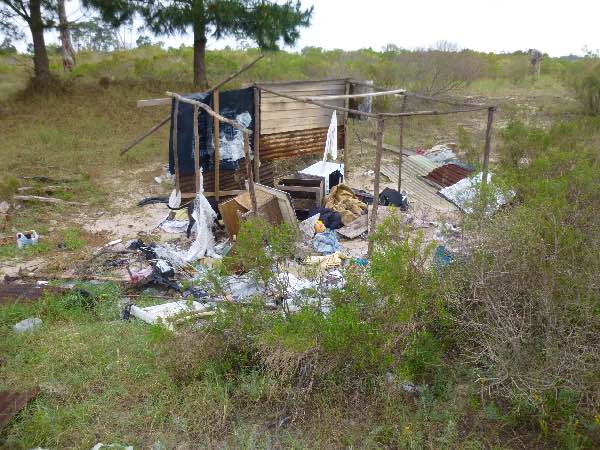
The ‘house’ in the ‘woods’

Beautiful weather the last few days, but I’m on dog-walking hiatus because he managed to slice open his foot on one of the multiple garbage dumps where we walk with Syd’s five dogs.

So this photo is from a few days ago.

Shack in open area, Canelones Uruguay

According to Syd, someone spent a winter in this structure. It was intact when first I saw it.

Other trash sites include old furniture, TVs, and just about anything else you can imagine, including many things that could have been put in trash receptacles nearby.

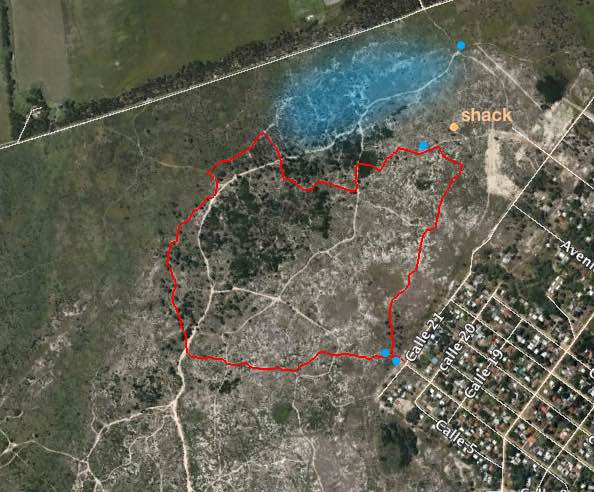
trash pile locations, Villa Argentina norte, Uruguay

Blue dots represent trash locations; Syd probably knows more. Light blue area is generally littered. And yes, there is a pile of broken TVs and other appliances just meters from the streets that have trash receptacles, and no, not all the trash predates the receptacles.


You may recall the dog we found and the mess its owner couldn’t be bothered to clean up.


An Uruguayan friend in nearby Parque del Plata told me that he and his wife spent a considerable amount of time cleaning up the corner lot opposite them, where neighbors left their trash, when the trash containers arrived. (OBTW there was trash pickup before the containers.) Shortly after, he watched a man in his 50s walk past the trash container to dump his trash in the open lot. When confronted, the guy said, this is the way I’ve done it all my life. He was eventually trained out of that habit. It took about a year.


The fish place

Fish for sale in Uruguay

There is:
Corvina (drum)
Lenguado (flounder)
Merluza (hake)
Cazon (school shark)
Angelito (angel shark)
Tambera (type of corvina, I think)
Camaron (shrimp — way too much work and tiny OBTW)
Mariscos (shellfish, seafood: not sure what they mean by this)
Lisa (mullet)

We buy only the first two. The others tend to range from weird to nasty.


A summer day in winter

It appears we’re in the veranilla — couple days of “little summer” before it gets cold again. Walked the dog in a t-shirt. Had I gone to the beach, I might have worn shorts and walked barefoot. Recall that this is the equivalent of the end of February in the northern hemisphere. Should be this way tomorrow as well.

Then the forecast for the weekend is the Tormenta de Santa Rosa, which means wind — lots of wind. And rain. And Dutch pirates not attacking Lima. But that’s another story.

Our first meal in Peru

rsz_p1040484

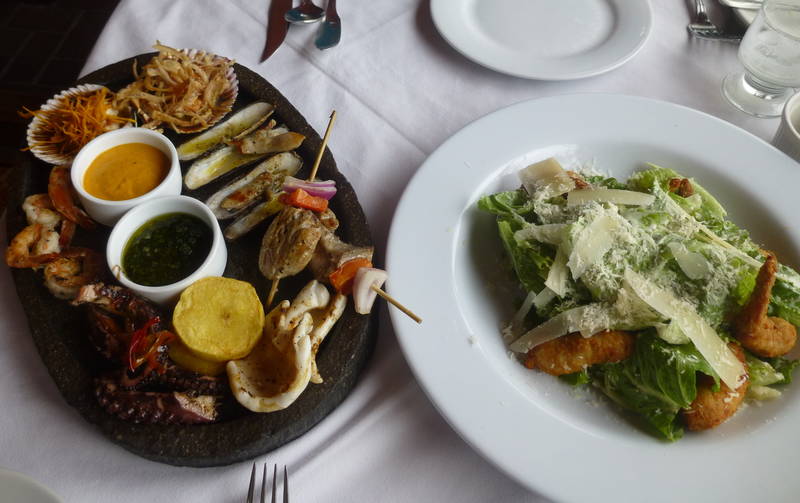
No, I do not intend to go all Instagramy, but for the benefit of my seafood-deprived friends in Uruguay. On the left, shrimp, octopus, potato thingies, squid, tuna, razor clams, and scallops. Chimichurri and a delightful picante sauce. On the right, Cesar salad with corn-battered prawns. All exquisitely prepared. A bit under USD 30.

Pizza on the barbecue grill

We attended and 18th birthday party last night. We were told there would be pizza, but I couldn’t have guessed how — cooked not in an oven, but on the parrilla / traditional grill. I explained parrilla — well, sort of — long ago. The fire is one one side, and the coals are raked under the grill, which typically can be raised or lowered. Doing an asado with meat this way takes hours, but with pizza it’s hella more efficient than trying to to do them in the kitchen oven.

bbq-pizza
The coals weren’t that color at all. Bad camera! I should have taken a picture with my iPad :0

Pizza after pizza was delivered to family and friends at the big outside table: Hawaiian, mushroom and cheese, gorgonzola, mussels. All delicious. The combination of the nearby fire, hot pizza, and wine did a nice job of making the chill go away.

Our host, Marcelo, told me that he had tried doing pizza on the grill and it turned out a mess. So here’s the secret: put the plain crust over the embers until one side is done, then remove, turn over and add toppings, and cook over embers again.

As they prepared to leave, the cooks gave out the quintessential Uruguayan marketing tool: refrigerator magnets. Yes, this is what they do for a living!

bbq-pizza-magnet

PS — can you guess the only business that doesn’t give out magnets? See here.

The 30-mile salad

My wife recently asked, where’s your camera? which means come take a picture of this. (In case the concept of camera confuses you, yes, I do have a phone, but a a clamshell unit that can only sync the results of its .3 MB camera through Windows OS, which we do not use.)

food-color

And though I probably would have opted for white or yellow onions in a baked dish, I must say the red onions make it more photo-worthy. The light yellow is winter squash from our garden. Onions, carrots, green peppers, and tomatoes, were I to source them, most likely came from within 30 miles of here.

If you are familiar with the 3,000-mile-salad of northern North America, and the fragile nature of the truck-based food transportation system in the USA (Syd can fill us in, perhaps, about Canada), the thought that fresh produce grows nearby feels kind of warm and fuzzy. No, it’s not all organic, but organic is available: we paid 90 pesos/kilo* last Saturday for organic green peppers at the local féria organica at Pilar’s chacra. We then stopped at Tienda Inglesa, where they sold for 158 pesos/kilo* — and not organic.

Not perfect, but not bad. And we get lettuce and cucumbers as well year-round, also local.

*USD 1.36/lb vs USD 2.39/lb