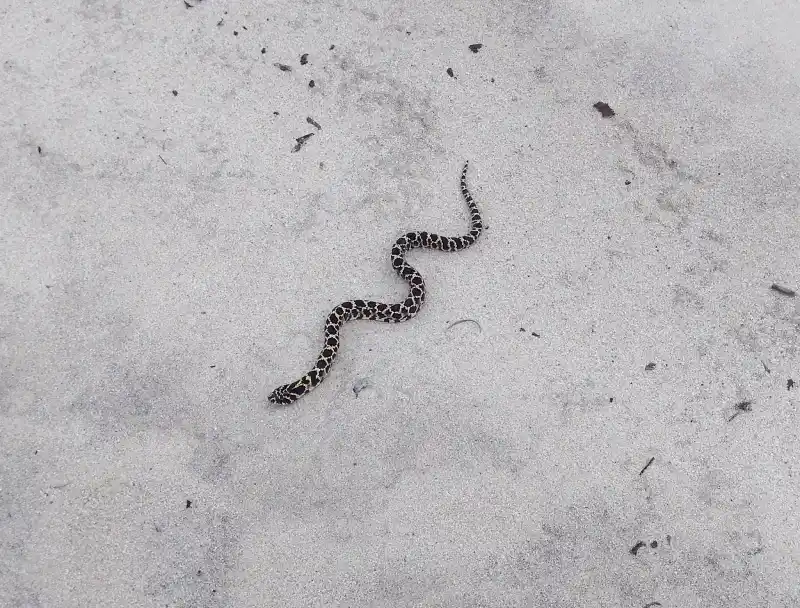
Looked to be 20-25 centimeters long. I nudged it with a stick to encourage it to move out of the middle of the path (and out of sight of birds, though extremely windy and none to be seen.
So what is it? I asked Grok.
Canelones, Uruguay: what kind of snake is this?
[Thought for 37s]
This appears to be a juvenile crucera (Bothrops alternatus, also called víbora de la cruz or yarará grande), a venomous pit viper native to Uruguay (including Canelones) and neighboring countries. snakeradar.com +1Key matching features from the photo and species descriptions:
- Bold, irregular dark (nearly black) dorsolateral blotches or “C”/telephone-receiver/headphones-shaped markings with pale (cream/white) borders or centers on a lighter ground color. These can appear somewhat connected or blotchy, especially in young animals, and match the classic crucera pattern. everything.explained.today +1
- Small size (juveniles/neonates are typically ~20–25 cm and more brightly patterned than adults).
- Robust body for its length and typical head shape of a Bothrops.
- Found on sand — cruceras occur in grasslands, wetlands, near water, and occasionally wash up or appear on beaches/coasts in southern Uruguay (including Canelones) after rains or via currents. elpais.com.uy
It is one of the two medically significant Bothrops in Uruguay (the other is the yarará, Bothrops pubescens, which has more trapezoidal markings and is less associated with lower/coastal areas). Adults reach 80–150+ cm; both species have heat-sensing pits, triangular heads, and venom that can cause significant local tissue damage and other effects (antivenom is available in Uruguay via the CIAT toxicology center). gub.uy
Similar-looking non-venomous species that can occur in the same area (and also like sandy habitats) include:
- South American hognose / falsa crucera or nariguda (Xenodon dorbignyi, including the Uruguay subspecies whose type locality is in Canelones). It mimics the crucera’s blotchy pattern, has an upturned snout for digging in sand, and is harmless to people (though it may flatten its head and body when threatened). en.wikipedia.org +1
- Other colubrids such as certain Erythrolamprus (e.g., culebra de Peñarol) or Dryophylax hypoconia (culebra de la arena) have different spotting or banding and are generally more slender or differently patterned.
Recommendation: Do not handle it. Keep a safe distance, and if it is near people or pets, contact local wildlife/rescue experts (e.g., Alternatus Uruguay or the relevant environmental authorities) for safe relocation. In case of a bite, seek immediate medical help (call CIAT at 1722 in Uruguay) — do not apply tourniquets, cut, or suck the wound.
Identification from a single photo is not 100% certain without scale counts, head details (pits, pupil shape, snout), or closer examination, but the location, size, and distinctive blotched pattern strongly point to a young crucera. If you have additional photos (especially of the head or underside), that would help confirm.


