Taco wisdom

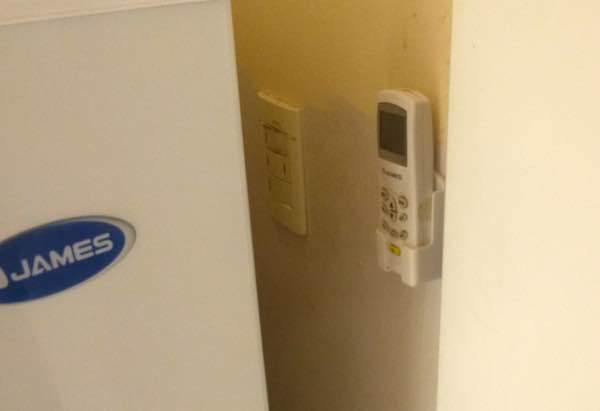
When we installed an “inverter” split (DC, variable, no motor noise) in our bedroom, we moved the noisy split (AC/heater/dehumidifier) unit to our dining room. Finally, today, I mounted its remote control to the wall, removing two pieces of clutter from the counter top.

Took me ten years to figure this out.

But that’s not the story. In north North America, hanging something on a wall is pretty simple, dealing with drywall and (usually) wood studs. In south North America, and South America, our home for ten years, you deal with a different situation: plaster and brick walls. In Uruguay the requisite plastic expanding anchors are called Tacos Fisher, and I’ve often found myself sticking wood slivers or broken toothpicks alongside them because the hole ends up too big.

Until I figured it out.

To install a wall anchor, do not drill a hole.

This will be obvious to a machinist, or someone who has worked a lot with metal, but I am neither. You don’t drill a hole: you drill a hole twice, the first time with a smaller drill bit. You then use the proper-size drill as a reamer.

Voilá!

I can’t believe it took me over nine years to figure that out :0

Sanders: my experience

No, not Bernie.

I’m making another 1-meter hanging shelf for under the kitchen cabinets. I bought a piece of 1″ x 10″ pine, a bit longer than needed (so I can trim the ends square with my table saw, since the good ol’ boys at the aserradero don’t quite grasp the concept of “right angles”). Then, of course, there’s lots of sanding to get rid of various planer marks. Fortunately, I have a hand-held belt sander that makes quick work of such chores. At least until almost finished, when it suddenly stops working.

Well, with not much left to do, I wasn’t bothered at having to use my much-less-competent palm sander. Well, to clarify, much less competent when they both work. Instead, I found it to be equally competent: instead of sanding, it just made noises. Might as well have been dead as the other.

A few days later (today), I decided to tear into them and see what I could.

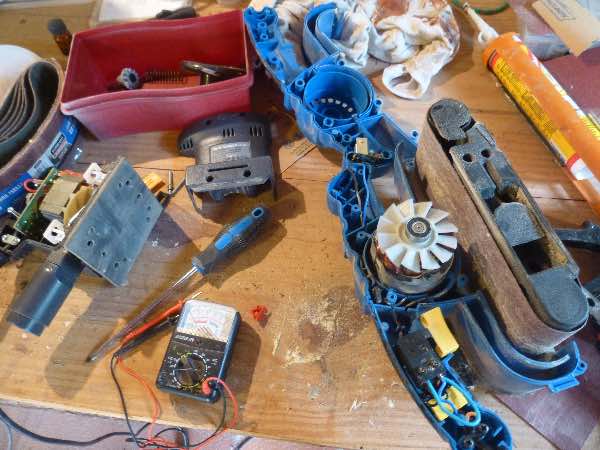
Disassembled hand sanders

The palm (orbital) sander, to the left of the screwdriver, was hopeless. Something’s jamming the central shaft, and I have not a clue what (nor why it didn’t the last time I used it, a while ago). A path forward wasn’t immediately evident.

On the belt sander, however, I found it is activated by a double-pole switch — basically two switches acting together, one for each incoming live wire (and they’re both live in Uruguay, so I tend not to do “simple repairs” to light fixtures or outlets without first turning off the entire house circuit). Easy diagnostics revealed one switch wasn’t working, so I installed a jumper wire (turquoise “U” at lower right) so that the connection is always on, and — ta da! — it worked, and I replaced twelve screws that hold the two halves together.

Turned it on, finished my sanding job, turned it off — uh, no. Now the switch is jammed “on.” But guess what? I don’t really care! Unplug it to turn it off. It works!

I won’t be tempted to tear it apart again because, being a cheap no-brand tool, the screws that hold it together anchor into the plastic molding of the other half. They were all nice and tight when I undid them, but only a third of them really firmly reconnected. The others just turned and turned.

So it may end up being held together with wire and duct tape. But it works — !

I’m feeling more Uruguayan all the time.

I love it when stuff like this happens

A few years ago, in Buenos Aires, our friend visiting from New York couldn’t believe the little things people were selling on buses, everywhere. “Who would buy a ball point pen?” she wondered. “I just did,” I replied, “I forgot to bring one.”

So couple years later in Manhattan, she emptied her “excess pen” drawer and we returned to Uruguay with a plastic bag full of pens.

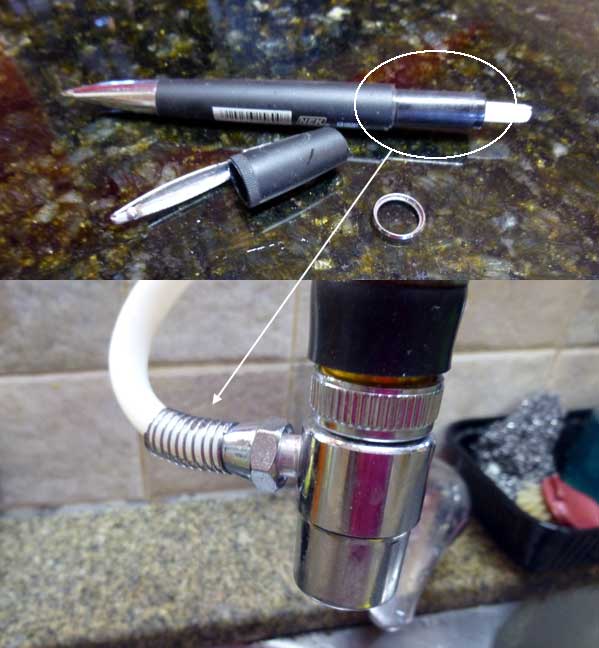
Recently, though, that one from Buenos Aires has been my favorite, so I was slightly saddened to throw it in the trash when it ran dry (I might have replaced the guts, but that didn’t seem possible.) Until I realized: WAIT! That spring! Exactly what I’ve been look for to keep our water filter tube from crimping!

pen-spring

Thank you, pen from Buenos Aires!


Heat remediation in an uninsulated house

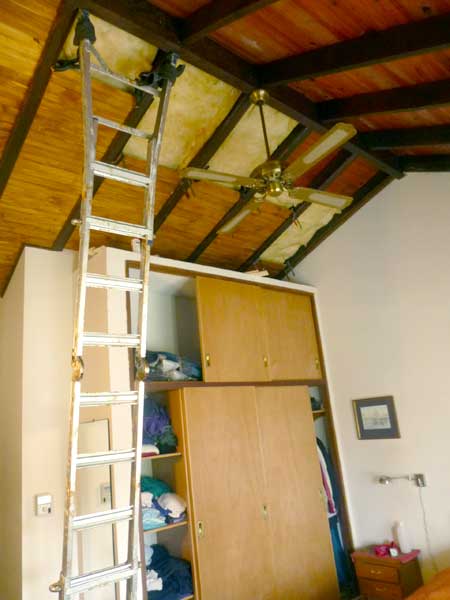
Typically uninsulated Uruguayan house cieling
Adding a little R to the north (sun)-facing side of the bedroom ceiling

On the other side of the aluminum-backed fiberglass insulation I’ve installed, there’s more of the thin tongue-and groove paneling wood (lambriz), a layer of sheet plastic, wood strips, and clay tiles. During the summer, the north-facing roof tiles take the sun all day, radiating heat to make our bedroom the hottest room in the house in summer.

And the coldest in the winter, with nothing but 1 cm of pine for insulation at the peak where the hot (well, warmer anyway) air gathers.

And oh by the way, yes, being up that ladder like that is a little crazy.

DIY project 95% complete…

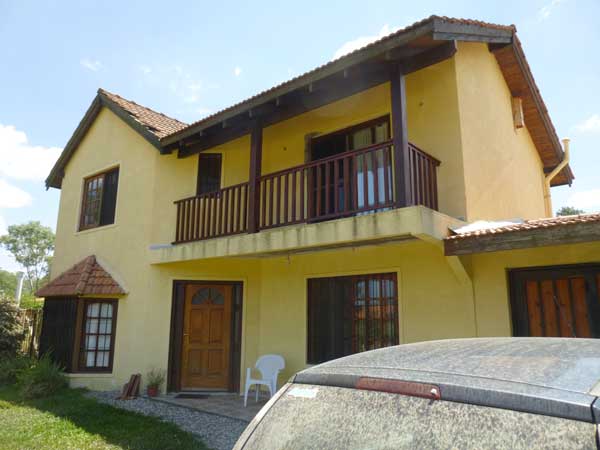
Finally got around to building a railing for the upstairs balcony. A few details still to go, but meanwhile looks like it’s always been there, which is of course the point.

I knew they were ugly, but didn’t realize how bad those drip marks look until I saw them in the photo. Would be a snap to clean them from above if not for that damned railing.

N.B. – with frequent trips to our country place and its dirt road – not to mention the dirt road we live on – trying to keep the car clean is a fool’s errand.

Today’s project: build an ugly table

Beautiful San-Diego-weather kind of day.

Today’s project: turn remains of crappy wooden gate we replaced into a table to replace the crappy plastic one we bought.

No, I have no dark stain to finish it (and no buying any: it’s Sunday). Yes, it is ugly. However, it also has significantly more weight than the plastic one, so that when bearing things like wine glasses that can easily topple, it is less likely to end disaster because of a dog fumbling about underneath.

The dog in the door, indicating that it’s time to walk to the beach, will no doubt put it to the test given the next opportunity.

Motorcycle repair

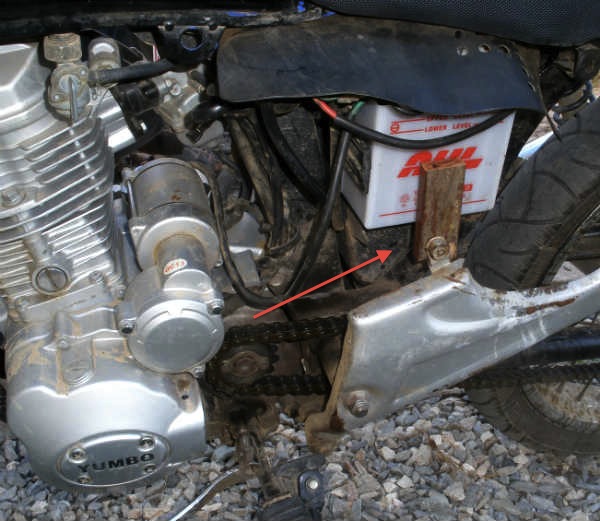
The plastic zip ties that held the battery in place on my son’s friend Mauro’s motorcycle were failing. He asked me if I had some he could use, and I sort of did, sort of didn’t, but in any case he clearly had no idea how to rig them as the previous person had. Nor did I.

I noted a mount for an obviously-missing bracket, from the back of the car grabbed some wood I had just salvaged from a friend’s remodeling project, cut a chunk, drilled a hole, put in a screw, and voilá!

My motorcycle repair, Uruguay

The wood appeared to be made to order. Mauro laughed delightedly – imagine that, a gringo showing an Uruguayan how to fix things with nothing!