Here it is, in all its glory, from the airport at 7:58 AM Wednesday morning. Probably 15-20 kilometers away, blowing over the heart of the city of Montevideo.
While watching organic fruits and vegetables harvested to order today — lettuce, swiss chard, celery, carrots, arugula, grapefruit — from the greenhouse I noticed something I’d never before seen to the east: water.
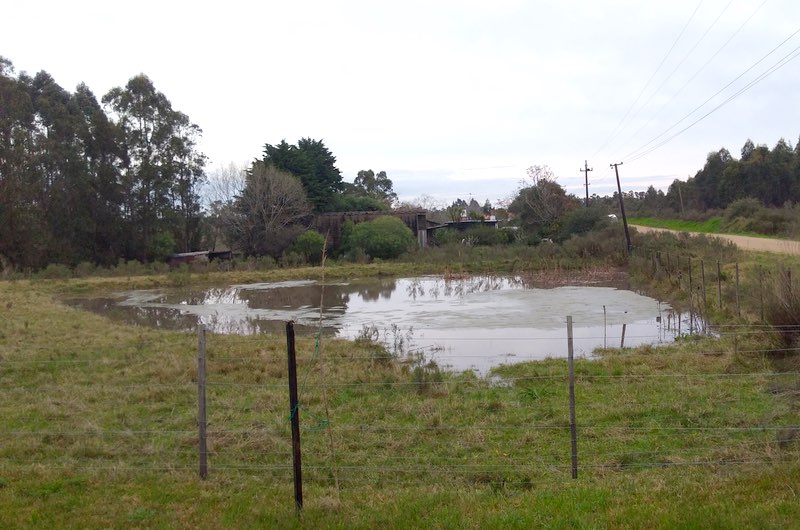
Not the ocean, but the Río Solís Chico. I asked Ricardo about it. Sí, hay much’ agua. So I had to check on our tajamar(pond), and wow, yeah, lots of water.
From our little country place — just a few hundred meters from Pilar’s, where the every-other-week feria organica happens, I could also see the river. That surprised me. I consider myself relatively observant, and if the river was visible from our place, I’d certainly never seen it before.
Much’ agua.
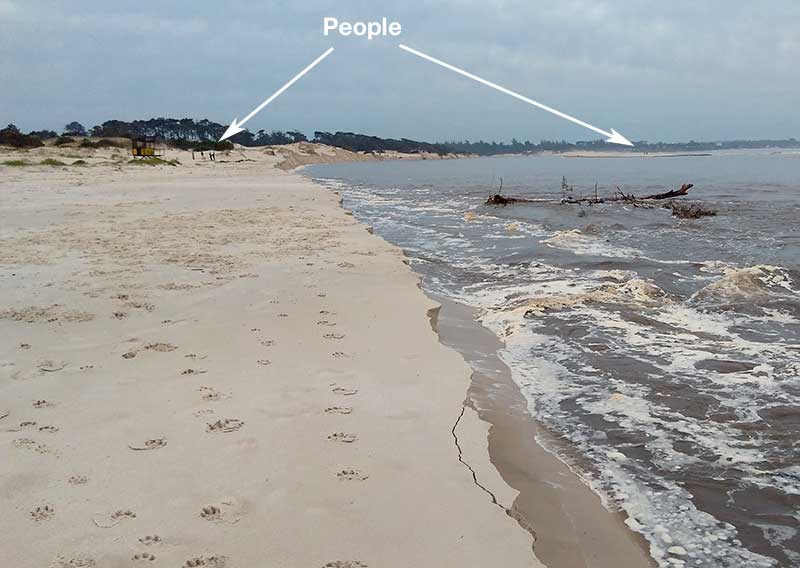
Since we first lived here at the mouth of the Río Solís Chico in Parque del Plata, and ever since loving its constantly changing paths as it hits the beach, I thought it might be worth checking out the water flow at the mouth of the river.
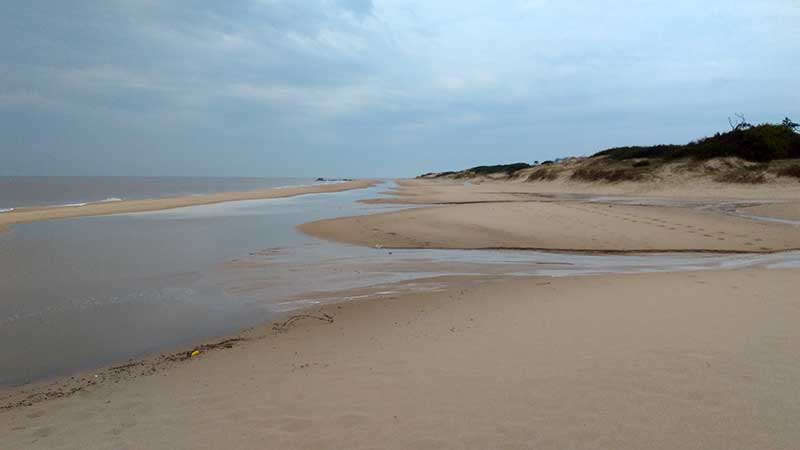
Indeed! Hard to do justice in one photo, but in normal times the width of the water separating these two groups of people would be about one half this. You can get an idea here. In that video, all of the foreground beach was underwater today!
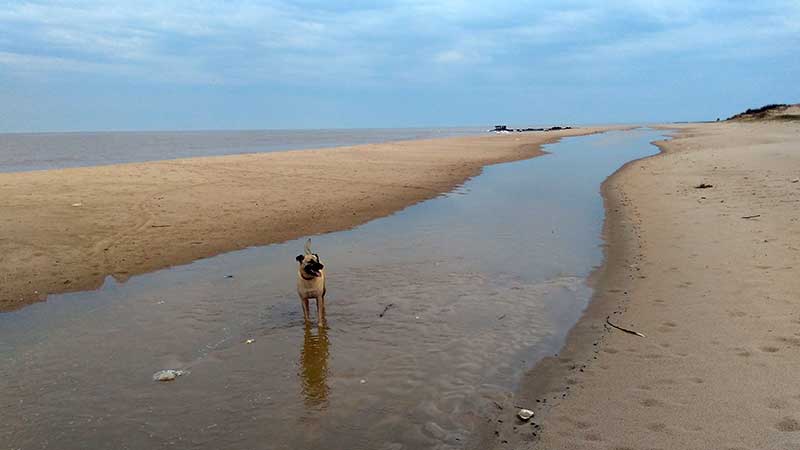
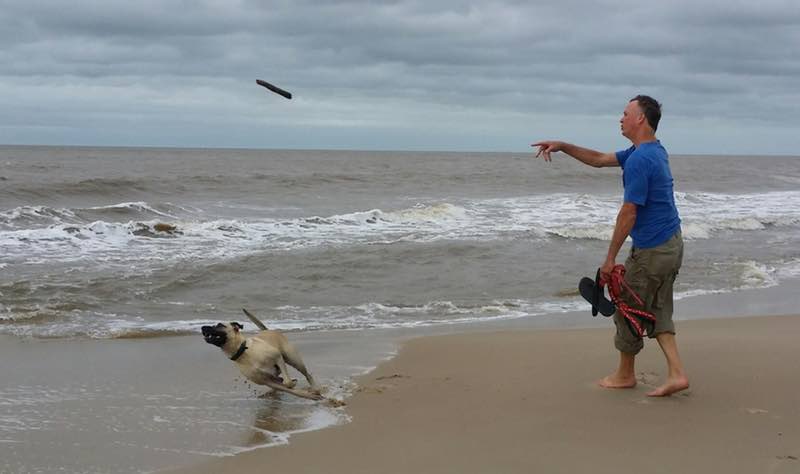
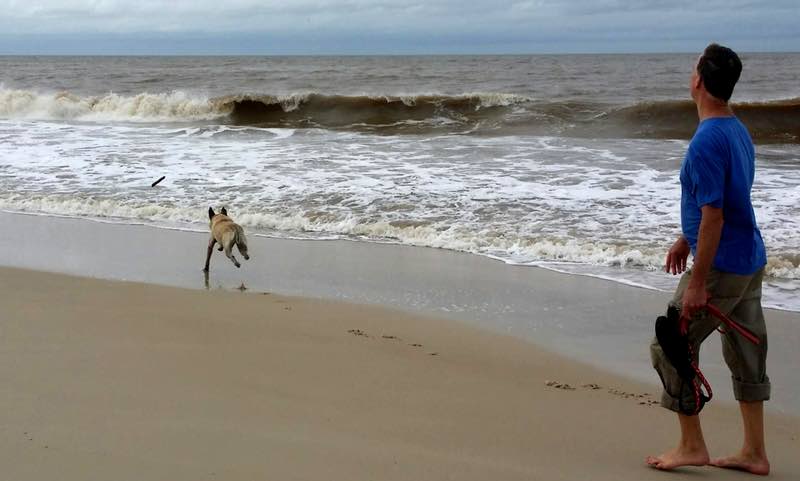
All the more water for Benji to splash around in. Here he takes a brief confused time out, attention divided between the head of cabbage he quickly lost interest in tearing apart, the stick I had been throwing for him drifting away, and something else. We were the only ones on the beach, so who knows what the something else might have been.
Some people consult the Farmer’s Almanac and moon phases for best times to prune trees. I don’t.
For me, there are two “best times“ to prune a tree: 2) when I feel like it, and 1) when the wife tells me to do it, as she did today.
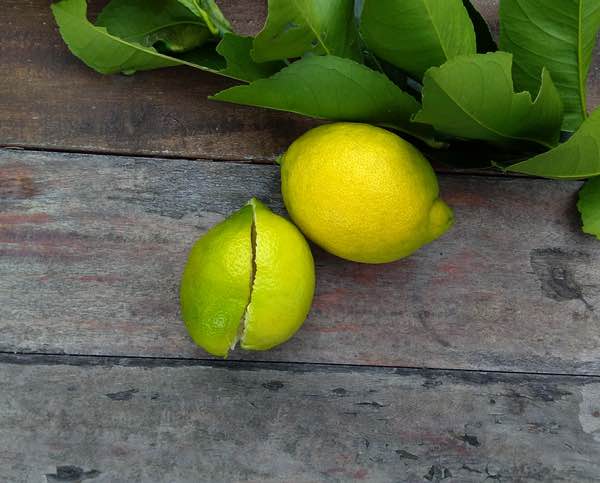
So, log-handled loppers in hand, directed by her, squinting into the sun, I lopped off the biggest branch first. As it fell, so did a lemon. But when I picked it up, I found half a lemon — seriously, almost exactly half a lemon, neatly sliced lengthwise.
Where was the other half? You guessed it: still attached to a branch overhead.
What are the chances of perfectly cutting in half a lemon you didn’t even see?
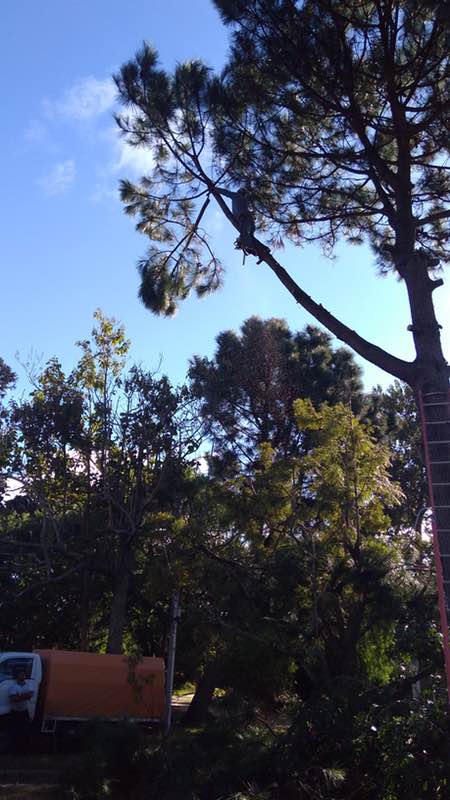
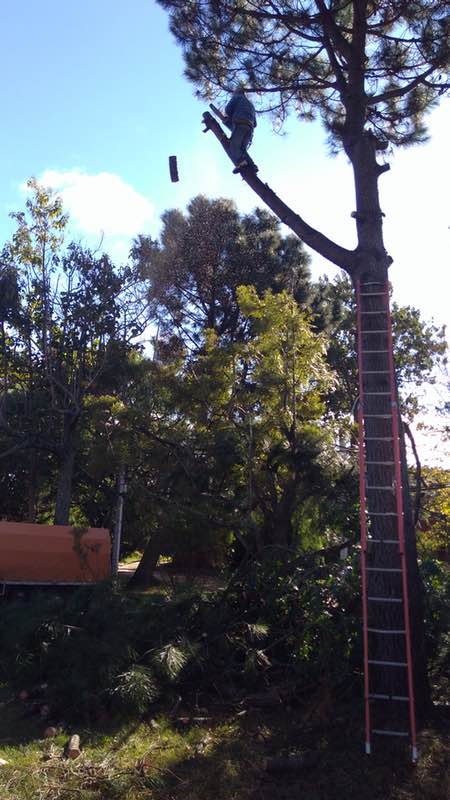
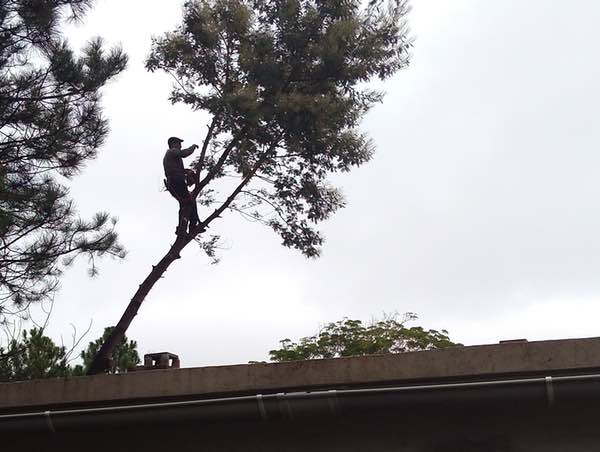
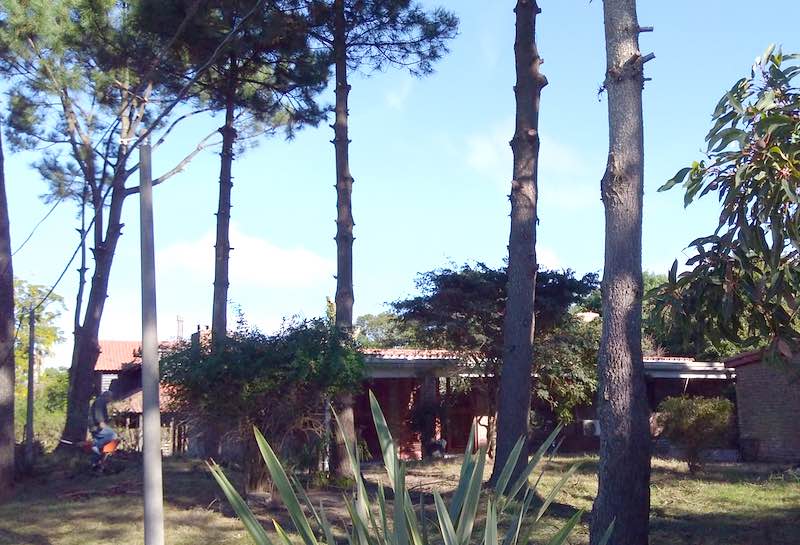
Amazing to watch tree workers in action. Yesterday (yes, Sunday) involved removing all the lower branches from pine trees at the house of friends.
Quite a show.
His brother removing an acacia that was leaning over the roof. Not a bit fell onto the roof in the process.
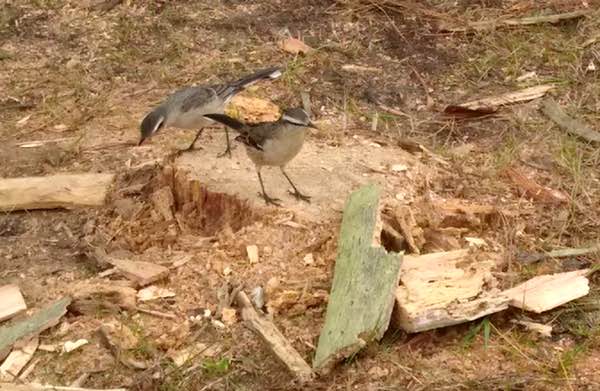
An old stump five meters high had a non-functioning light fixture on it. That was removed, stump cut down, and birds flew in to feast on the ants inside, mostly oblivious to me standing two meters away.
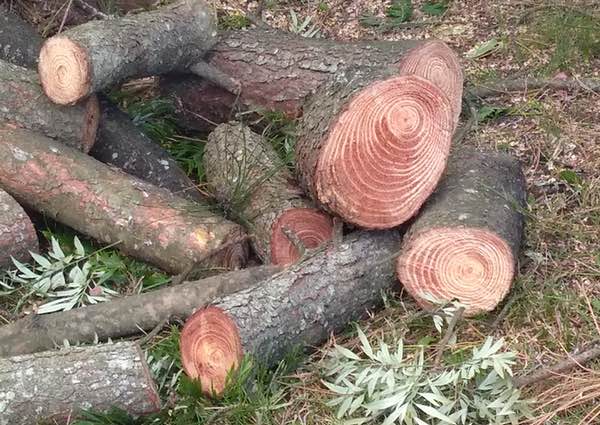
And another surprise: look at how the rings grew on that angled limb in the first two pictures!
I find it quite amazing that none of these trees has come down in severe windstorms during the six years the owners have been gone, but it seems much less likely now. And, a lot fewer pine needles to clear off the roof.
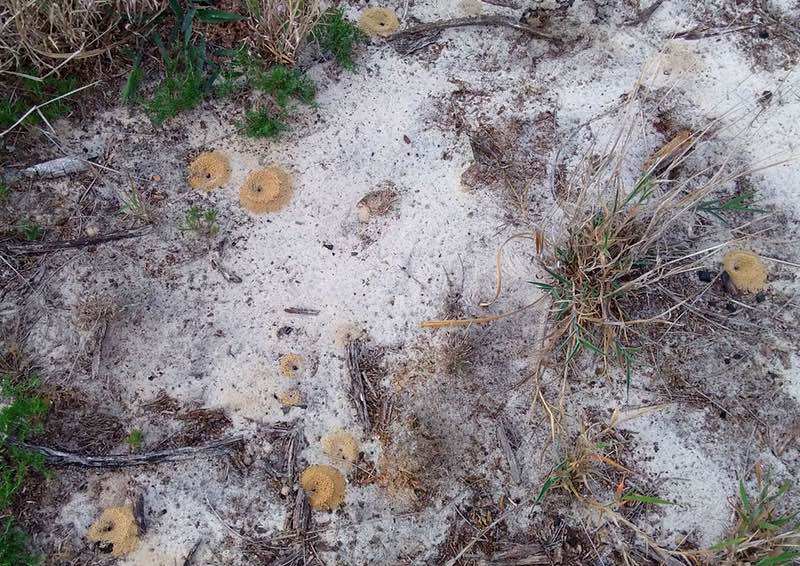
The ants have been busy lately in our dog walk area. For some reason, sand beneath the surface is a different color, making the hills particularly conspicuous. I find it interesting how many of them have appeared.
I don’t think they’re always there. Do they appear and disappear, like the several kinds of frogs, from one day to the next?
We also spotted a little snake, ~ 25 cm long, that all six dogs (happily) didn’t notice. From a clump of grass, it zipped between my legs to the safety of a nearby hole. No photo. Happened in seconds.
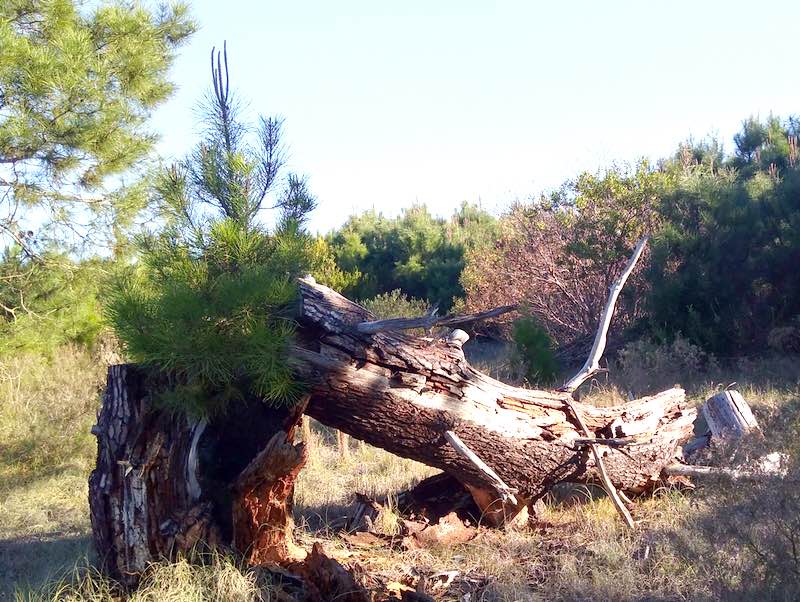
Pine trees don’t regrow from stumps, unlike eucalyptus trees. But you wouldn’t know that from looking at this. Apparently a pine cone sprouted inside the rotting stump. How it fares as the stump continues to rot will be interesting to watch!