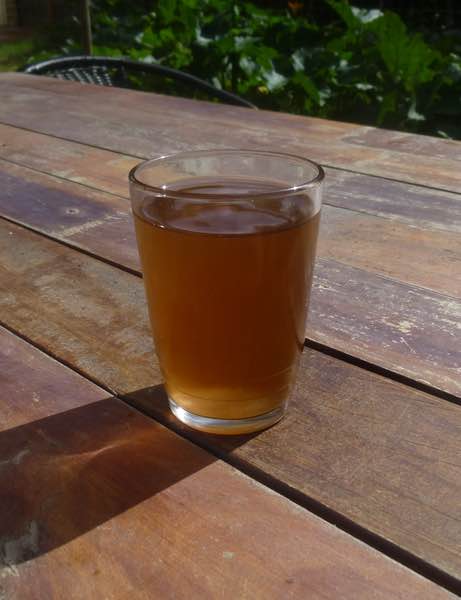
No, it’s not Earl Grey tea. It’s our tap water this morning, following a stormy night. The water will clear up with time. But if you were to visit Uruguay believing the claim that all the tap water is drinkable and see this, you might have second thoughts.
On the other hand, I remember well when a friend in Germany sent us some Heilerde. Maybe a little dirt is good for you?
Summer traffic — and we’re now in peak summer season — tends to be horrific.
Though other vehicle is removed, not too hard to parse: note the skid mark. Posted speed limit: 60 km (36 mph)
We live at the convergence of Punta-bound traffic from all points west. Punta del Este is the glitz capital of the southern hemisphere in January. We avoid it like the plague, but people who want to be there don’t want to be anywhere else. Especially slowed by congestion in Atlántida.
As I pointed out almost four years ago, the new overpass in La Floresta means pretty much open road after Parque del Plata traffic lights at the river. However, everything between Ruta 11 and there is pretty much one huge clusterfuck: a densely-populated area with numerous intersections. It very much merits caution. But don’t tell that to people racing in from sparsely-populated rural Ruta 11, or the Ruta Interbalnearia from Montevideo, who have just passed through several sparsely inhabited kilometers. Don’t tell that to the Porteños (Buenos Aires) or the BS drivers (see previous link) or testosterone-stoked motorcyclists, all of whom consider it their god-given prerogative to drive as fast as possible, regardless.
Because of the distance between traffic lights, in Atlántida the stream of traffic has often merged into a continuous flow, and trying to cross here can be an exercise in patience with small margins of safety. But crossing options exist: the Ruta 11 bridge is only 800 meters away.
One person tweeted that a motorcycle was run over:
No, sorry. Someone going way the hell too fast on a motorcycle slammed into something considerably larger, and possibly became an organ donor in the process.
It’s been over 30 years since one similar slammed into my BMW in a construction zone in Germany. Hast Du mich nicht gesehen?* he asked, lying on the ground a dozen meters from the point of impact. As if I, driving especially cautiously because my parents were in the car, should be responsible for his (typically reckless, according to neighbors) behavior. No sympathy. Even later, hosing off from the crumpled fender a tiny piece of flesh.
* Didn’t you see me?
UPDATE: same time, 24 hours later, a few hundred meters up Ruta 11, another fast bike — bright green — splintered into pieces on the road. Had to keep moving, did not see other vehicle/s involved. Two ambulances on scene, another coming quickly with siren as I drove on.
Tiza means chalk in Spanish, and for several years the local Rotary Club in Atlántida has held an event called Atlantiza, where they close off a street and provide chalk and a 3 x 3 meter artist’s space. Some people use the chalk to draw; others mix it with water and paint.
With rain threatening, this year featured a significant number of no-shows. While some of the creations were nice enough, I saw nothing outstanding. I expected at least one convincing 3-D rendering, but saw only unconvincing attempts, like the one in the photo. It might have been fun to participate; I indicated interest but when I got no response decided not to pursue it.
Incidentally, if you’re curious how artists create magnificent 3-D street art illusions, here’s a clue:
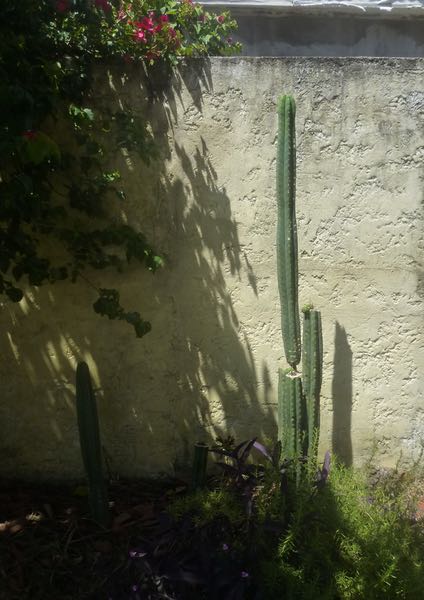
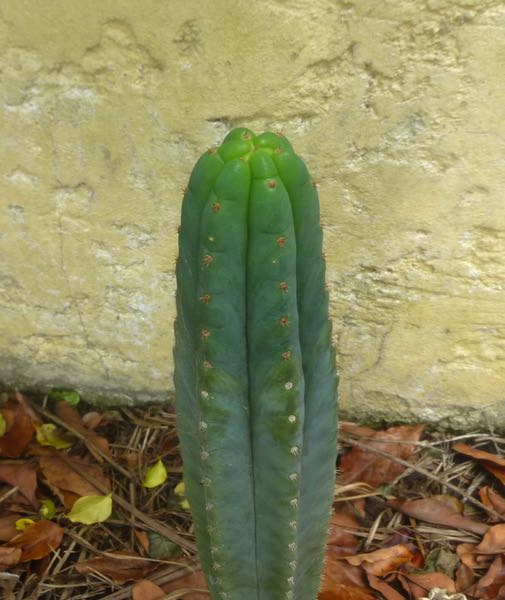
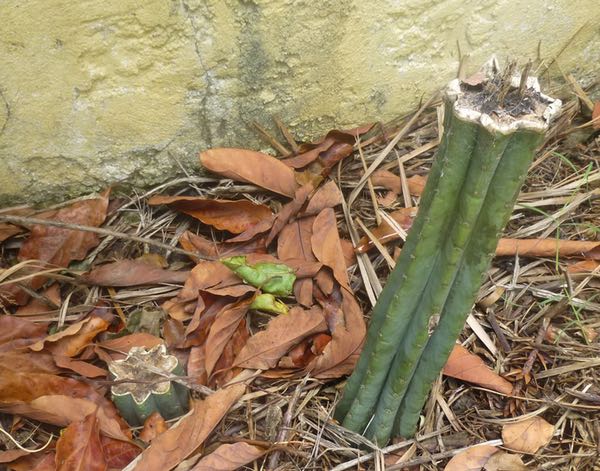
A friend generously brought me a cactus shortly after we moved here. One of my son’s friends figured out what kind of cactus it was, and stole a chunk. I never learned anything more about that. The whole top part you see is what has regrown in six years since he cut a chunk off.
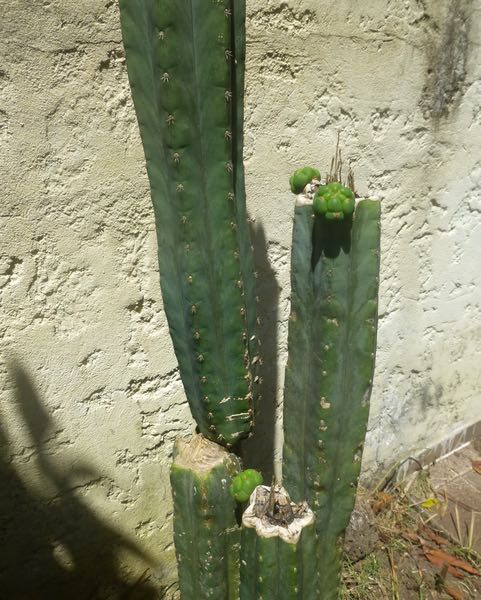
Alas, a recent windstorm broke two of the three branches — but not the new one!
I gave away the tip of one branch. The other I planted. The bright green indicates new growth.
And the broken branches are busy regenerating as well.
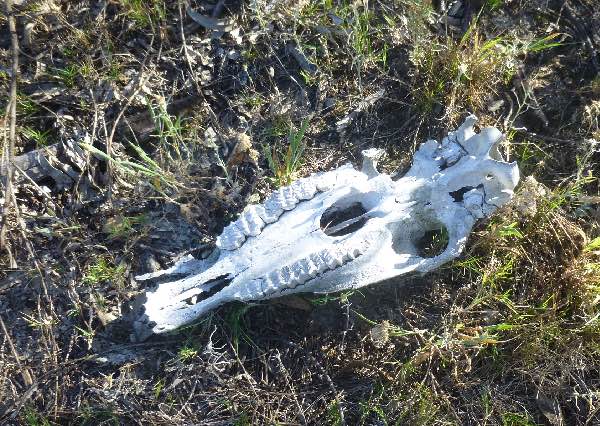
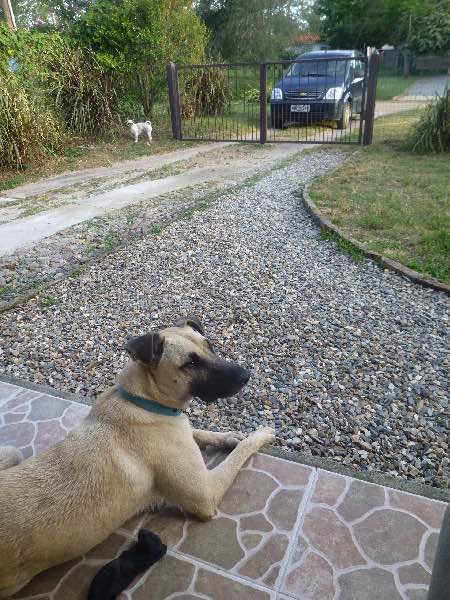
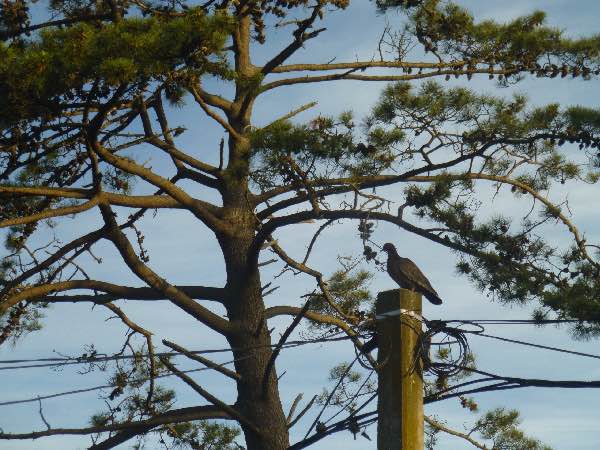
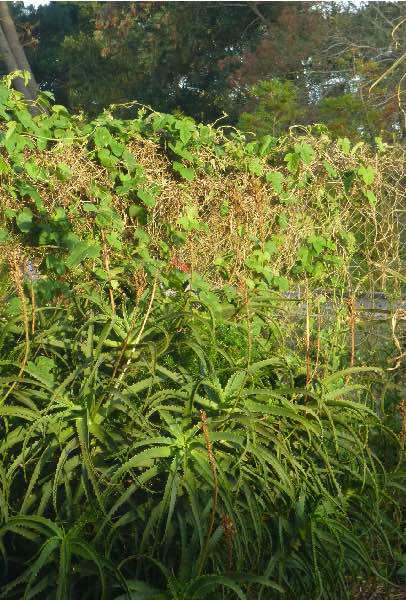
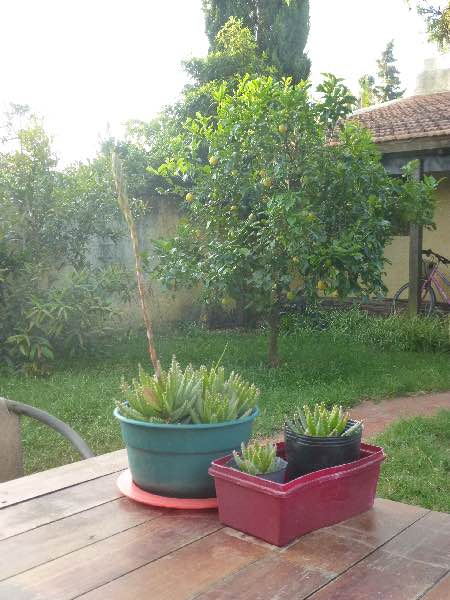
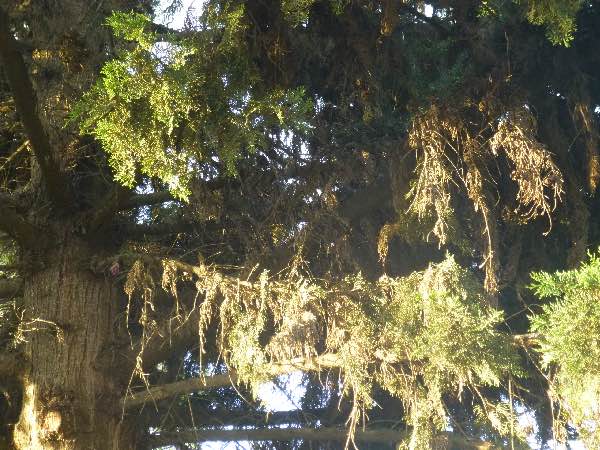
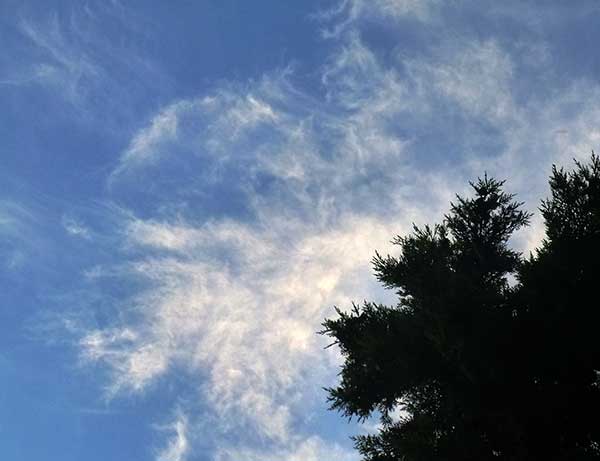
A horse skull in the “woods”Dogs at peace, for nowDove, treeAloe vera, morning gloryThe BandidoLots of sand between the toes after wandering with Ralf and dogsWhat next to expect?Our backyard pine, looking kind of old-south USAand the freaky sky.
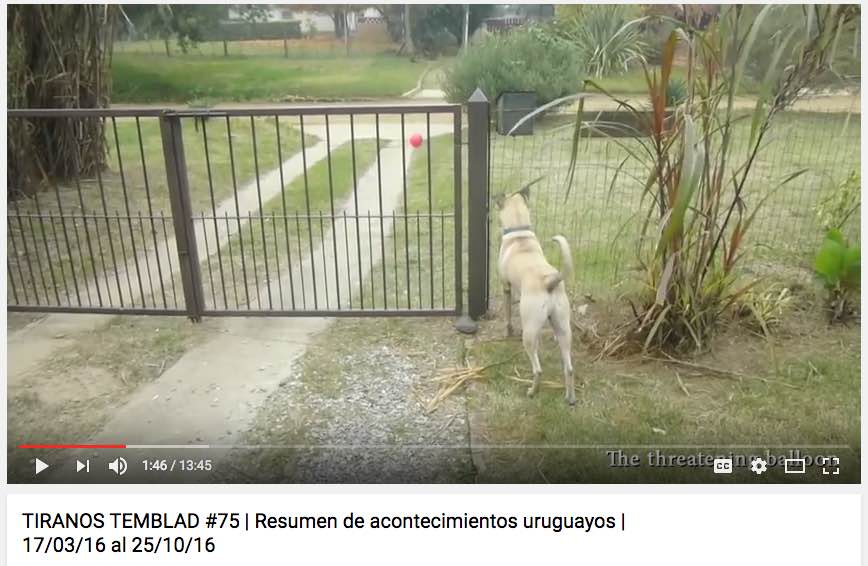
Tiranos TembladTV posted four days ago its first Summary of Uruguayan events in seven months. The narrator explains that during this period, more than a thousand videos have accumulated, too many to show all. And then — drum roll — starts the summary of events with a dog barking at a balloon (1:40).
In case you’re new here (or to refresh your memory), here’s where that clip came from (added long after Syd’s comment):
The Summary is fun to watch all the way through. Even if you don’t understand the narration in Spanish, you’ll get the drift. There are a few bits in English.
So — if one dog year equals seven human years, Benji should have gotten 2.14285714285714 minutes (128.5714285714284 seconds) instead of 4 seconds. But the clip I posted originally was only 24 seconds long, and it was the “lead story” here, so good on ya, Benj. You’ve still got potential years of silliness ahead to claim your remaining 124.5714285714284 seconds of fame.
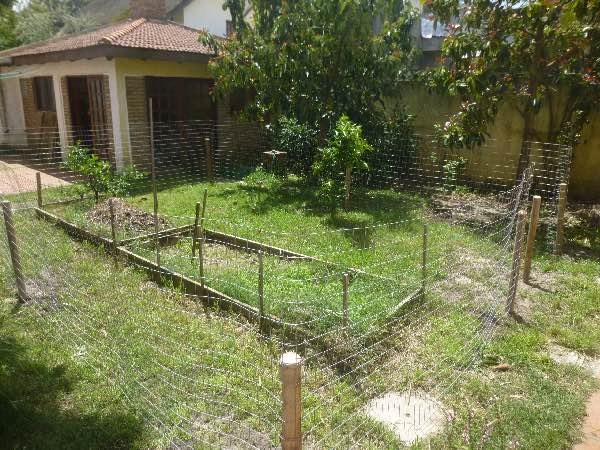
I’ve put this off far too long. With destructo-dog I absolutely have to have a fenced garden area. I’m not the most enthusiastic gardener, but I do have a bunch of seeds started, some of which (squash) will require substantial space.
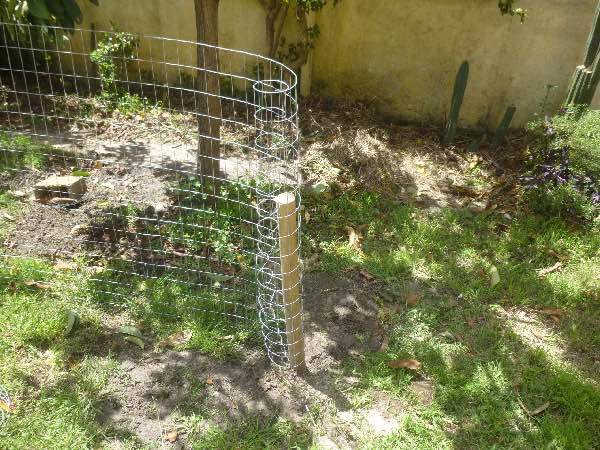
Using what I had at the chacra, I cut posts to have 80 cm exposed. I had a roll of 120 cm fence wire already, so I figured I take off the top 40 cm and double it when I ran out of the roll.
It was pretty close — 2 meters shy! Had I not made a circular compost bin in the country earlier with the fencing, it would have worked out almost exactly right.
Where ignorance is bliss, ‘tis folly to be wise.
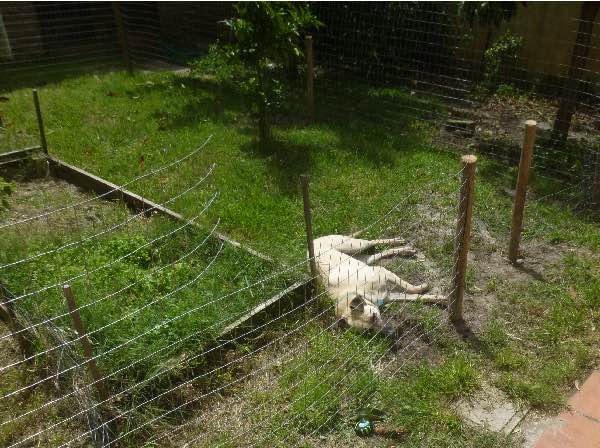
Benji, meanwhile, decided this was a nice place to hang out. No more. I trimmed the top 40 cm, leaving spikes, and built a gate. It’s not a pretty fence, and it’s not particularly well made, but it doesn’t have to be. It just has to keep out the dog and cat.
Aloe (pronounced as a Canadian might say, aloe, eh) vera grows in abundance here. Today I saw another first in seven years: its harvest.
Turns out they sell it to a laboratory that turns it into a skin product. For exactly what application I couldn’t catch. Uruguayan Spanish is not generally spoken in a crisp, clear way, and the guy at the truck, while friendly, was a little hard to understand. Anyway, they get USD 0.68 per kilo. Sounds like farmers grow fields of it. It wasn’t clear the connection between these guys and this little stand of aloe, apparently on private property in town, right off the main highway, the Ruta Interbalnearia.
Aloe is all kinds of good for your skin and more. Nice plant to have in the backyard, which we do. Easily planted, like so many things here: lop off a chunk of plant and stick it in the ground.