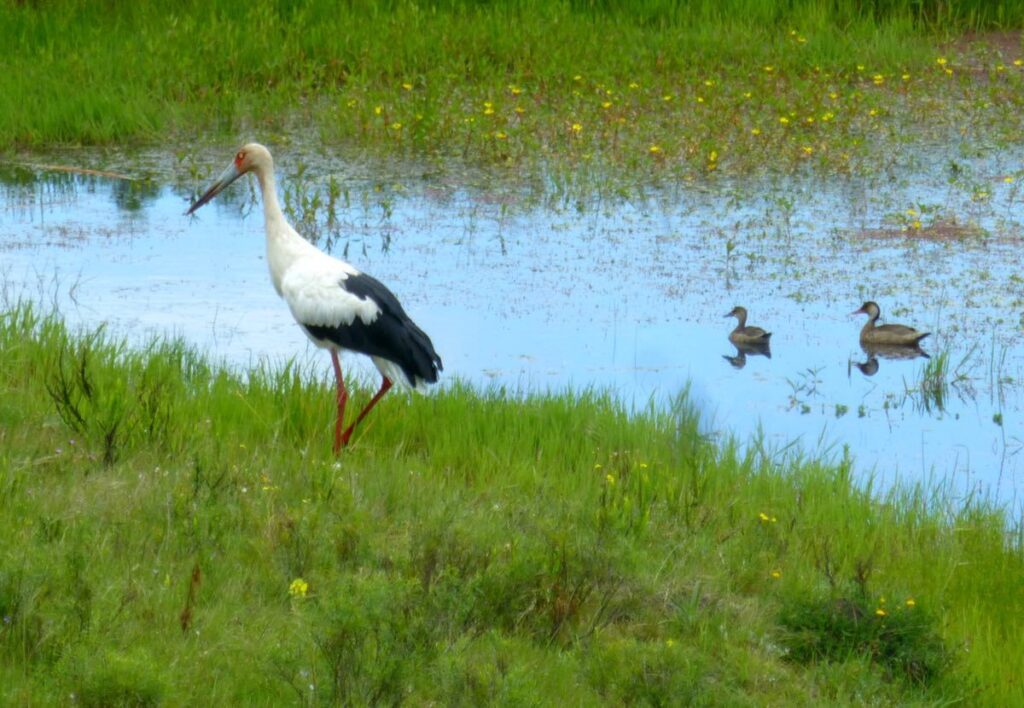
Maguari stork (Ciconia maguari) and ducks
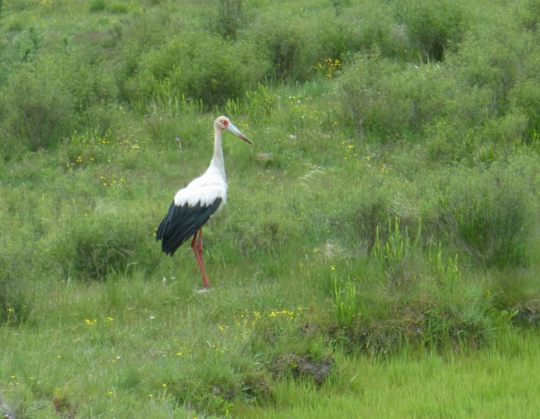
Its presence upsets the teros (Southern lapwing – Vanellus chilensis), but it clearly has no attention of going anywhere. They were hassling it when I arrived, and still an hour later.
An inquisitive old fart with a camera
Maguari stork (Ciconia maguari) and ducks
Its presence upsets the teros (Southern lapwing – Vanellus chilensis), but it clearly has no attention of going anywhere. They were hassling it when I arrived, and still an hour later.
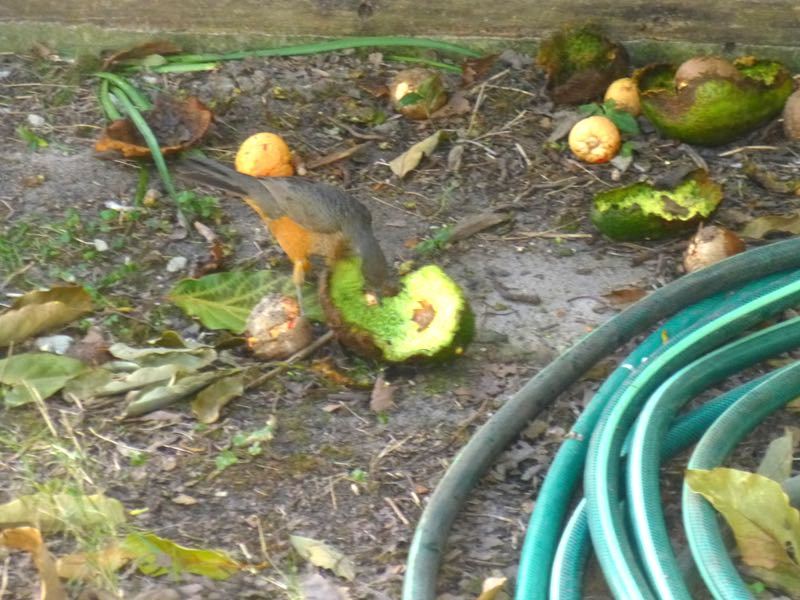
In previous years, we thought it was a comedreja (possum) eating our avocados. Nope – this year it’s birds. As you can see they’re doing a fine job. I must say, though, unlike some other birds, they are very thorough. Nothing goes to waste.
So I guess if the birds are happy, I am as well.


These guys like to let you know when the dogs get into their territory!
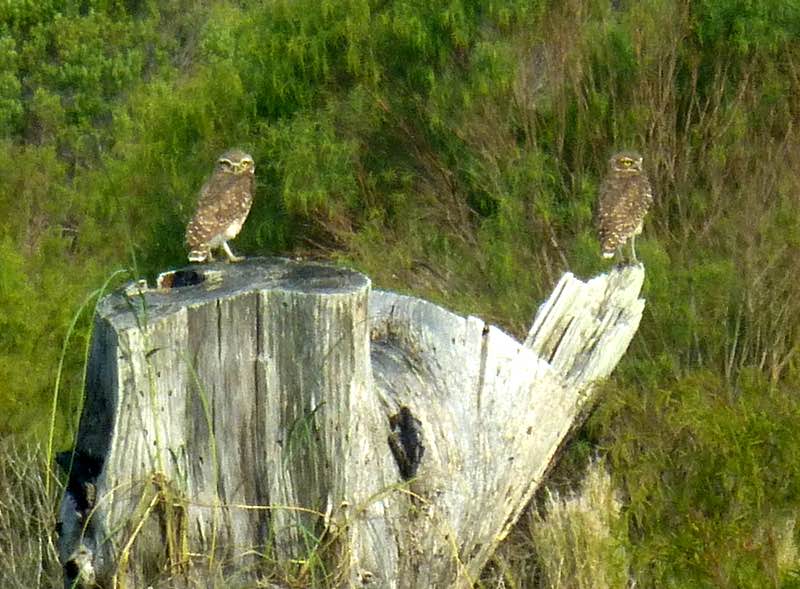
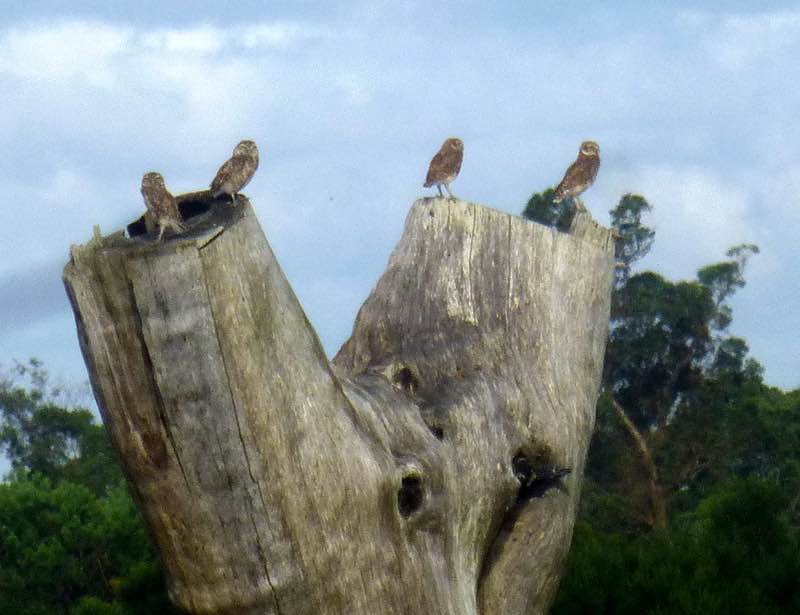
Taken with my Panasonic point-and-shoot camera, no tripod.

No, you didn’t ask, come to think of it. I snapped this a couple days ago, wondering “how on earth can I fit this into a blog post?”
The more you watch and listen to guinea fowl, the less sense they seem to make ….
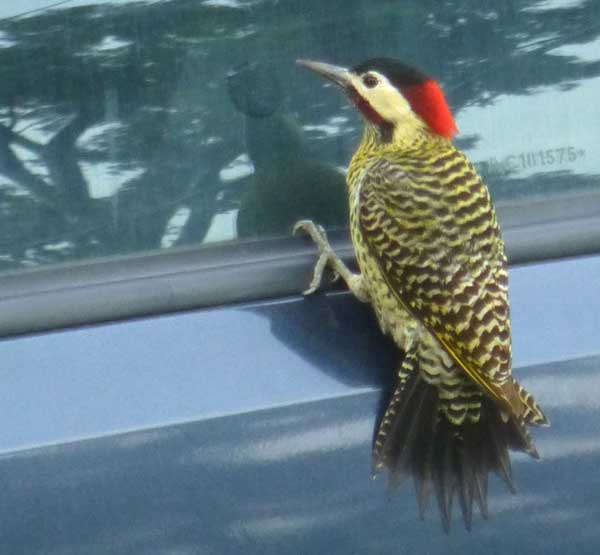
After shooting the short video, I closed the door and the bird flew away from the car …
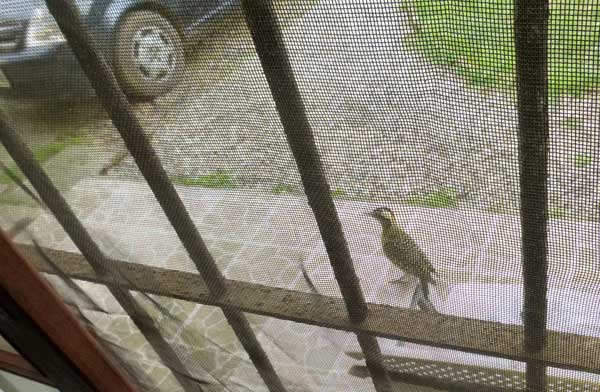
… only to settle on a chair outside my office window (also a favorite of the cat).
Green-barred Woodpecker (Colaptes melanochloros)
French: Pic vert et noir
German: Grünbindenspecht
Spanish: Carpintero Real or Carpintero Nuca Roja (Red-naped Woodpecker)
Other common names: Green-barred Flicker; Golden-breasted Woodpecker (melanolaimus group)
(Thanks to Jim Wiemann for the identification)
With the camera I have, very difficult to see subject in bright light

I have not spent much time in the campo lately, and was fully expecting to see the baby tero-teros.
Instead, I was not greeted by noise. The teros, near the tajamar (pond), remained quiet until I approached to check the water level.
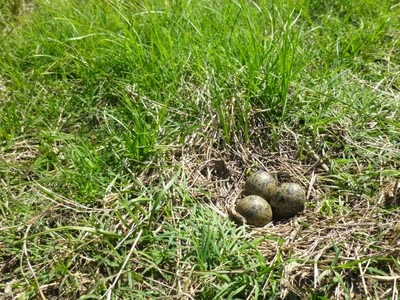
Here’s the nest. Empty. No eggs, no shells, nothing. I don’t know what transpired, but apparently we won’t be seeing little teros this summer.
Meanwhile, the water level has subsided in the tajamar with our recent suffocating heat. The grasses I planted to the left are high and dry, but hanging in there (and I learned that the second type of mystery floating plants, which I did not add, were put there by my neighbor Mañuel).
I try to keep my blogs short, so that if one is boring, at least, well, it’s short. But since we’re on the subjects of teros and water, I must relate a revelation: an Uruguayan guy about my age told me that when he was a kid, visiting his grandfather’s estancia (big country place), the teros hung around the water, in the thousands. When they took flight, they formed a cloud that blocked out the sun. With the advent of “modern” (i.e., unsustainable) agriculture, they adapted: so now you see them only in pairs, far from water, near streets, even on Avenida Italia in Montevideo. I never dreamed they could exist in a crowd.
A pair of territorial Southern Lapwings, or tero-teros as they’re called here after their raucous call, have created this “nest“ near our tajamar, and, given their aggressive nature, have staked their claim for a significantly larger area. I was able to get close to take this picture (they’re the size of very small chicken eggs) without them dive-bombing me.
When the young hatch, that will not be the case.