Mold

moldy wall in Uruguay

Given a combination of brick walls, poor construction (this is underneath a terrace that ‘sort of’ drains), and warm snaps during cold weather, Uruguay offers the perfect combination for growing mold on walls, shoes, and just about everything else.

Looking at building a house in the country (hey, what’s the problem?), we’re interested in alternative construction techniques.  One is steel framing. They call it ‘dry construction.’ A new and exciting construction technique for Uruguay!

Not everyone, it appears, is convinced. A friend tried to explain the virtues of building with insulation to an architect in Montevideo. He put his hand on the wall, and said that in the winter up north, instead of being cold, the inside of the wall would be room temperature. To which the architect replied, well, you can turn on a heater.

As another friend points out, turning on a heater in a damp brick room is the best possible way to accelerate mold growth.
Leñero

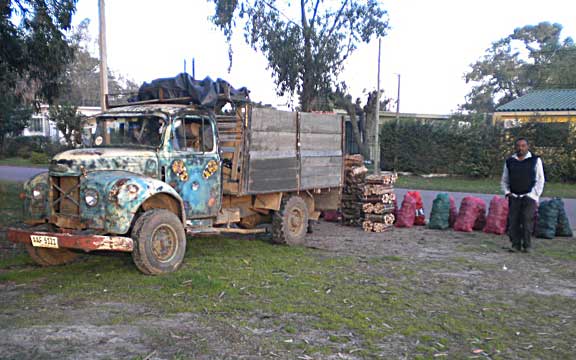
firewood truck, Atlántida, Uruguay

Leña means firewood, and the guy who sells it is a leñero. This guy appears on weekends and holidays near the zoo (yes, we have a zoo). He always waves to everybody. I’ve waved to him for a couple of years when I walk the dogs, thinking one of these days I want to ask him about that truck.

Finally did: 1954 Commer (English). He’s got a better one, he says, and plans to put the engine from this into that. I didn’t ask when, or how long he’s been planning that; meaningless questions in the land where ‘next week’ can mean ‘next month.’

Coffee in Yesterguay

Probably 98% of the coffee sold in super (and other) markets in Uruguay is ground and glaseado – meaning sugar added.

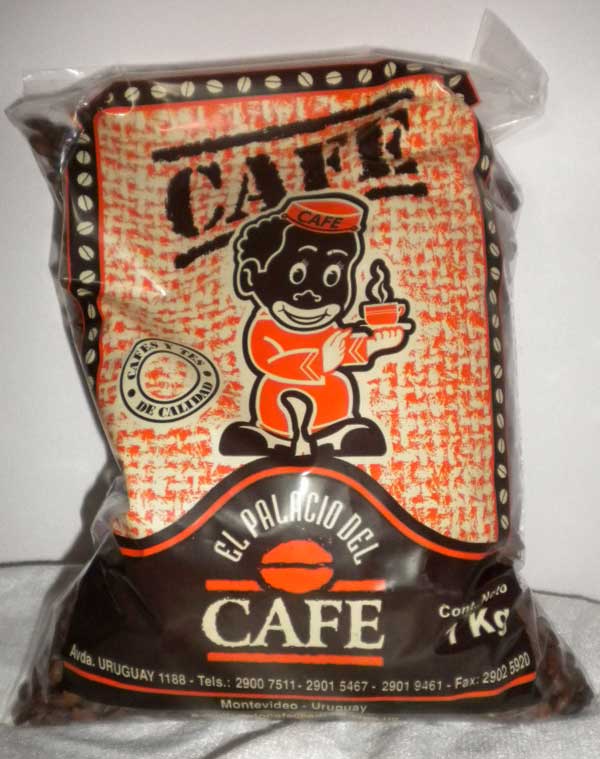
As far as I know, the only place to buy real coffee is Palacio del Cafe in Montevideo. They do not have a stunning selection, but they do have rather stunning packaging:

Coffee label in Uruguay in 2014: not exactly politically correct

You can also get their coffee at Tienda Inglesa in Punta del Este (in the bakery section, natch). In that case, however, you’ll get more modern (say, post-1930) graphics.
Current cost UYP 355/kg = USD 7.45/lb.

The Hanging Cow

Now, it’s not a Tarot card.

It’s what happens when you let an idiot put a pregnant cow into a loading shoot where she doesn’t have room to give birth, then produces a stillborn calf and can’t stand up, and your Uruguayan neighbors all show up to help.

The metal bit in the back is clamped onto the cow’s protruding pelvic bones. They rigged a beam between two trees. The back feet didn’t actually touch the ground.

Not our cow. We were called to help before the neighbors – who actually knew what to do – showed up.

Our remarkable new house

We have finally taken possession of a narrow strip of farmland (5.6 hectares, 13.837901 acres) about ten kilometers inland. Most remarkable about the house is that the couple who raised their family in for twenty years or so never got around to installing running water.

The hand-dug well is only about 20 meters from the back door for your flushing convenience. I think there was a basin, since removed.

The bathroom opening (no door) lies behind this brick curtain wall, which became a pile of rubble today in less than an hour.

To the credit of the sellers – who now live a kilometer down the road in a new house with running water and a fireplace (this one had no heat source other than a wood kitchen stove in the little closet of a kitchen) – the place was clean: not a bit of crap in the house whatsoever. A few bits in that rustic (and rusty) galpon (barn), whose side sheathing consists of the sides of metal barrels that have been straightened.

Ñuke: wretched Argentinian wood stove

We recently bought a new Chilean wood stove with a five year guarantee.

It replaces the poorly designed, ugly, poorly built Argentinian Ñuke (great name, eh?) that we have had two and half years.

With its top removed, you can see (lower arrow) an air channel for secondary combustion that was completely filled with rust flakes, and (top arrow) a triangular air tube whose top was almost completely rusted off. I bought fire bricks in a local supply yard to replace the ones the Ñuke chimney cleaner broke and never replaced.

We’ll probably find a use for this in the campo now that we’ve finally taken possession of our farm land and remarkable little house (more to follow).

Speaking of which, I’m thinking of writing a(nother) book: 14 Acres and No Clue.

Tools, or toys?

Our friend Patrick informs us that the Chinese make first-rate goods, which they sell in Europe, Japan, and the USA. Then they make second-tier stuff for developing countries where people can’t afford the best. Finally, they produce such wretched crap that Bangladeshi refugees would refuse it. And that’s what they sell in Uruguay.

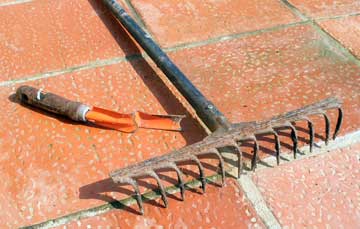
Lo barato sale caro. What’s cheap stuff ends up being expensive – because you have to buy it over and over again. Here’s a weed trowel that lasted maybe 15 minutes before bending in half, and a stamped metal ‘iron’ rake. Note that it’s barely more than a foot wide. I didn’t think to include my turning fork, where one tine, one day, simply bent at a 45° angle to the other three. In dirt.

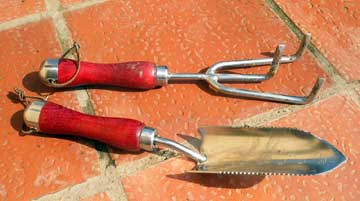
So imagine my amazement when I found these gems at Tienda Inglesa!

Solid, stainless steel (though stainless steel can be all over the map on terms of quality), a bit under ten bucks each. Paid with shopping points on our Tienda Inglesa tarjeta de puntos.

I haven’t really put them to the test yet, but I am (drum roll, please)…

…cautiously optimistic.

Birds

As I washed dishes, I noticed something large and unusual in the backyard: a gallineta (ga•zhee•NET•ah). Beautiful bird who wakes us at 6 AM with a chorus of calls that sound like donkeys being answered by owls.

Reminds me that in the campo – a few km inland where we are now the owners of a 5.6 hectare (13.87 acre) farm of sorts – the neighbors call the guinea fowl who come to visit us gallineta. They also have their own word for gate. And who nows how many other things as well.

Frogs

The frogs are back. Some frogs, anyway.

After all the rain, I’ve been hearing them the last couple nights. They sound like frogs, which makes sense.

Except in the previous couple years, they’ve sounded like cats. Mew, mew, mew…. Our German neighbor said that when he first moved here, he enjoyed that sound of nature, but had no idea what it was.

So now we have frogs that sound like frogs, and it’s weird.