And when it ended, the area surrounding us became an amazing chorus of frogs. In this short clip I kept panning, hoping to catch distant flashes of lightning, to no avail.
Uruguayans apparently find nothing annoying, unnecessary, or unusual about waiting 15 or 20 minutes for an ATM (even where it replaces what used to be two ATMs).
You could always go into the bank to withdraw money, but that’s a minimum of 30,000 pesos (USD 1,600; 28% more than when we first arrived). Inside the bank, you would take a number, and often wait 45 minutes or more before getting to the counter.
That, of course, only if you happen to be there at the right time.
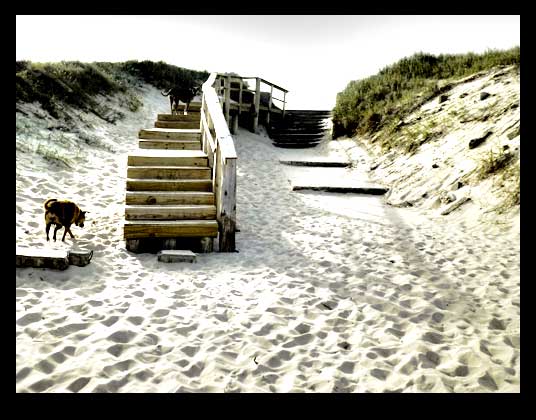
Though I took this a few days ago, the weather has remained lovely
I find March is usually the most pleasant month in Uruguay: the heat has abated, the hordes have returned to Montevideo and Buenos Aires, and while not guaranteed, there’s a good chance of some lovely days for long walks on the beach.
Neighbors have loaded in tons of firewood for the winter. I will wait until I have to.
Have I mentioned that I was once a professional photographer? Good, then. Forget I said it.
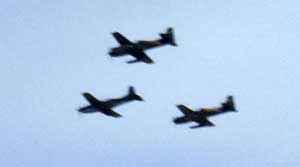
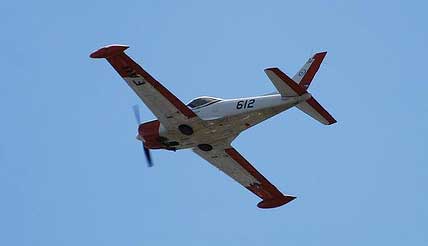
Took off for the beach with the dog, and saw several squadrons of three prop planes (apparently the Aermacchi SF.260s I mentioned yesterday).
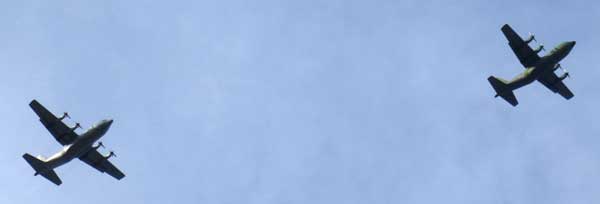
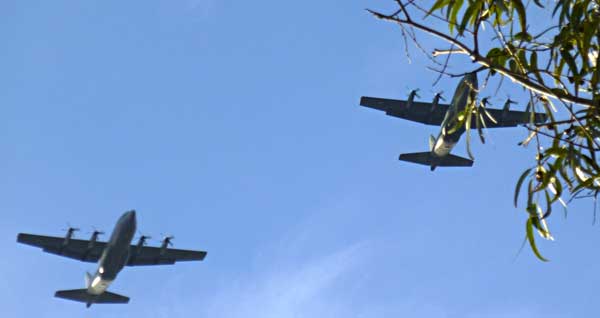
I remembered from yesterday’s Wikipedia check that the Fuerza Aéria Uruguaya has two C-130s, cargo planes I’ve always thought are kind of cool, and lo and behold, they flew overhead, the first of many many times. All two of them.
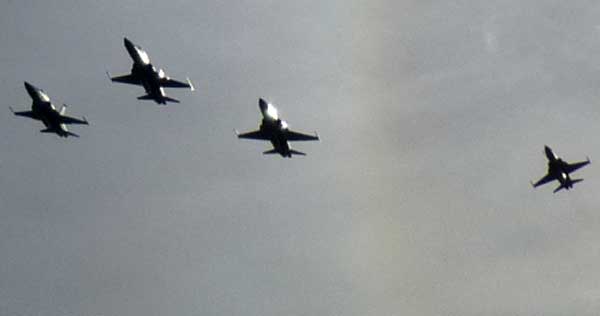
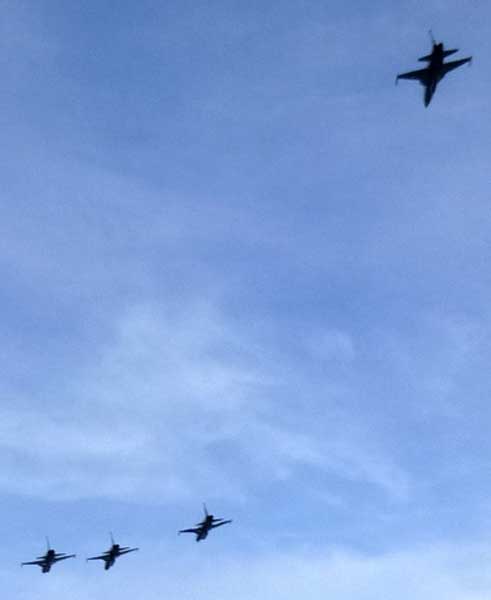
Then a screaming approach, and I could barely get my camera out fast enough to catch these guys:
… coming and going …
… which appear to be Northup F-5s, though according to Wikipedia the UY Air Force doesn’t have any. Oh my, Wikipedia not true? Who knew?
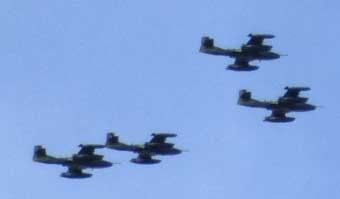
Then these guys, the Cessna A-37 Dragonflies I mentioned yesterday.
And the C-130s kept doing their circles.
I met my neighbor riding her 3-wheeled cargo bike to exercise her dogs. She asked about our big dog, and I asked her about the planes, and she said today is the aniversario of the Air Force. Lo and behold, from Wikipedia: Military aviation in Uruguay was born on 17 March 1913 when the Military Aviation Academy (Escuela de Aviación Militar) was formed at a small airport 50 km from Montevideo. The first aircraft were a Farman Longhorn biplane and a Blériot XI monoplane.So let’s put this in perspective: the planes flying overhead today, the current inventory of the Uruguayan Air Force, are all designs about 50 years old (C-130 a bit older). 50 years before that, the Air Force was started with this:
and this:
And the current technology? 100 years. You don’t have to be into planes, but they illustrate it well.
In the country, we often see one or two prop-driven trainers from the Uruguay Air Force, which has a base nearby in Pando. All depends on whether they have fuel or not. Seriously.
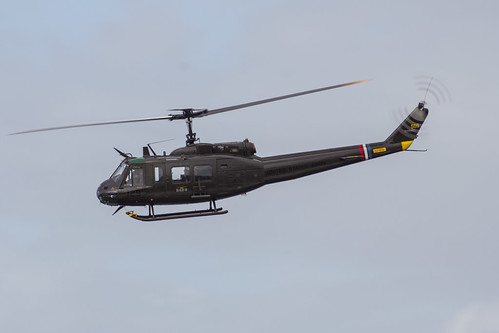
In town, the window near my desk faces the ocean, so I get to see what’s flying back and forth between Montevideo and Punta del Este. Very little, usually; some corporate-type helicopters occasionally, or a Vietnam-War-era Huey helicopter (introduced in 1956).
Today, three Air Force jets flew out and then back, and seven prop planes in formation, none of which I’ve ever seen before. I had to look them up: the jets appear to be Cessna A-37 Dragonflies (introduced in 1964):
The prop planes I’m guessing are Aermacchi SF.260s (also introduced in 1964):
Which all seems hopelessly quaint, especially compared to mighty (and mighty expensive) beasts like the US F-35 Joint Strike Fighter and the F-22 Raptor, but the fact remains that the little planes of the Fuerza Aérea Uruguaya are actually flying (unlike the F-35) and not killing their pilots (one of those unfortunate things the F-22 tends to do).
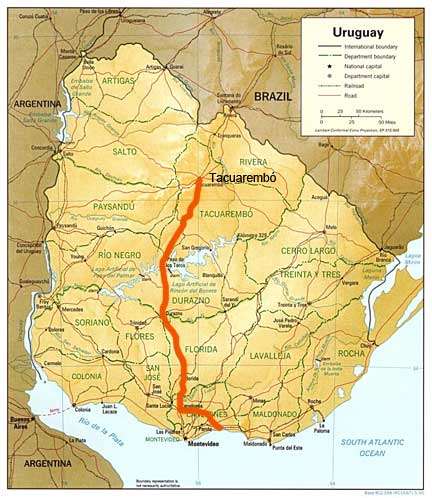
Last weekend, I drove with friends a frightfully long distance (for Uruguay) – five hours to Tacuarembó, site of the 27th annual Fiesta de la Patria Gaucha.
On Saturday, they had a parade through the town that included over 3,300 horses. Umm, yeah, get it. That’s a lot of horses.