The aliens of Tiwanaku (Bolivia)

Tiwanaku lies close to Lake Titicaca, the highest navigable lake in the world, divided between Perú and Bolivia (the joke goes that Perú got the Titi and Bolivia the caca — OK: hey, I just work here). I found the site  underwhelming. The “reconstruction” and archeology feels contrived and inaccurate.

However.

From this courtyard, the very large “Bennett” monolith was excavated, displayed in La Paz for 70 years, then “returned” to a museum hall nearby where it would be safe from pollution and pigeon crap. When I descended the metal stairs with Antonio Portugal, there were very few people present (unlike this picture I took a few minutes later).

Tiahuanaco, Bolivia

Jutting out from all sides are facial representations, each is carved on a piece of rock a meter or so long, he told me, based on other excavations. Caraclavos, I think he called them: face nails.

tiwa-2

They supposedly represent every different race. In some cases, clearly, better than others.

tiwa-3

When I spotted the one below, I turned to Antonio and gestured toward it. He simply pointed upwards. Yes, aliens.

tiwa-4

And I thought of the “Starchild” skull we had seen in Paracas.

tiwa-5

Then there’s another that seems just a little out of place.

tiwa-6

This made me think of the Andayhuaylillas Museum and its enigmatic Huayqui skeleton, which some (and clearly the people who created the display) believe to be a hybrid human.

tiwa-7

This was typical of the experiences on this trip: walk into a place with absolutely no prior knowledge, notice something with no prodding, ask a question without speaking, to be answered by an expert* with a single silent gesture.

* he has been researching Tiwanaku for decades. He showed us the site map done with ground-penetrating radar, which reveals large subterranean chambers. Alas, permission for excavation unlikely any time soon, he says, because the locals (and current political leadership) don’t want to know that the builders weren’t their ancestors. Who knows?
The happy sound of chain saws

Atlántida can be a (relatively) noisy place — sometimes I refer to it as “Alarmtida.” In addition to regular and specious security “threats“ duly announced by neighbors’ alarm systems, we have weed-eaters, gas leaf blowers, lawn mowers, and chainsaws. The chainsaws have been mosquito-annoying persistent for a couple days. My wife had a revelation today, when all of a sudden her upstairs office lit up for the first time in the winter afternoon sun.

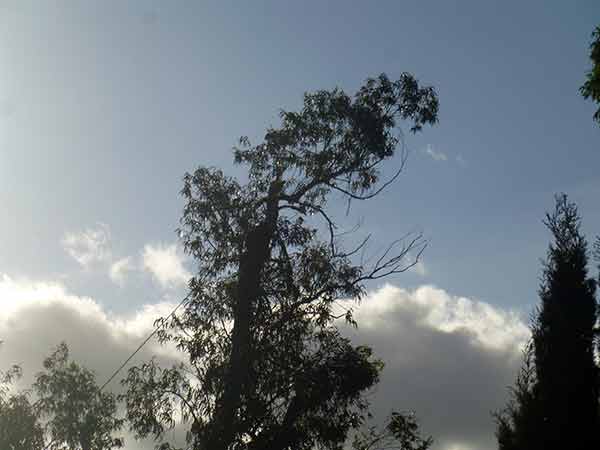
Turns out the neighbors spooked (perhaps) with the latest windstorm, and decided to remove a eucalyptus tree or two towering 40 meters or so to our northwest, where it/they blocked a significant amount of our afternoon sun (when you live in the south, the sun’s in the north).

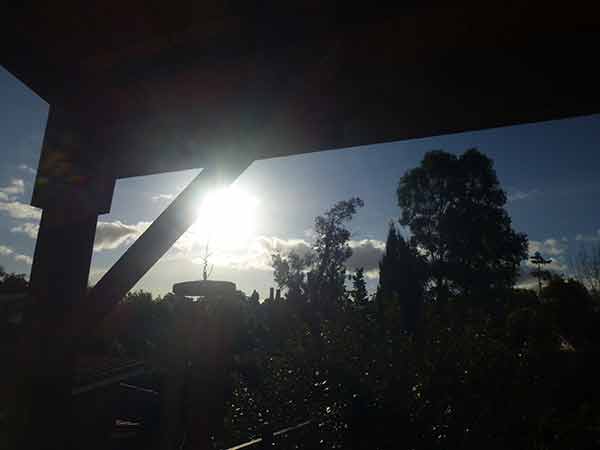
A little hard to convey in pictures, especially when your point is, “Hey, the sun’s not blocked there anymore!”

euc-2
From the balcony upstairs, outside my wife’s office window.

Most of the way up the tree in the middle, a guy with a chainsaw negotiated next moves and lowering of cut branches with the crew on the ground.

euc-1

Seriously, there’s a guy in there somewhere with a freaking chain saw — about where the rope comes up from the lower left. At this point, half the tree horizontally has gone, and probably the top quarter of what remains. The neighbors will have a few years of firewood out of this. Good on ‘em (and thanks)!

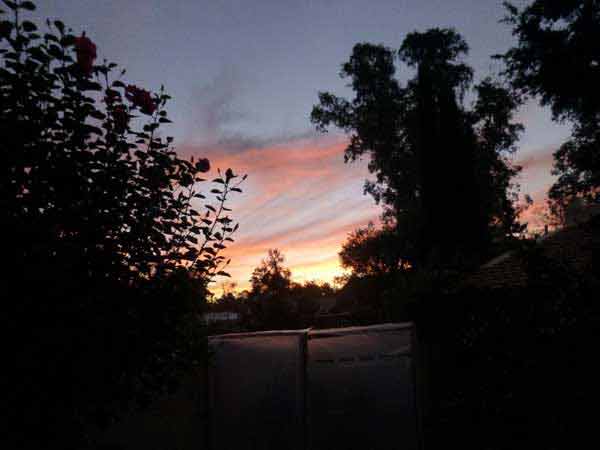
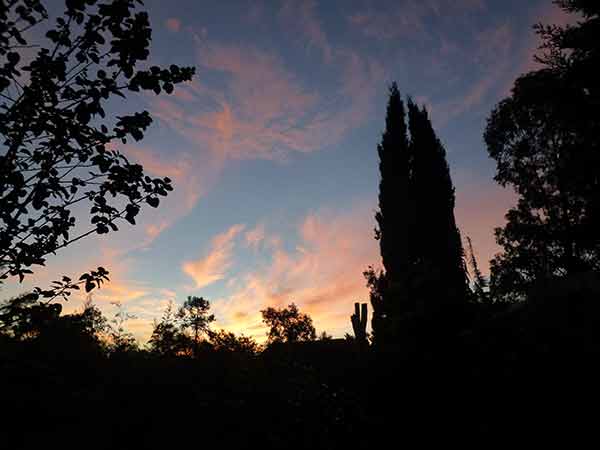
The arbor vitae in the foreground doesn’t show from this sunset photo in June 2014.

sunset-3

And because it’s close, looks equivalent in this photo I took tonight. It’s not (notice the twin stumps of the removed tree, just left of it). This represents a huge, and wonderful, increase of light into our back yard. Sun glaring in the kitchen window — a new winter afternoon treat!

The microclimate of our back yard has just changed, for the better in terms of gardening, perhaps more challenging in terms of mitigating summer heat.

Always interesting to observe changes, no?

Cusco morning

Morning, Cusco

After three nights in a strange room in the Hotel Ruinas in Cusco, which opened onto the lobby, whose only ventilation was the bathroom fan which involved leaving on an extremely bright ceiling light all night, which guaranteed disrupted sleep, we returned there the final night to a wonderful room with a balcony (#306) — and this gorgeous view in the morning.

Tipon: an Inca terraforming masterpiece

Located near Cusco, Tipon isn’t mind-blowing like Machu Pic’chu or Ollantaytambo. But it is an amazing place.

I realize I’ve been kind of slamming the Incas: not because they were incapable of the megalithic work they built on, which is technologically more advanced than anything we can do even now, but because of the “stupid history” that gives them credit for work they could not possibly have done.

I didn’t show it yesterday, but here’s the side of the cave opposite the megalithic “portal.” Megalithic “altar” behind the dude with the hat.

Umm, not quite megalithic.
Umm, not quite megalithic. Not complaining, just saying.

Tipon has a number of well-watered terraces, a collection of microclimates. But your first introduction is a small gurgling waterfall.

Tipon. Cusco, Perú

Channeled from another waterfall.

Tipon. Cusco, Perú

And then you realize there are many of them, on every wall, every corner.

Tipon. Cusco, Perú

Our guide, shaman Dr. Theo Paredes, urged us to pay attention to the distinct sounds of each. When I observed many empty streams (the walls above and to the left), he explained that work was being done on the aqueduct from the source, 2 km away. I could only imagine that with all flowing, the atmosphere must be magic. As it was, all who visited left feeling energized.

Near the very top, the water enters through four streams. Simple, yes?
Tipon. Cusco, Perú

No! The water enters as one stream, which is divided into two streams, which recombine to one stream, which is then fanned out into four channels (that is not just perspective; the final four streams are farther apart at the end than the beginning).

Tipon. Cusco, Perú

As Theo tried to explain, what’s going on here is a profound understanding of energies we tend to ignore. Given his credentials —  struck by lightning twice, first time at age 11 — I am happy to accept his word that more is happening here than I perceive.

Tipon, Peru

So it was a place of healing as well as agriculture. And it wouldn’t have been monochromatic — amazing to imagine the effect of the water and geometry with the terraces planted in vibrant colors. Why not?
tulips

The megalithic cave temple

Returning from Ollantaytambo, we turned off the main road near the Skylodge Adventure Suites, where you can spend the night in a hotel room hanging off the side of a cliff. You can. Me, no thanks.

After winding along a riverbed with 1,000′ cliffs either side, we were let out to scramble up a steep terraced incline to a triangular cave.

Climbing to the megalithic temple
Photo: Chester Jagiello

Megalithic cave temple

Inside, we found a perfectly machined wall and “portal.”

cave-portal

Our guide Wilco explained that in his grandfather’s day, the cave was open and extended very far into the hillside, but had collapsed at some point. The recessed ridges in the “portal” represent levels of consciousness. Portal to where? None of us found out (I think).

Megalithic cave temple, Perú

I spent a few minutes sitting in it, not as long as I’d have liked (we were quite a few people), but long enough to experience a gentle probing contact, like tentacles of consciousness coming from the rock on either side of me.

Then onto the megalithic gem at the mouth of the cave.

Megalithic cave temple, Perú
Photo: Chester Jagiello

Wilco explained this could be used kneeling, facing the morning sun, or sitting, allowing the energy to be channeled through the base of your skull. Being late in the day, there was no sun.

Megalithic cave temple, Perú
Photo: Chester Jagiello

Again, I took only a short time, out of respect for others. I didn’t feel much here — until I was ready to get up. Then I felt a distinct need to ask permission to disengage (immediately granted). Nobody had mentioned anything like this, nor had I thought of it before. But it clearly felt like the necessary and respectful thing to do.

On the train to Machu Pic’chu

Photo: Chester Jagiello

Life among the easily amused: pity those poor bored tourists behind, missing the subtle excitement of observation and discovery.

nazca-flight

On the other hand, perhaps it’s just me: preparing to fly over the Nazca lines.


Ollantaytambo

Ollantaytambo: looking beyond the rock piles

At the end of Perú’s sacred valley lie massive terraces towering above the town of Ollantaytambo.

Olantaytambo, Perú

Fortress, experimental planting center, hangout for the elite, it reflects the Inca’s awesome organizational skills.

ollay-4

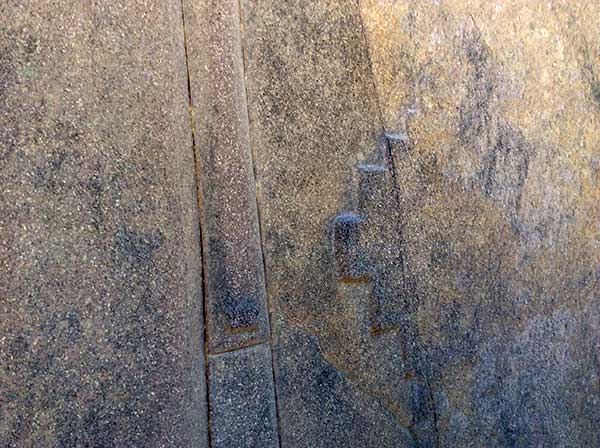
But, again, the fun begins with details at the bottom: megalithic carving and stonework.

ollay-2
The incas carved flat surfaces and interior corners into solid rock with copper chisels? I don’t think so.

ollay-3


And at the top, more distinctly megalithic remains. Note the monster monolith, upper right.

ollay-5

ollay-6
C’mon now, give me a copper chisel and I’ll show you how it’s done!

ollay-7

Towards the top, an amazing wall of six  monoliths, generally attributed  — without a shred of evidence — to the Incas.

Ollantaytambo, Sacred Valley, Peru
Photo: Chester Jagiello

Here you can get an idea of the size of the rocks. And see that mountain in the background? That’s where they were quarried — somewhere the other side of it.

Ollantaytambo, Sacred Valley, Peru

Here’s a closeup, a section perhaps a meter high. And the relief to the right is not a design, insisted Stephen Mehlen, one of many interesting people along on the tour.  Purely functional. How? Probably in a way an Inca with a copper chisel would be hard-pressed to explain.

Ollantaytambo, Sacred Valley, Peru

Think energy, vibration, frequency….

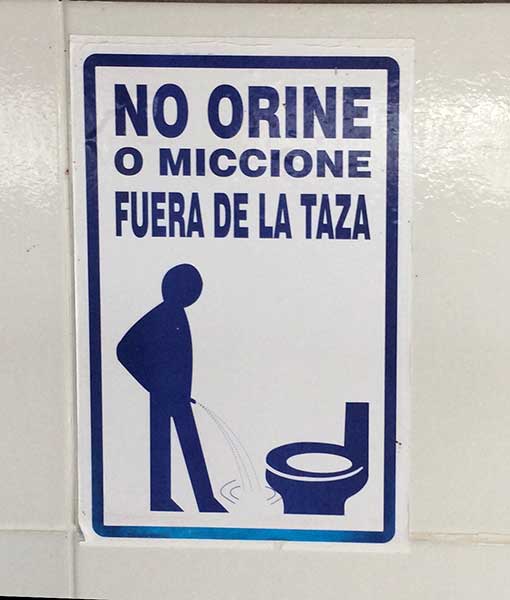
Putting the graphic back in design

graphic-design

Between Paracas and Naxca, Perú. Perhaps because the image shows the exact opposite of what they want you to do, the message doubles down: “Don’t urinate or piss outside the bowl.” Further adding to its charm, it’s posted above urinals, not toilets.

Machu Pic’chu: a few observations

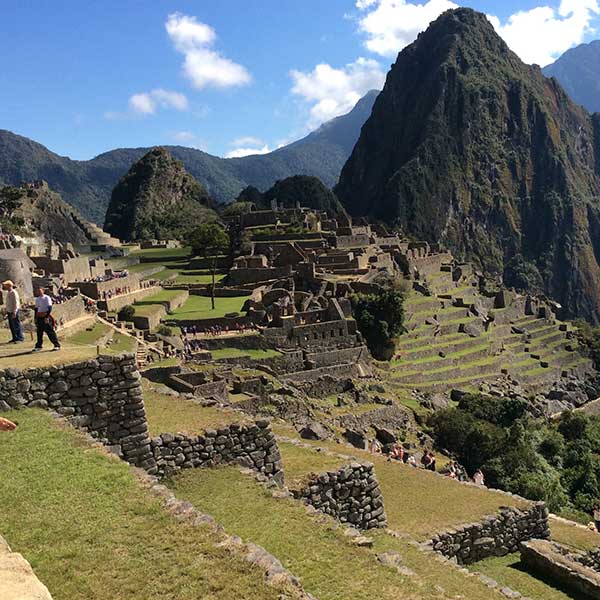
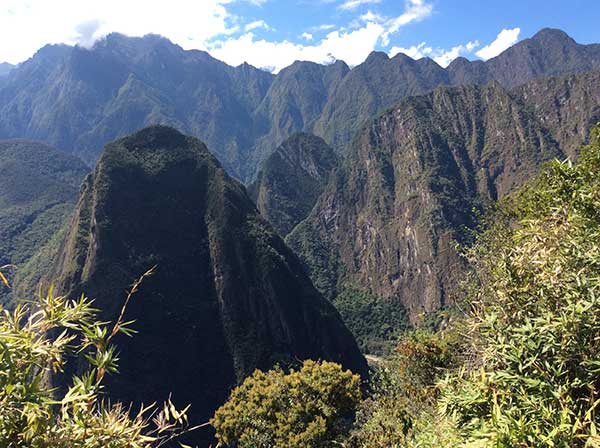
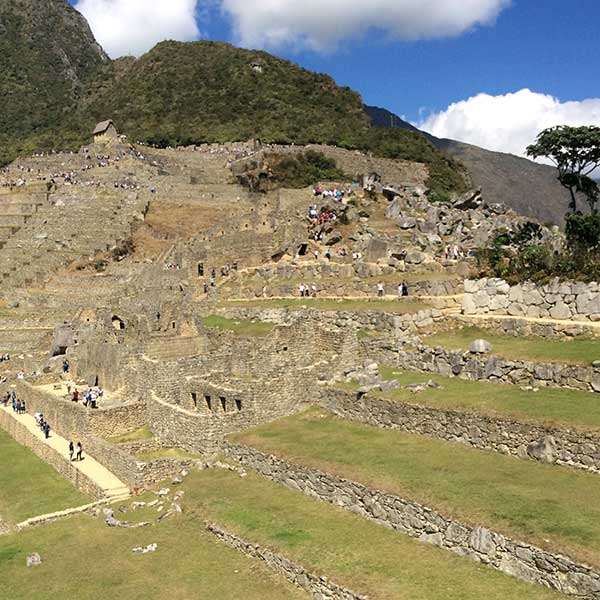
Observation 1: insane verticality

Machu Picchu: vertical, vertical, vertical

We didn’t climb Huayna Picchu in the background, restricted to not-too-many people per day. We didn’t have time. Yes, I’d want to on another trip. Then there’s Putucusi, opposite Machu Pic’chu. Reports vary on its current accessibility, but back in the day, our guide Wilco told me, it took days to climb, hacking with machetes all the way on ancient Inca steps/trail to arrive at a small slab temple at the top.

m-p-2.5

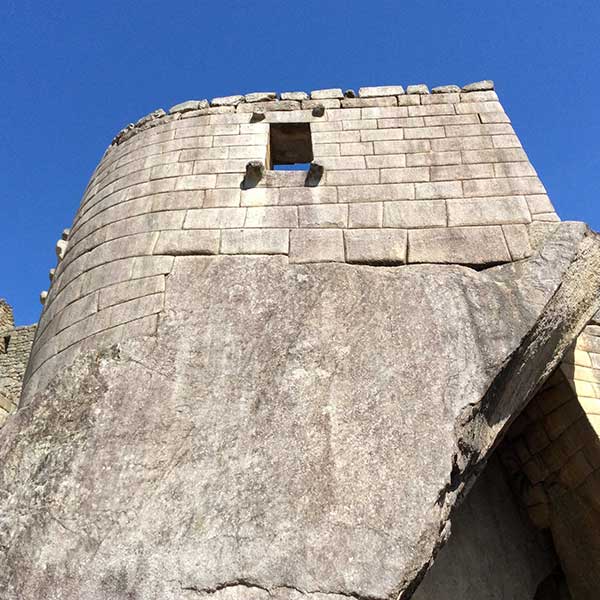
Observation 2: Inca: new kids on the block

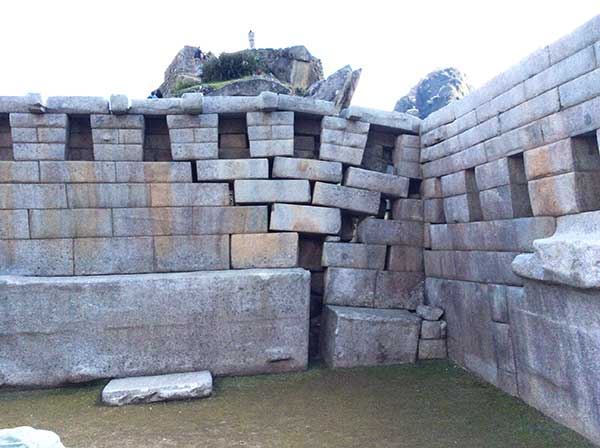
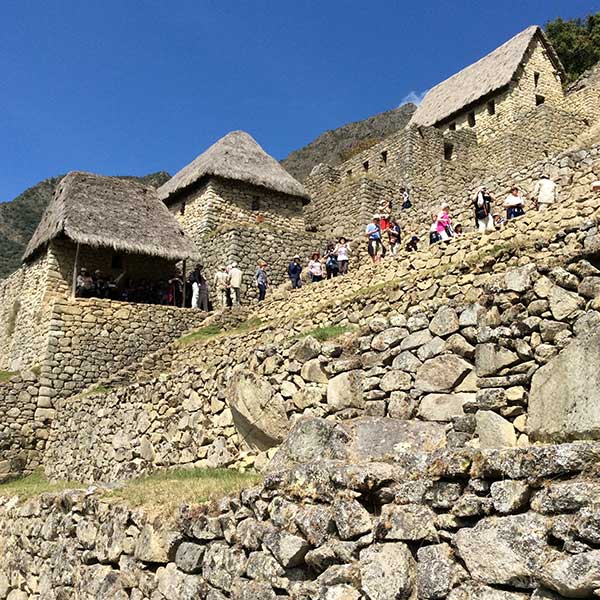
“Temple of the Sun,’ with a couple tiers of Inca stonework added at the top. Notice the difference in workmanship?

MAchu Picchu, Temple of the Sun
m-p-3

Original stonework, right. Inca stonework, left.

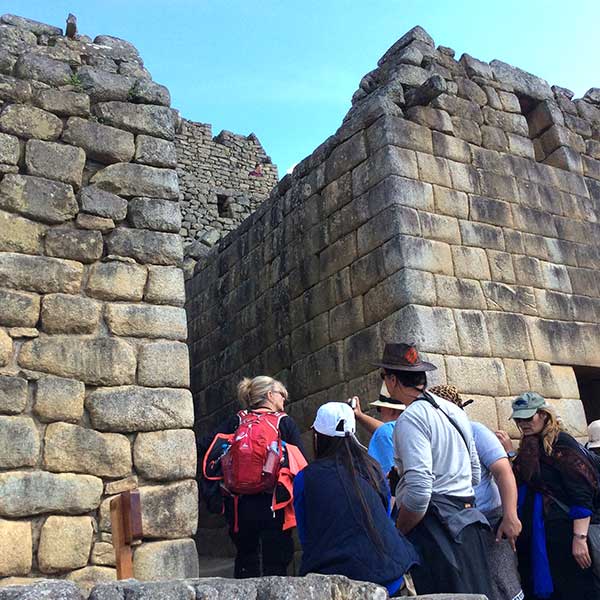
Observation 3: the smoking gun

Inca and pre-inca megolithic stonework, Machu Picchu, Peru

Something happened here! On one of Brien Foerster’s earlier trips, he told me, a geologist had supposed that a magnitude-9 or so earthquake had liquified the soil under the part on the right, causing it to sink and pull the megalithic wall apart.

Inca stone buildings, Machu Pic'chu

Given such a powerful shake, how is it that these Inca buildings remained standing?

Answer: they didn’t, obviously. The hadn’t been built yet.

Observation 4: lotsa people. OK.

m-p-1.3

I expected that thousands of people swarming the site would sully the experience. Not even close. I hardly noticed them, except in constricted areas. When I told our local guide about Syd’s free-wandering experience there in the 1980s, he lit up with recollections of how he started guiding when he was 16, in the 1980s. In those days, he said, sometimes they’d play an impromptu game of soccer ball in the main courtyard.

These days, that would cause lots of whistle-blowing, but it wouldn’t be from referees.