Boutique olive oil producer worth a visit

Guest post by Syd Blackwell

LOTE 8 – Viví Una Expeeriencia Única

View on Ruta 12, Dep. Maldonado, Uruguay
© Google

If you drive east on the interbalnearia (coastal highway) from Montevideo, then switch to Ruta 9 at Pan de Azucar, you will reach the start of Ruta 12, that runs north towards the tiny village (less than 100 persons) of Pueblo Edén, Uruguay. The vibrantly green hills and valleys along this route are, in my opinion, the most scenic of Uruguay. On one of these hills, just north of the village, you will find Lote 8, a unique experience in olive oil production.

Lote 8, olive oil producer, Uruguay

The operation, owned by an Argentinian family, offers tours, tastings, and, of course, the opportunity to purchase products. As recommended, we pre-booked a tour for our group of four, to ensure we would have the services of Martin, an English-speaking guide. We wished, as their brochure offers, “to enjoy a unique place where nature and passion transform its fruit into true art.” We were not disappointed.

Olive trees, Lote 8, Uruguay

The property is lovely; the vistas superb. Martin began his tour among the olive trees, where the fruit was still green and not yet ready to harvest. He explained two different methods of harvest, one with a finger-like device to strip olives from the branches, and one a shaking device to shake down olives. Matting below the trees catches the harvest.

Olive oil processing plant, Lote 8, Uruguay

Next, we followed the route of the fruit. First to a large grilled square in the floor where the harvest is dumped, and the conveyor that lifts it up to where the leaves and twigs are separated. Then the product moves through other machines that mix it with water, pulverize it into a slurry, and eventually separate out the valued oil. Finally, it is packaged, most in utilitarian bottles for Uruguayan supermarkets and such, and some in specially designed Mexican hand-blown glass bottles, suitable for gift purchases. Other products, such as soaps, candles, and chocolates, made with olive oil, are also available in the gift shop.

Lote 8 olive oil production plant, Uruguay

The buildings, the machinery, the layout, the total operation is just first-class. Great care is taken to produce this oil. Work also continues to add more features, more site beauty, to what is already remarkable. Step out of the processing room door and you look across a lily-pad covered pond, flanked by a bed of lavender, down and cross the grand greenness all around. This is a delight for visitors and workers alike.

Lote 8 olive oil, Uruguay

The main product, La Repisada extra virgin olive oil, has already won numerous international awards, some of which are on display in the gift shop. Each of us purchased items for personal use and future gifts.

We were totally delighted with our experience and would definitely recommend a visit. More information and contact email can be found on their website.


A special thank you to Karen Higgs, who suggested such a visit in her blog, Guru’guay. Also, if you tell them you read Karen’s article [link no longer exists], you are given a discount on your purchases!

All photos except the first by Syd Blackwell.

DTOTB

It’s been a long time since I posted Dead Things On The Beach, but today’s was quite impressive.

Dead sea turtle and dog, Atlántida, Uruguay

As was Benji’s response. Until I got close, I was convinced the turtle was going to move.

As usual, how and why of its demise remain a mystery.


Taco wisdom

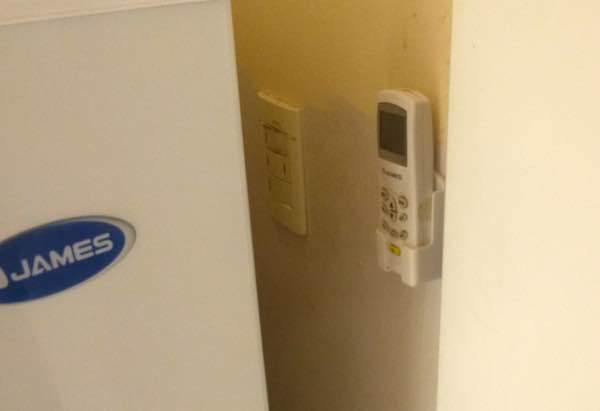
When we installed an “inverter” split (DC, variable, no motor noise) in our bedroom, we moved the noisy split (AC/heater/dehumidifier) unit to our dining room. Finally, today, I mounted its remote control to the wall, removing two pieces of clutter from the counter top.

Took me ten years to figure this out.

But that’s not the story. In north North America, hanging something on a wall is pretty simple, dealing with drywall and (usually) wood studs. In south North America, and South America, our home for ten years, you deal with a different situation: plaster and brick walls. In Uruguay the requisite plastic expanding anchors are called Tacos Fisher, and I’ve often found myself sticking wood slivers or broken toothpicks alongside them because the hole ends up too big.

Until I figured it out.

To install a wall anchor, do not drill a hole.

This will be obvious to a machinist, or someone who has worked a lot with metal, but I am neither. You don’t drill a hole: you drill a hole twice, the first time with a smaller drill bit. You then use the proper-size drill as a reamer.

Voilá!

I can’t believe it took me over nine years to figure that out :0

Name that beverage redux

Thanks OSE: Uruguay tap water

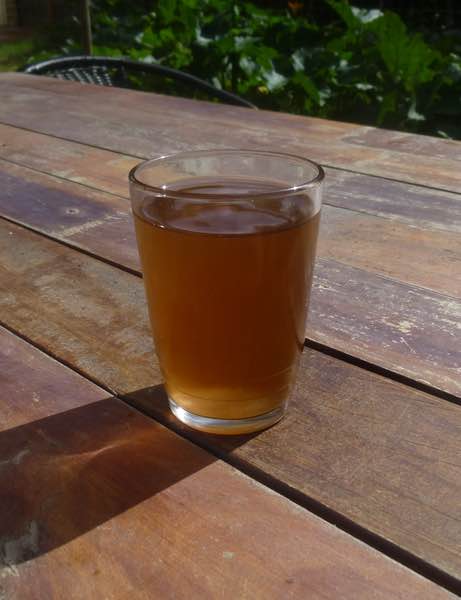
No, it’s not Earl Grey tea. It’s our tap water this morning, following a stormy night. The water will clear up with time. But if you were to visit Uruguay believing the claim that all the tap water is drinkable and see this, you might have second thoughts.

On the other hand, I remember well when a friend in Germany sent us some Heilerde. Maybe a little dirt is good for you?


De-cluttering

I’ve been reading The Joy of Less: A Minimalist Guide to Declutter, Organize, and Simplify, a needful reminder.  We may have moved to Uruguay somewhat minimally — ten suitcases and a pallet with sixteen cartons, a BMX bike, and a floor lamp — but oh my, how stuff has collected since! Some of the ideas in The Joy Of Less I had come up with on my own. In the 1980s, I parted with my yearbook collection and (worthless, seriously) old journals in Germany by putting them in a box with a “dispose” date. In 1997, when my father died, I took all the tools and materials in his workshop I’d known inside and out for over thirty years and laid them out in the “wrong” places, making it simple work indeed to sort trash from treasure the next morning. It was like walking into someone else’s garage sale.

In the past week, several boxes, some with perfectly good stuff, have gone to EMAUS, the local thrift store. For example, the electric buffer I bought, thinking I would assume a more conscientious attitude toward our car’s appearance. I didn’t. A nice hard shell suitcase that became “oversize” after its first trip when the airlines changed their specifications. A heavy-duty hoe that I thought just the ticket for cleaning the ditch in front of our house. Wrong. It’s simply taken up space in the garage for over six years.

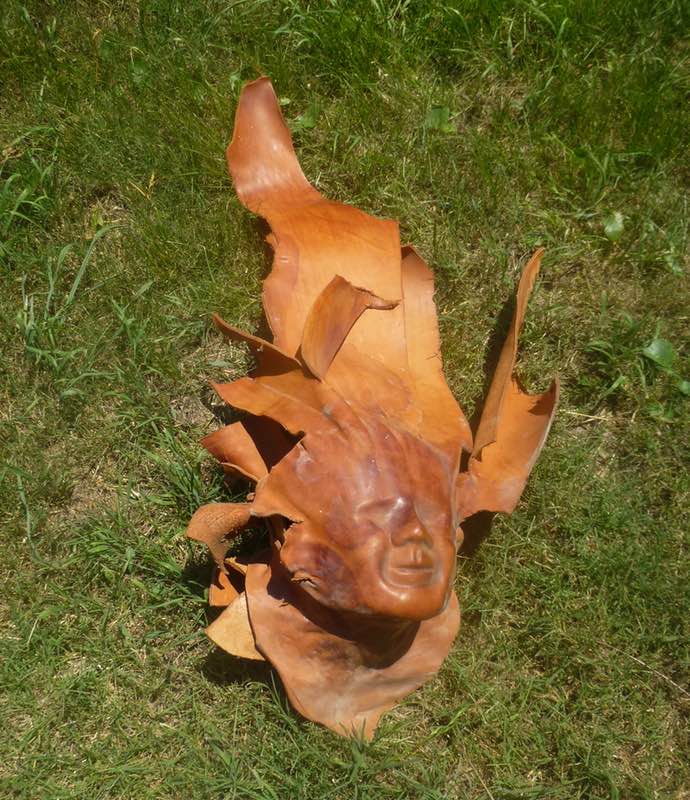
And for almost two years I’ve had the uncompleted, last work of Tex Farrell stored with our suitcases above the stairs. Haunting as it is, and fascinating a glimpse of his technique as it is, there’s no really good way to display it. And what to do with some large pieces of his leather he left? Aha! Knife and straightedge and now we have dog protection for our “new” leather couches, recently purchased from a couple who moved back to Europe.

leather protection for leather couch
OK, not particularly fashionable, but neither is a 4′ x 8′ painting I did when I was 17

But what exactly to do with this?

The last, uncompleted leather work of Tex Farrel

Today I took the scraps from the couch pieces to Carlos, shoe maker and repairer who has a tiny storefront in Atlántida. I also took the incomplete head, figuring he could at least use some of the leather.

To my surprise, he was absolutely delighted to receive it, and explained that it was of his friend Tex’s nieta — granddaughter. It wouldn’t mean anything for anyone else, he explained in Spanish, but it means a lot to me.

Another de-cluttering win-win!

Another one bites the dust

Summer traffic — and we’re now in peak summer season — tends to be horrific.

Motorcycle wreck, Atlántida, Uruguay
Though other vehicle is removed, not too hard to parse: note the skid mark. Posted speed limit: 60 km (36 mph)

convergence of eastbound traffic

We live at the convergence of Punta-bound traffic from all points west. Punta del Este is the glitz capital of the southern hemisphere in January. We avoid it like the plague, but people who want to be there don’t want to be anywhere else. Especially slowed by congestion in Atlántida.

Prime accident location: Atlántida, Uruguay

As I pointed out almost four years ago, the new overpass in La Floresta means pretty much open road after Parque del Plata traffic lights at the river. However, everything between Ruta 11 and there is pretty much one huge clusterfuck: a densely-populated area with numerous intersections. It very much merits caution. But don’t tell that to people racing in from sparsely-populated rural Ruta 11, or the Ruta Interbalnearia from Montevideo, who have just passed through several sparsely inhabited kilometers. Don’t tell that to the Porteños (Buenos Aires) or the BS drivers (see previous link) or testosterone-stoked motorcyclists, all of whom consider it their god-given prerogative to drive as fast as possible, regardless.

Because of the distance between traffic lights, in Atlántida the stream of traffic has often merged into a continuous flow, and trying to cross here can be an exercise in patience with small margins of safety. But crossing options exist: the Ruta 11 bridge is only 800 meters away.

One person tweeted that a motorcycle was run over:

IB accident tweet

No, sorry. Someone going way the hell too fast on a motorcycle slammed into something considerably larger, and possibly became an organ donor in the process.

It’s been over 30 years since one similar slammed into my BMW in a construction zone in Germany. Hast Du mich nicht gesehen?* he asked, lying on the ground a dozen meters from the point of impact. As if I, driving especially cautiously because my parents were in the car, should be responsible for his (typically reckless, according to neighbors) behavior. No sympathy. Even later, hosing off from the crumpled fender a tiny piece of flesh.


* Didn’t you see me?

UPDATE: same time, 24 hours later, a few hundred meters up Ruta 11, another fast bike — bright green — splintered into pieces on the road. Had to keep moving, did not see other vehicle/s involved. Two ambulances on scene, another coming quickly with siren as I drove on.

Impala, Méhari

Like the fuel to run them, cars are ridiculously expensive in Uruguay. I’ve talked about that before.

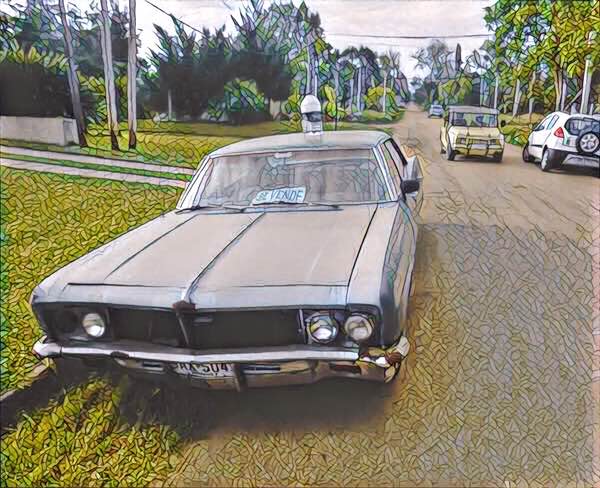
1960s Impala, Citroen Méhali in Uruguay

Here’s a decades-old Chevy Impala (I have been unable to determine the year) for sale. Not in very good shape; I don’t even want to know what they’re asking for it.

Approaching is the quintessential cheap-ass-looking Citroen beach buggy, called a Méhari. They were actually produced in Uruguay from 1971 to 1979. So you can probably pick one up cheap, right? As we say in Spanish, jajajajajajaja!

Interestingly, both are named after African animals, albeit two unlikely to cross paths.


The trail goes cold

This month marks ten years that we’ve lived continuously outside the US (this time ;-). That means ten years since we’ve received junk mail or catalogs* in our physical mailbox. In 2016, I mailed one letter and we received perhaps five. Though we maintain a physical address in the US and have a couple of phone numbers, this is what comes up (without paying) through internet sleuthing:

When you leave the US, the traces begin to fade

Another site offers this:

outdated info

And while we still have a business in the US, we have no utility bills in our names going to an address there. Seeing the way things are going with financial institutions, this could become a problem at some point.

But hey, we’ll burn that bridge when we come to it. Meanwhile it’s lovely to be obscure.


* do they still exist?