Currency value decline a.k.a. inflation

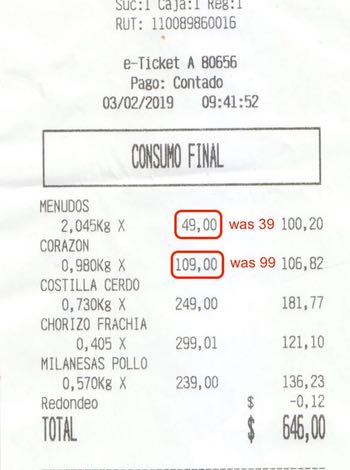
I stopped by the butcher to get menudos (giblets) and corazón (beef heart) for the dogs. To my surprise, prices had jumped significantly from the last time I looked at a receipt a couple weeks ago:
receipt

That’s a 25% and 10% increase respectively.

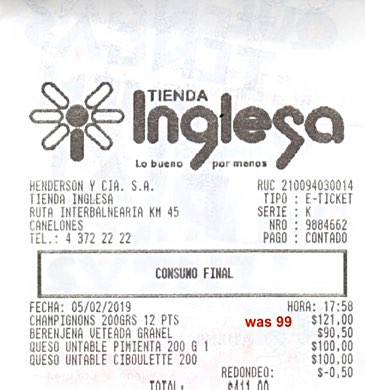
Same thing at Tienda Inglesa:
receipt

Mushrooms have gone up 22% in the last two weeks.

In our little local store, the price of eggs has gone up 8% in the last two weeks.

This is not a case of higher prices for tourist season. All of the price hikes have happened in the last week or two, as tourist season ends. And the USD exchange rate has been steady for the last several months (although the highest since we’ve lived here).

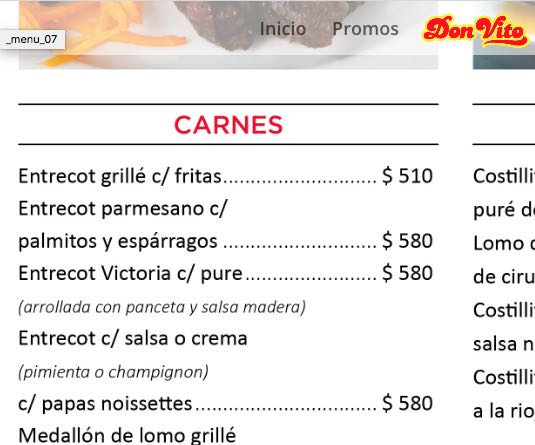
I don’t pay attention to too many prices, although I do recall when we first moved here, our son liked to order entrecot (boneless ribeye steak) at Don Vito. It cost 245 pesos, which seemed expensive – at least compared to what we ordered. Here’s where we are with that at the moment:
menu

Granted, it’s been almost ten years, so that’s not entirely unexpected. I remember being appalled when red peppers hit 99 pesos/kilo. Now you’re lucky if the price gets that low. And of course produce varies with the season.

But all these significant price jumps in a very short time, given my expectation of 10-12% per year, have definitely got my attention.
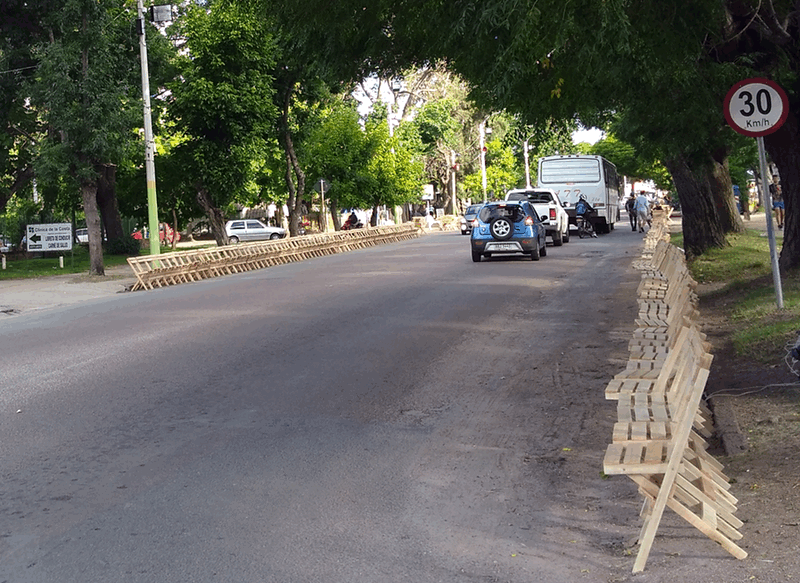

It’s that day

When you see chairs lined up either side of the road, it means tonight is the Carnaval parade in Atlántida. But they’re not there just as a nice gesture. If you want to sit, you have to pay.

I went out to see part of the parade one year, and haven’t felt compelled to do so again. You can find more in the Wikipedia article on Uruguayan Carnival (which apparently doesn’t meet Wikipedia’s high editorial standards, oh my!) and find videos of our local desfile here.

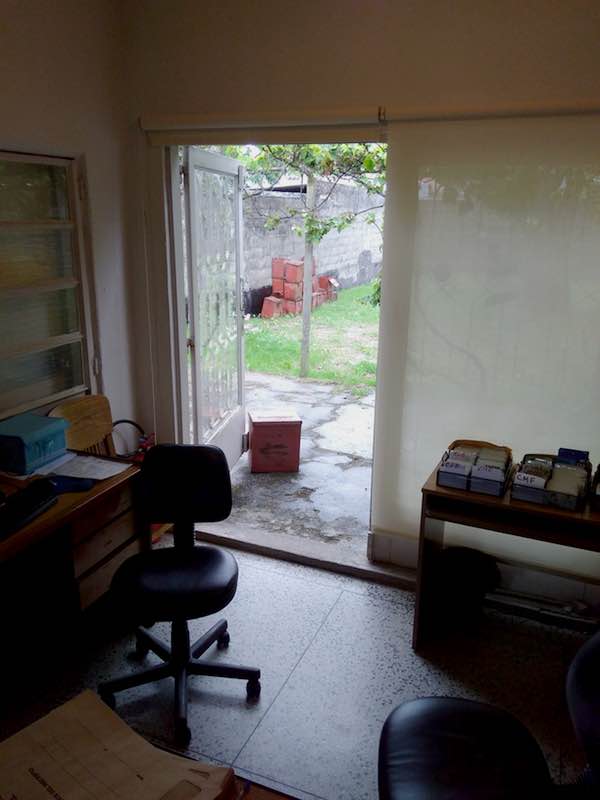
In the road maintenance office

“So, the heaviest tourist season is over. What now?”

“Well you know that heavily-used pedestrian crossing by the Playa Mansa?”

“Of course. Leading to the most crowded beach, saw a lot of pedestrian traffic. Typical January. What about it?”

“It’s kinda faded.”

“You’re right. Now that the bulk of the tourists are gone, this might be a good time to repaint it. You know, so cars can see it better. Safety thing.”

“My thinking exactly.”

Una locura

Our timing was bad, but our location could have been worse. Walking dogs at 5:00 PM, Syd and I got rained on to the point that I decided going into an air-conditioned supermarket in wet cotton might not be the best idea. And it was necessary: we were out of wine! It’s not killer air conditioning as in the Untied Snakes, but I remember well from my days as a summer camp counselor in Maine: Cotton Kills. Hypothermia is not your friend.

Home, just a couple kilometers away, we had received a lot of rain – pooling in streets, filling drainage ditches. I showered, changed clothes, waited for the rain to abate, and took off again for the 4-5 minute drive to Tienda Inglesa.

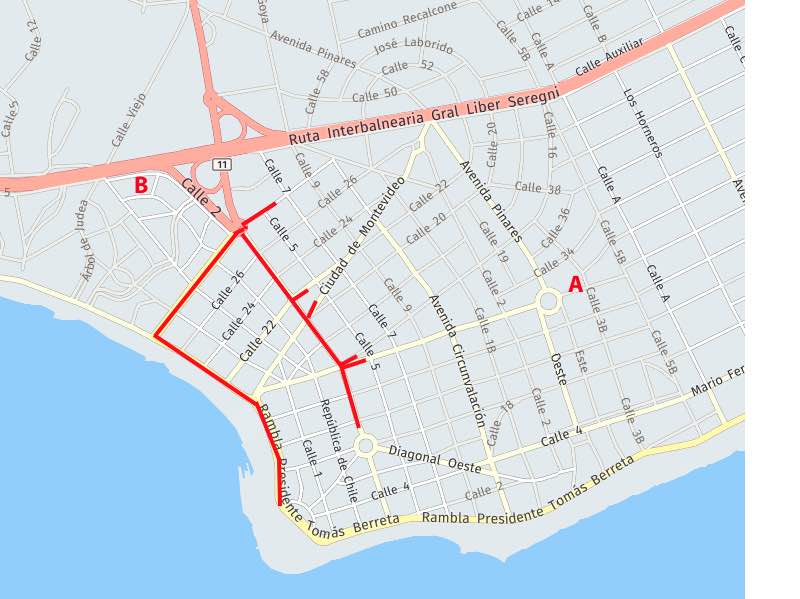
Not. The entire town was gridlocked/stop-and-start. I thought I could come at T.I. from the back, but that involved the Rambla (beach front road), which was no better. This is what I saw of the stoppage:

The red represents gridlocked or stop-and-start traffic. The 4-5 minute trip from A to B took at least 30 minutes.

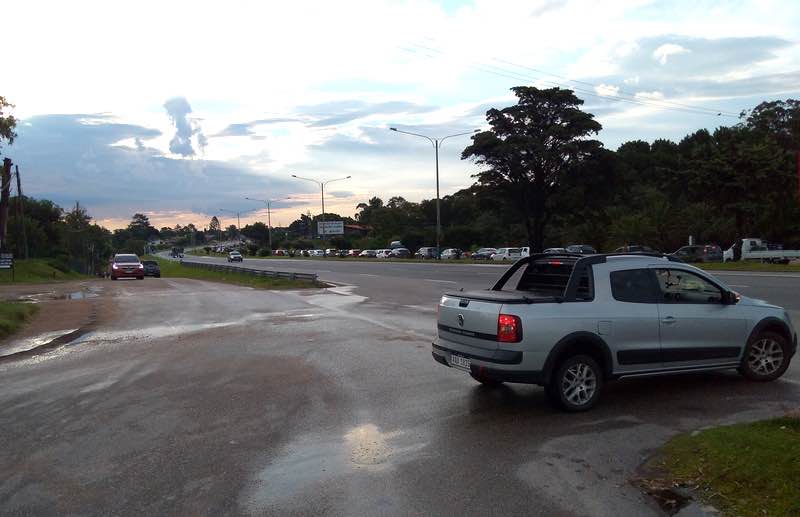
The trip back was significantly quicker, traveling the right direction on the Ruta Interbalnearia:

Those cars headed west toward Montevideo appear that they may be moving slowly. They’re not. They’re stopped.

So I’m a little puzzled: this shouldn’t be “turnover” day – once upon a time, families here spent a month on vacation, but now it’s two weeks, and that turnover’s not for another couple days.

Sure, it’s Sunday, and the weather suddenly went pear shaped.

Wild….

The business card

When we first moved here, we found an older tapicero – upholsterer – to redo a bunch of used furniture we had purchased. We haven’t needed work done since, but I don’t that guy is still working, and I do think about it from time to time.

So when I saw a guy in the feria for the second time advertising his services, I thought it might be a good idea to ask for a business card. Which I did. This is what I got:

No card, no name. Just “TAPICERO.”

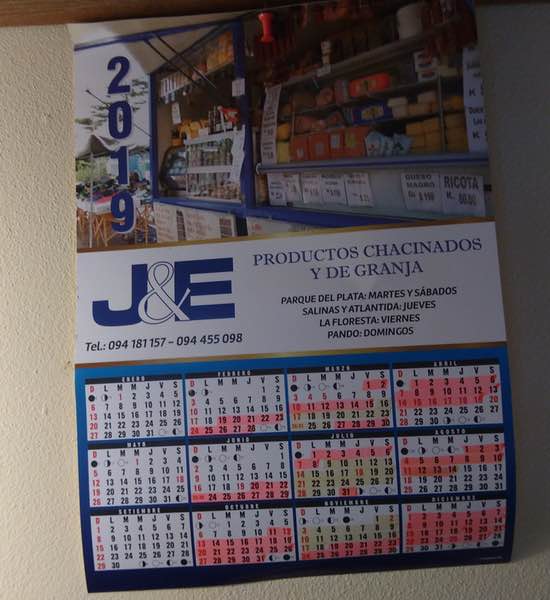
Which reminded one of the calendar I got from one of the other vendors a few weeks ago:

It hangs above my computer monitor, with retrograde Mercury and shoulder dates highlighted just in case I get a sudden and unexplained urge to buy electronics when I shouldn’t.

But noteworthy is “J&E” – they have a business name? Who knew? And if I told you the name, would you be able to find them in the feria? Maybe by the blue color of the truck in the photo?

No, instead they’re the cheese truck on the school end opposite the produce stand on the school end, as opposed to the middle-aged couple cheese truck a half block further, across from the produce stand where they usually wear maroon jackets.

That’s the extent of “branding” in the Uruguay feria.

There was a seed and nut stand memorably named 8 Búhos (8 owls) which appeared in Atlántida a couple of times. Since they were new, I asked if they planned to be there regularly. Always, they replied.

You guessed it: they’ve never been back.

Got ya covered

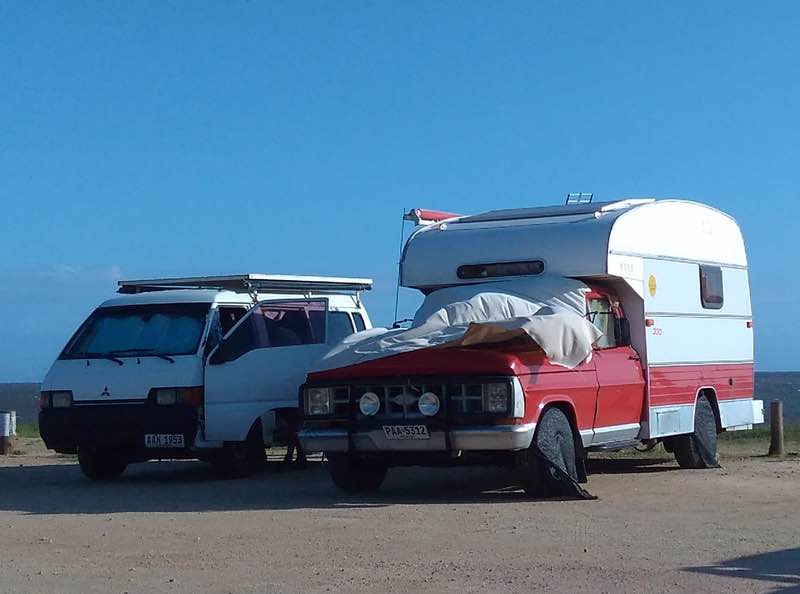
Local (Uruguay) campers. Looks like they’ve got it all sorted – solar panels, side awning, sun protection for the truck. There was a couple sitting with a little portable table between the two vehicles.

But: covering the tires to protect them from the sun? I guess maybe a good idea, but I’ve never, ever seen that before!

Parking Montevideo, then and now

Montevideo Rambla, Ciudad Vieja. When we arrived here, late 2009, it was rare to see even a single vehicle parked along this stretch of road.

Consumer credit comes to Uruguay! At least that’s one explanation.

Car prices have fallen recently. This may involve poor budgeting by people new to credit, buying cars for only *so much* a month. Perhaps they don’t think about fuel (2.5 times the cost in the USA), maintenance, and insurance. Then enough of them figure out they really can’t afford a car, and try to sell it.

At any rate, it’s distinctly more difficult to find a parking place in Montevideo than a few years ago, to the point that I usually don’t even try, and head to a parking garage instead.