Model T: new parts, old parts, tire changing

I checked in with Burkhard yesterday, to see the status of the Model T project. He told me that they day before, he had felt like a kid at Christmas after a box full of parts arrived from the United States.

Here they are: bushings, suspension and steering bits. And the aftermarket springs.

Model T restoration

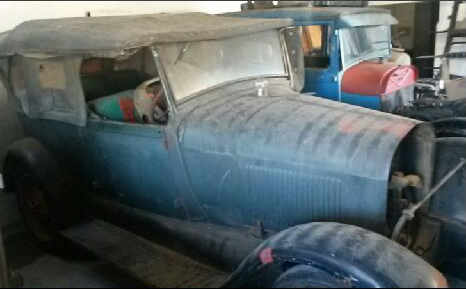
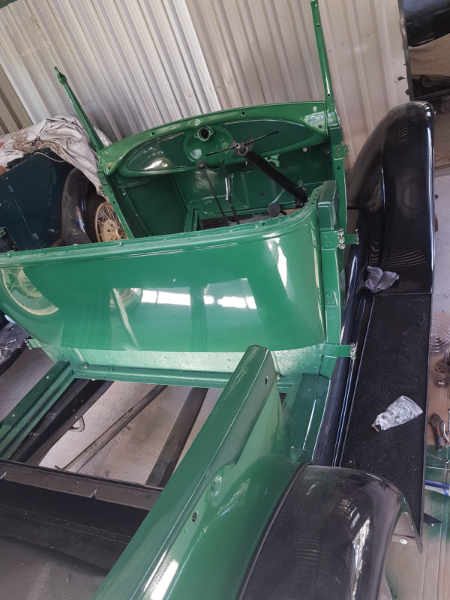
And what of the beast itself? Look at this picture and see if you notice something strange, as I did:

Model T restoration

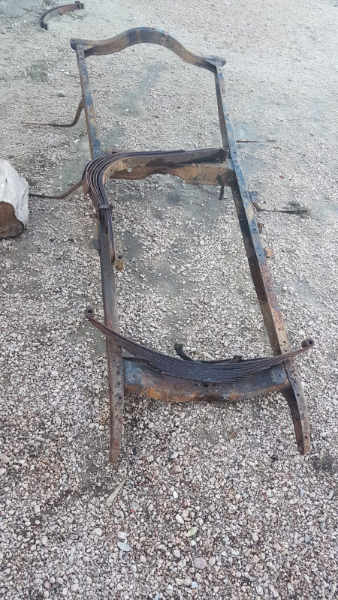
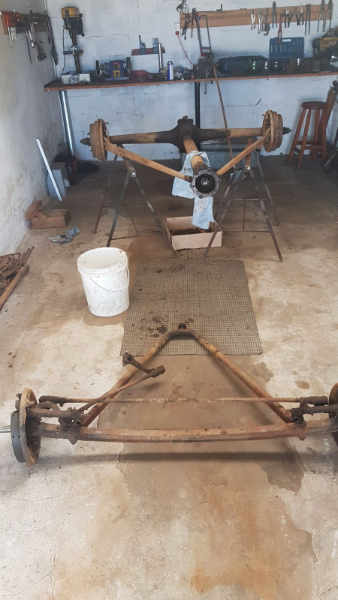
His friend friend Francisco, who turns out to be the owner of the working Model A pickup, tipped him off that the rear axle housings are perfect for supporting the front end. Logs supported the rear end.

Model T restoration

There’s a little more unanticipated, slightly tricky welding required.

Model T restoration

The wood framing for the body panels needs to be replaced. Most of it is pretty straightforward, but there are a couple pf pieces – not pictured – which involve compound curves.

Model T restoration

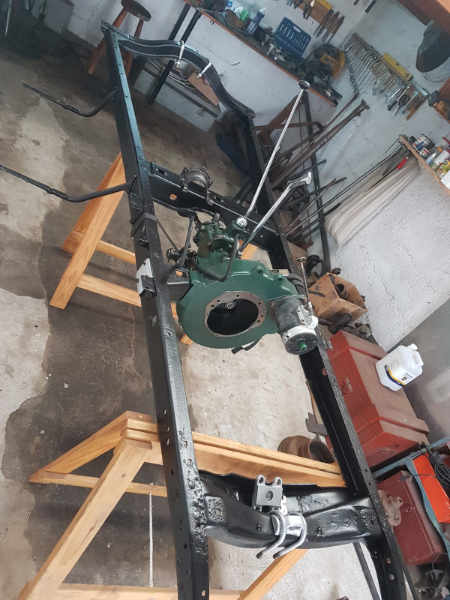
The parts department: spares for both cars.

Model T restoration

You may well recognize the cylinder head and starter. That weird thing on the left is the flywheel and gear box, consisting of two gears and reverse. Pressing the pedals tightened bands around them. The braking for the vehicle also happened here, which suggests that there’s no such thing as a Model T screeching to a halt!

Model T restoration

Then Burkhard showed me this gem: a unique tire-changing tool. The rims, which attach to the wooden wheel with five bolts, are not one continuous piece. When tightened with this tool, they effectively make the diameter smaller, allowing for a tire change on the side of the road. If you’ve ever watched your car’s tires being mounted, you’ll appreciate the ingenuity of this.

Model T restoration

No need to go further. The rim’s not refinished, and it would still require a tube, but pretty darned cool!


It begins: the wheels

Immediately after I posted yesterday, Burkhard sent me current photos. I think maybe he’s having some fun with me, because the last one is definitely smaller than the next two, and even accounting for perspective, the closest looks bigger.

Model T wheels

I’m not sure why he feels a need to fix them — it’s just a few bug holes and Model Ts don’t go very fast.

Model T wheel closeup

But he’s picky. No doubt will insist on new tires as well.

Model T wheels pre-restoration

I think that’s a front hub below. You can actually buy one new for USD 289.95. Might make a nice coffee table conversation piece. The new spokes will be made from fresno, or ash, used for ax handles up north (along with hickory).

Rims and hubs, ready to go for refurbishing. Local cost to put each wheel back together with new spokes is USD 100, which seems like a good deal now that I’ve looked online.

Model T wheel disassembled

And meanwhile, some new antique firewood!

Model T spokes for firewood

Restoration

My friend Burkhard, of German descent from Namibia, moved from a rather remote part of the interior of Uruguay to a place not far from our little country property. And immediately started projects. One of which was buying a Ford Model A.

To restore.

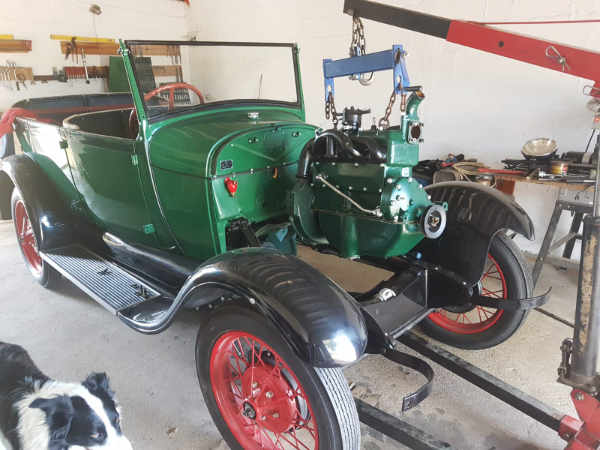
Which meant taking the whole thing apart. No, I mean really apart.

And from three engines that looked like this, creating one with the best parts from each. He substituted adjustable valves – a later innovation (i.e., not original) that apparently saved days of labor.

And then, of course, one has to put the whole thing back together.

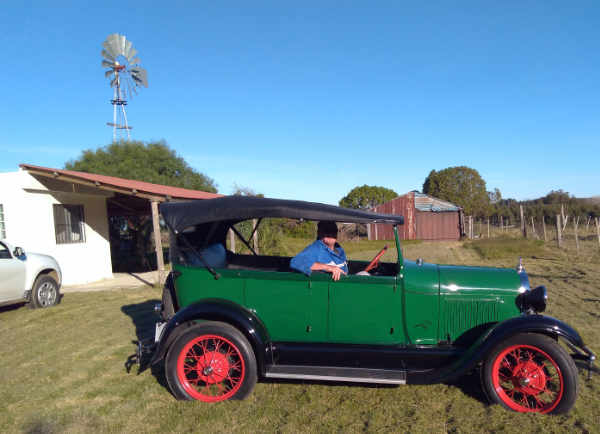
Today it had its first public-road debut. Having been a farmer all his life in Africa, he knew about windmills, and had helped with ours on our barely-used chacra (14+ acres/5.6 hectares). He mentioned that it probably needed lubrication, and since I was halfway through mowing the knee-high grass, and he was offering, we arranged to meet there this afternoon.

And there he was!

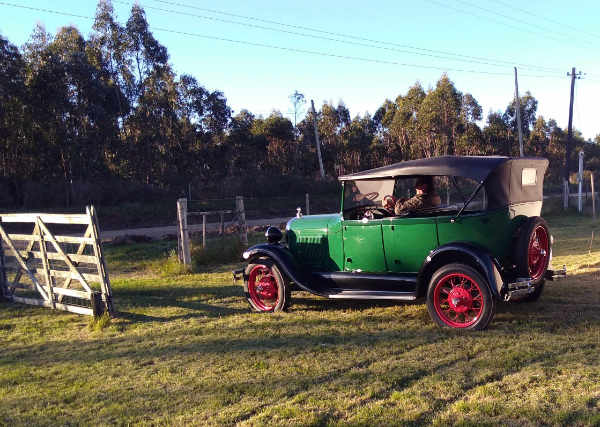
He also helped me find a plumbing solution for an annoying oversight from our Uruguayan “of course I know everything” contractor Martín, and then putt-putt-putt was on his way home before he had to use the vehicle’s lights, which are humorously (as long as you’re not driving in the dark) dim.

All photos except for the last two are his. I’ll try to do better next time.

Next time – did I mention he also bought a Model T that he will begin restoring in a few weeks?


Shiny new car, and a bit of strangeness

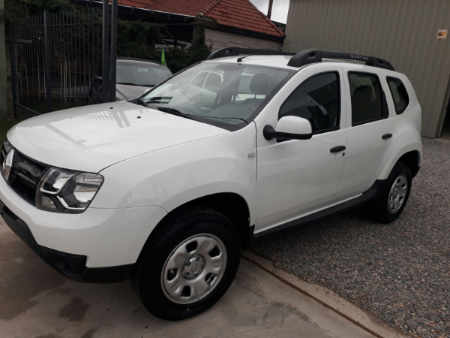
Renault Duster
Photo the dealer sent when the car arrived

We finally took delivery of our new car, a Renault Duster. Though it’s been wonderful to have a loaner car for two months, it’s fabulous to be sitting high off the road again, and the Duster may replace my 2002 Toyota 4Runner as my all-time favorite car. It’s a sort-of SUV, only two wheel drive, lacks some bells and whistles such as electric mirrors, but by default – YESSSSSSSS! — front running lights turn on when you start the engine. These are required in Uruguay by law, and not having to remember to turn the lights on is a great plus. On the Meriva there was not even the option to pay the dealer a rapacious USD 100 fee to change the computer. Couldn’t be done.

I was going to write that despite close calls, I’ve never been pulled over for not having lights on. Not true: during our first visit, in March 2009, I drove through the Solís toll booth, and was pulled over by an older policeman on foot. He told me my Spanish was very good, and I was tempted to reply “yours isn’t!” but refrained – I was still struggling to understand the Rioplatense zhmumbling. He seemed to be hinting something about a Coke, like a small bribe, but the smallest I had was a 20 Euro note (we had been in Europe four months before), and I wasn’t giving him that. My lack of comprehension eventually led to an impasse, and we drove off fine-free.

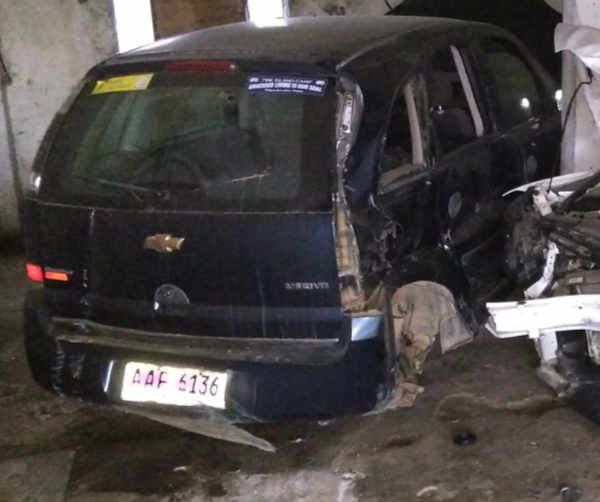
Back to the story: the Meriva, you might recall, ended up like this:

wrecked 2010 Chevy Meriva

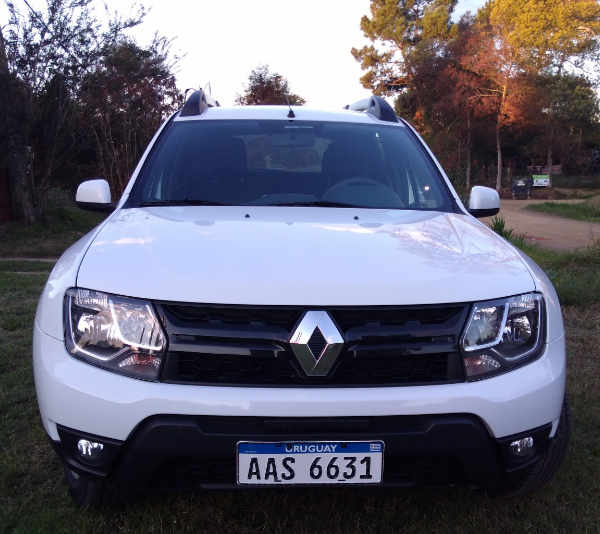
Please note the license plate. Now compare to the new one:

Just a bit interesting, no? Is Universe sending a message?


“Engine: start”

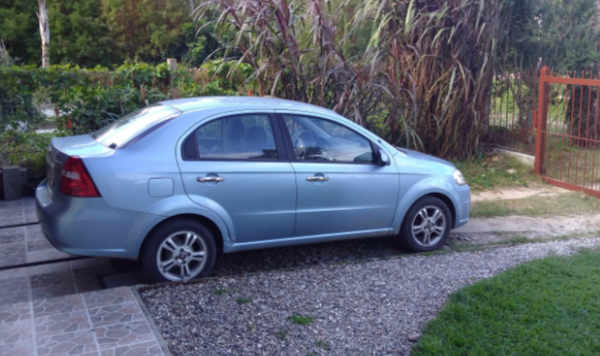
Chevy Aveo

A friend returning to the States for an extended period generously offered us the use of his car, and refused to accept any money for it.  I wasn’t too concerned about that, because I could tell it needed some work.

And boy, did it: entire front suspension and brake pads, rear wheel cylinders, alignment, oil change … a little over USD 700. But, seeing as we’ve had the car seven weeks and probably will need it one more, the cost will come to something like USD 12.50/day, and we “leave the campsite cleaner than we found it,” as was the goal when I was a camp counselor. Win-win.

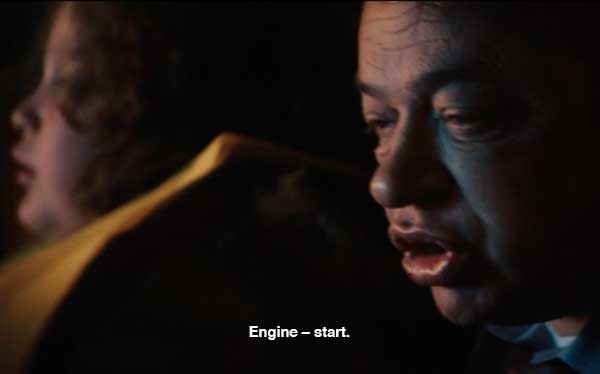
But there is one more thing it needs: a new battery. Sometimes it doesn’t want to start, and this morning it simply didn’t, even with my command “Engine-start!” as I turned the key.

Which is from a silly 2009 movie called 2012 Apocalypse. If you have access to US Netflix, you can see it at 1:42.

2012 Apocalypse - "engine, start"

The movie has some other compelling scenes: the Vatican destroyed in an earthquake (1:30), the White House destroyed by an aircraft carrier in an immense tsunami (1:34), and helicopters flying in the Himalayas with giraffes slung beneath them (1:44) – you just can’t make this stuff up.


Anyway, maybe I’ll spring for a battery. I have to go to the supermarket now. Engine – start!

Requisite autumn photo

autumn tree

Lovely, sunny, crisp autumn day. I walked into town to pick up a $3,000 Western Union transfer (cost: $6) so that now we officially have enough money in the bank here to pay for our new car, which should arrive in the next few days. From where, I have no idea. We ended up with the Meriva in 2009 because it was available: with other makes and models we might have preferred, we were told to “come back in January when the new cars arrive.” At $1,000+ per month for a nothing-special rental car, we did not like that idea.


Another single-car crash

Several years ago, I saw a scene where a car had left the Ruta Interbalnearia  eastbound at high speed.

Today, another.

single car crash scene, Uruguay

single car crash scene, Uruguay

I was cruising the frontage road looking for a mechanic’s shop. Rather sobering, considering how many people I passed on foot or riding bicycles, not to mention the thought of a car flying off the highway into your vehicle.

What’s also interesting is how close this is to the crash in 2012.

crash locations, Uruguay

And the speed limit? Close as I can tell, 60 km/hr (36 mph). Maybe 90 (54). Either is clearly considerably less than this car was traveling.


El Camino

The friend who loaned us his car when he left for the States refused to accept money from us as rent. That didn’t bother me, because I was pretty sure it needed a little attention. So: oil change. Then front shock absorbers, mounts, stabilizer links, and brake pads. Then rotate, balance tires, and align front end. And now to the auto electric shop for  the “check engine” light and nonfunctional – despite apparently good bulb – right rear turn signal.

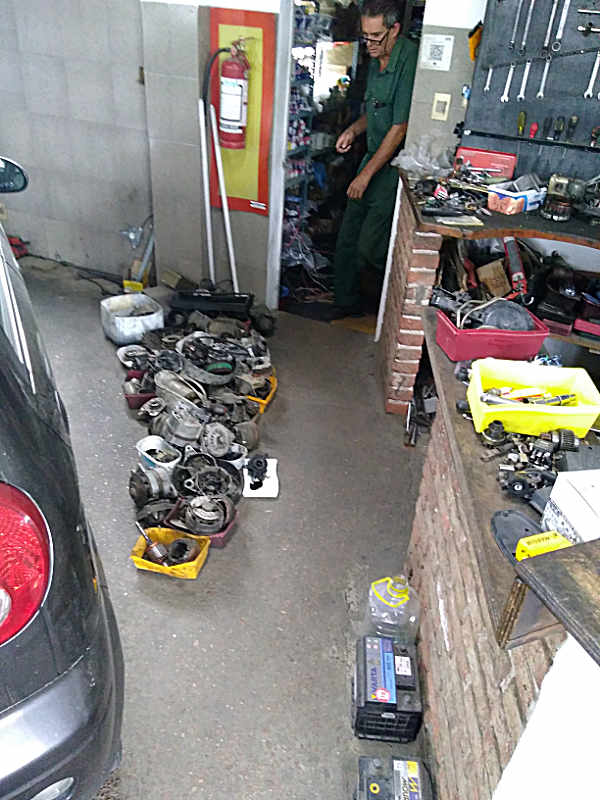
This shop is chaotic inside, with parts and tools everywhere.

path in mechanic's shop, Uruguay

Which, I guess, is why I found the neat paths around an island of alternators amusing. Chaos, but organized chaos.