…push the “down” lever. No, just kidding!
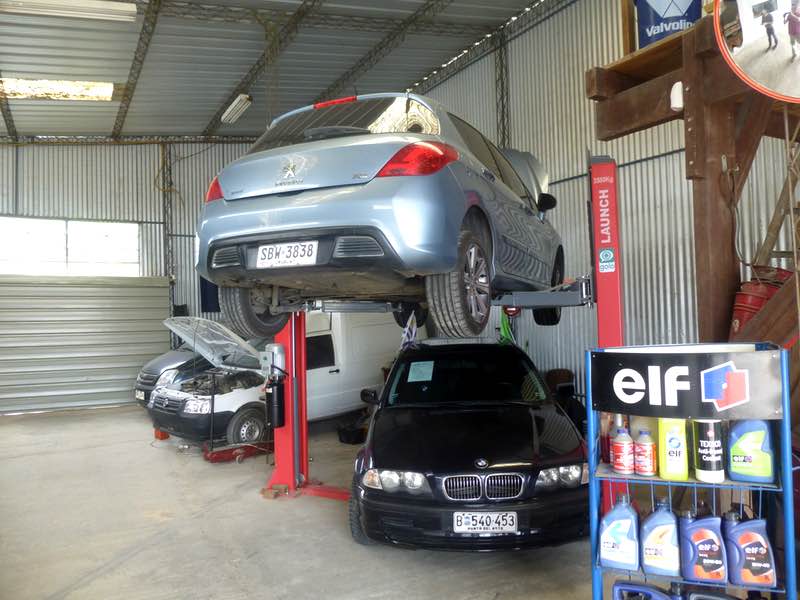
Today, finally signed papers to sell the pobre Meriva (you can see it way in the back).
An inquisitive old fart with a camera
…push the “down” lever. No, just kidding!
Today, finally signed papers to sell the pobre Meriva (you can see it way in the back).
I called Burkhard to see if there was anything new with the Model T. Not really, he said, I’ve painted the chassis. Well, I said, since I have to go to our chacra anyway to pick up my mechanical sheep (he has real sheep; I require a four-stroke engine mounted on wheels with a blade spinning really fast to keep grass trimmed), that might be interesting to see.
As I pulled in, I didn’t actually notice this at first: another Model A chassis.

But as we walked around the garage, I definitely noticed this:

two more unrestored 1929 Model A’s (I had to ask), purchased at auction for $400 each. The better chassis will remain here; the other will go to someone else into this stuff. Burkhard’s end result will be a pickup truck, hybrid of genuine original Model A and Model T pieces. Seems wife had issues with excessive wrecks populating the back yard. Hey, it’s a guy thing; get over it!

Meanwhile, in the garage he built between two containers, Burkhard’s restored A is joined by a four door Sedan, which he stores for a friend whose mother drove it – in Montevideo – until 15 years ago. Yes, let that sink in. The black vehicle is all original.
Boggles the mind.

Meanwhile, here’s the T chassis – upside-down and lovingly painted. It’s very light, and surprisingly flimsy.
I got curious: the Model A versions ranged from about (USD) $400 – 1,400 in 1929, or ~$5,840 – 20,400 in 2018 dollars. That seems reasonable.
On the other hand, $400 in 2018 would have been worth $27.40 in 1929. I’d say that’s rather a screaming bargain either way.
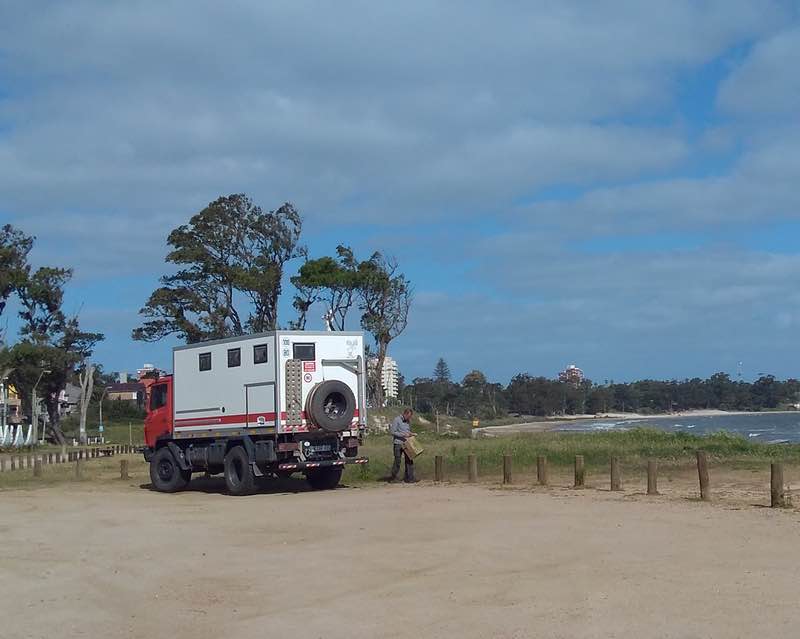
Today’s Saturday, and the weather’s much like in this photo, but this is from a few days ago, a pre-season weekday. Today this parking lot would have been full of cars. Notice the sand ladders and crane for lowering and raising the monstrous spare tire. And massive fuel tank. And bunker-like windows. Just kinda automatically makes you feel light-footed and adventurous, nein?
Compare this with the last German camper van I posted:
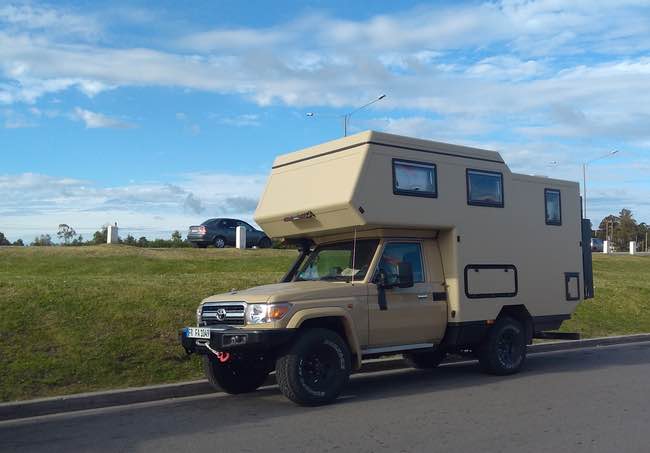
OK, the Unimog is an amazing vehicle, but – is it just me? – seems sort of, um, constipated as a travel vehicle. Hey, there will be more this summer: stay tuned!
And, oh yeah, I’m being sarcastic about the minimalist thing, in case you missed that.

Most of my posts like this are from January and February, hot season, but here we are, late October, and a Deutschmobil appears outside Tienda Inglesa (as many do). Yes, actually from Germany; others similar have been from Austria, France, Slovakia…
This actually strikes me as quite a sweet rig; I’d like to have seen inside. Built on a Toyota versus a quasi-military Mini Mog. Here you can see some of the weirdness I’ve observed over the years here.

I guess this is what happens when you add arrogance to incompetence?
Burkhard’s Model T has now moved from shipping container storage to his garage workshop, on borrowed wheels (his are being rebuilt). Because of course, just borrow Model T wheels. No problem! They’re actually from Francisco, who told him about using rear axle housings to keep the front end level — notice them to the left of the photo.
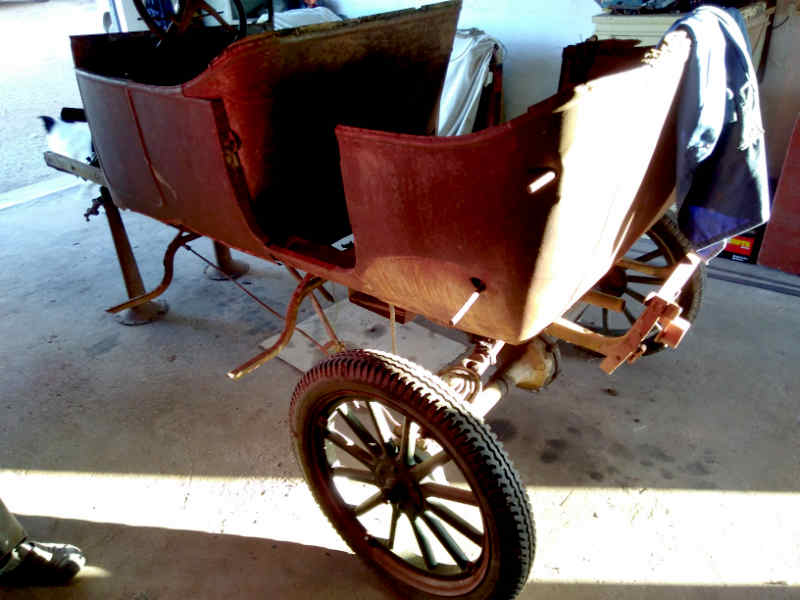
He thought the jacket draped over the back shouldn’t be in the photo, but it struck me as perfectly symbolic: well, at least this thing has value as a coat rack!
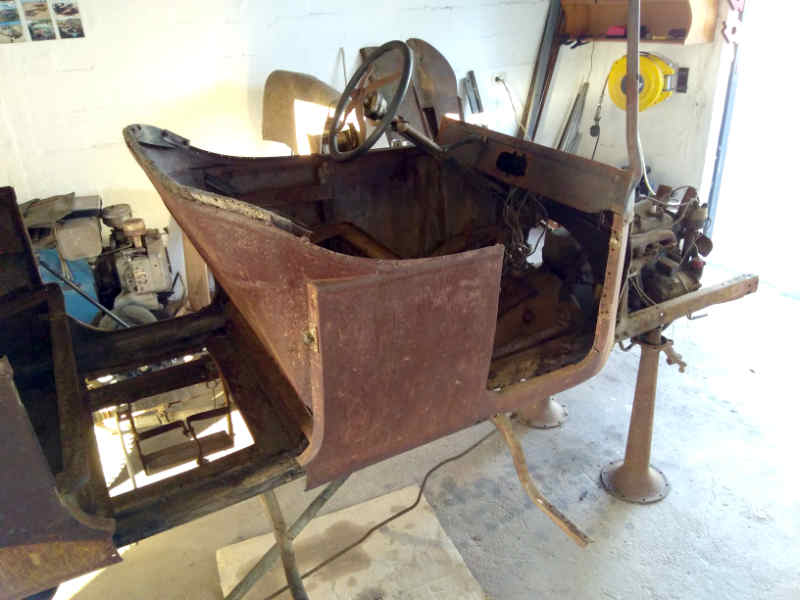
Burkhard chuckled as he lifted body panels, demonstrating how flimsy the whole thing is.
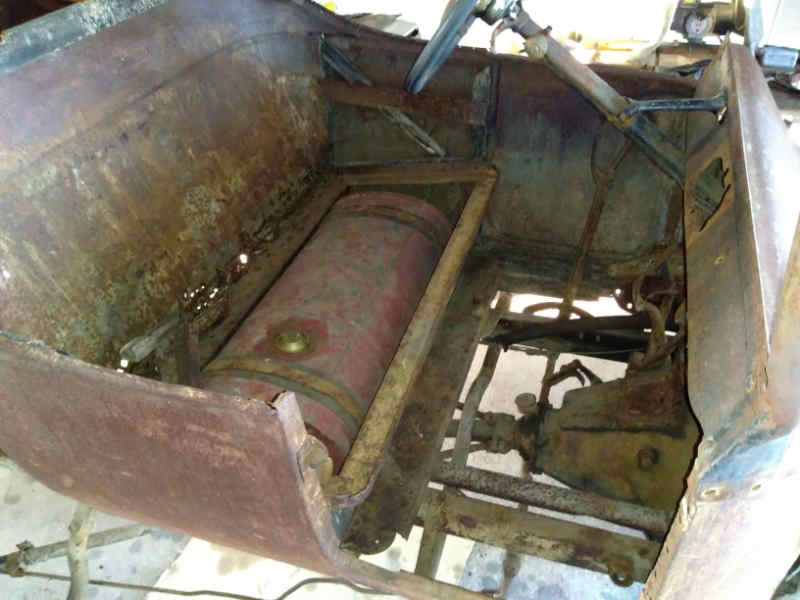
I think at this point I would decide that maybe this wasn’t such a great idea. Burkhard is undeterred.
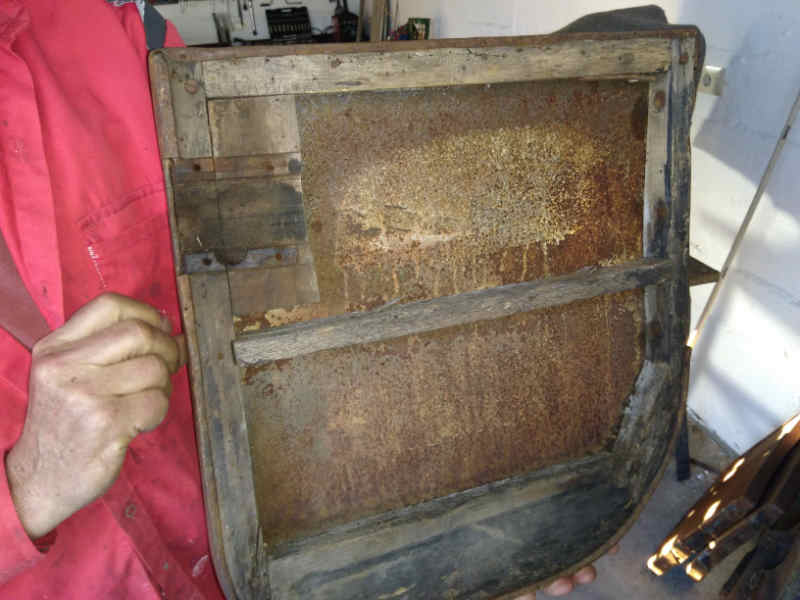
The bodywork in a Ford Model T is build over wood framing. This door is mostly good, but much of the other wood in this critter is rotted or destroyed by bugs. Researching a while ago, I read that Henry Ford owned over 100,000 acres of forest land to provide wood for Model Ts. I also read that — perhaps — they cut up pallets from parts deliveries to use in Model Ts. Perhaps. Just under 15 million of these cars were produced, between October 1908 and May 1927. Insane!
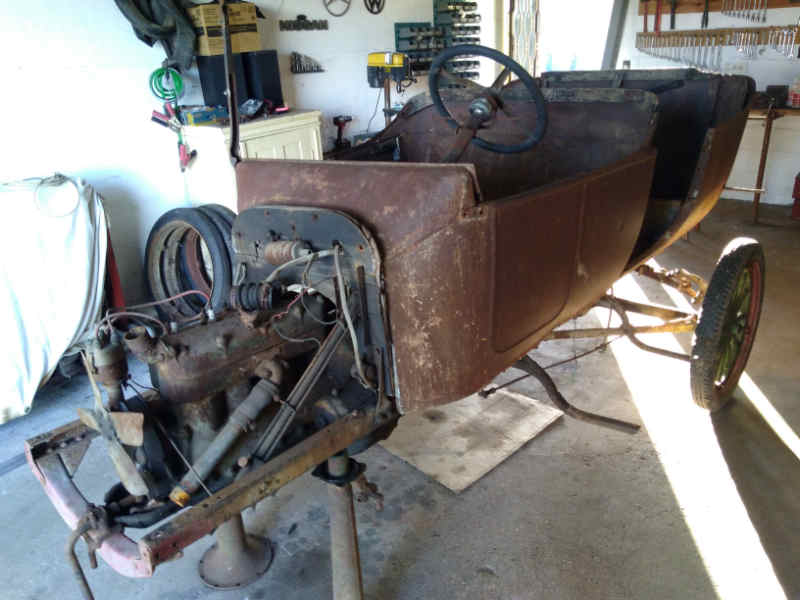
Here’s another view of the Tin Lizzie.
This will be interesting. Stay tuned…!
I checked in with Burkhard yesterday, to see the status of the Model T project. He told me that they day before, he had felt like a kid at Christmas after a box full of parts arrived from the United States.
Here they are: bushings, suspension and steering bits. And the aftermarket springs.

And what of the beast itself? Look at this picture and see if you notice something strange, as I did:

His friend friend Francisco, who turns out to be the owner of the working Model A pickup, tipped him off that the rear axle housings are perfect for supporting the front end. Logs supported the rear end.

There’s a little more unanticipated, slightly tricky welding required.

The wood framing for the body panels needs to be replaced. Most of it is pretty straightforward, but there are a couple pf pieces – not pictured – which involve compound curves.

The parts department: spares for both cars.

You may well recognize the cylinder head and starter. That weird thing on the left is the flywheel and gear box, consisting of two gears and reverse. Pressing the pedals tightened bands around them. The braking for the vehicle also happened here, which suggests that there’s no such thing as a Model T screeching to a halt!

Then Burkhard showed me this gem: a unique tire-changing tool. The rims, which attach to the wooden wheel with five bolts, are not one continuous piece. When tightened with this tool, they effectively make the diameter smaller, allowing for a tire change on the side of the road. If you’ve ever watched your car’s tires being mounted, you’ll appreciate the ingenuity of this.

No need to go further. The rim’s not refinished, and it would still require a tube, but pretty darned cool!
Immediately after I posted yesterday, Burkhard sent me current photos. I think maybe he’s having some fun with me, because the last one is definitely smaller than the next two, and even accounting for perspective, the closest looks bigger.

I’m not sure why he feels a need to fix them — it’s just a few bug holes and Model Ts don’t go very fast.

But he’s picky. No doubt will insist on new tires as well.

I think that’s a front hub below. You can actually buy one new for USD 289.95. Might make a nice coffee table conversation piece. The new spokes will be made from fresno, or ash, used for ax handles up north (along with hickory).

Rims and hubs, ready to go for refurbishing. Local cost to put each wheel back together with new spokes is USD 100, which seems like a good deal now that I’ve looked online.

And meanwhile, some new antique firewood!

My friend Burkhard, of German descent from Namibia, moved from a rather remote part of the interior of Uruguay to a place not far from our little country property. And immediately started projects. One of which was buying a Ford Model A.
To restore.
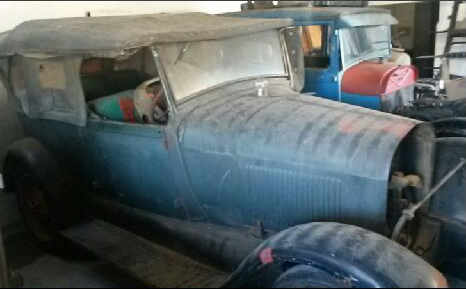
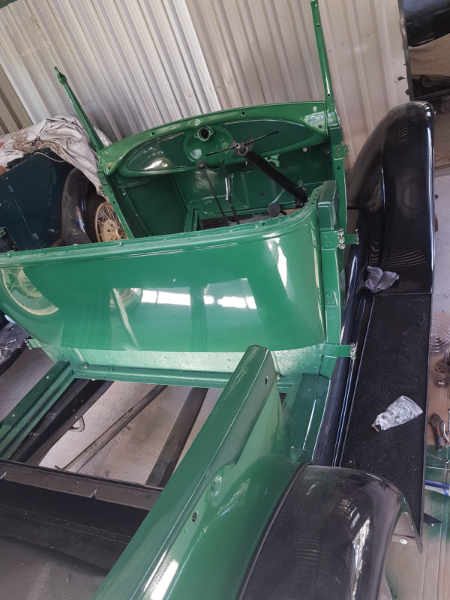
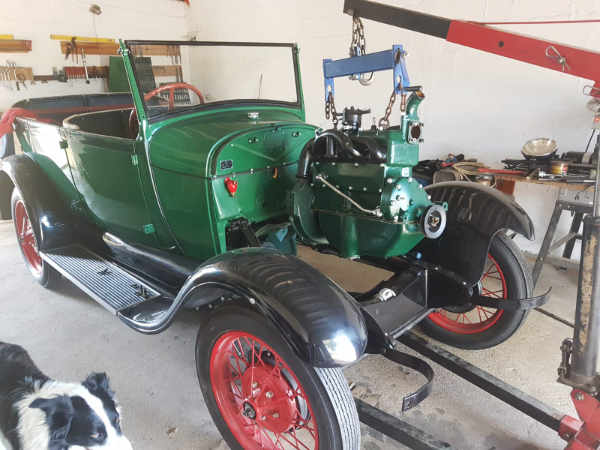
Which meant taking the whole thing apart. No, I mean really apart.
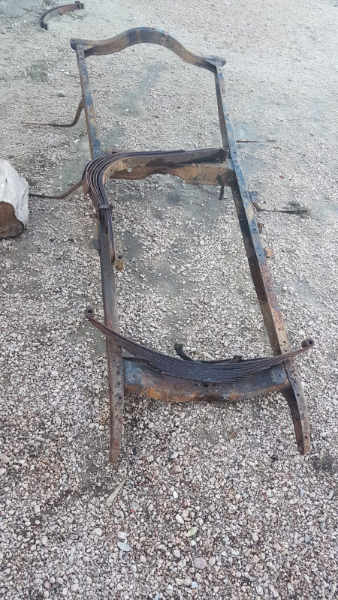
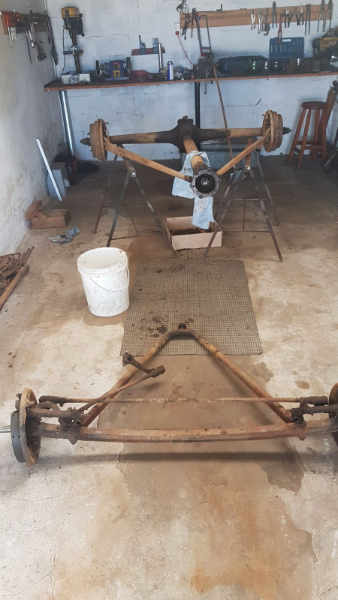
And from three engines that looked like this, creating one with the best parts from each. He substituted adjustable valves – a later innovation (i.e., not original) that apparently saved days of labor.

And then, of course, one has to put the whole thing back together.
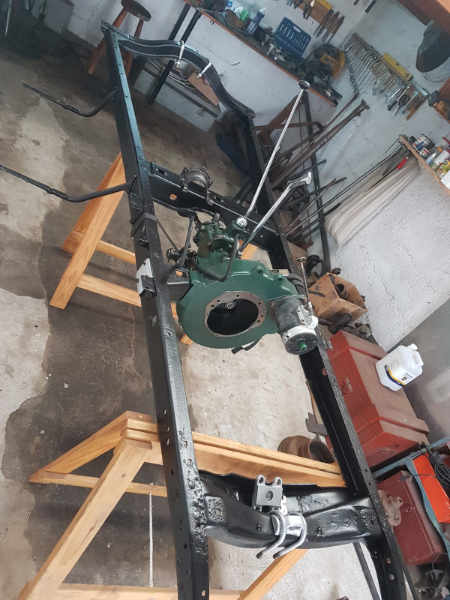
Today it had its first public-road debut. Having been a farmer all his life in Africa, he knew about windmills, and had helped with ours on our barely-used chacra (14+ acres/5.6 hectares). He mentioned that it probably needed lubrication, and since I was halfway through mowing the knee-high grass, and he was offering, we arranged to meet there this afternoon.
And there he was!
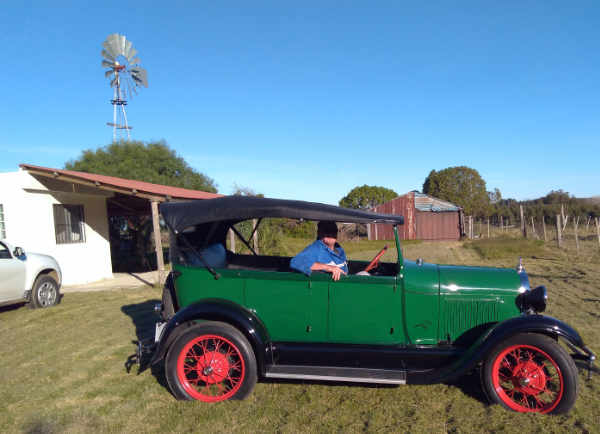
He also helped me find a plumbing solution for an annoying oversight from our Uruguayan “of course I know everything” contractor Martín, and then putt-putt-putt was on his way home before he had to use the vehicle’s lights, which are humorously (as long as you’re not driving in the dark) dim.
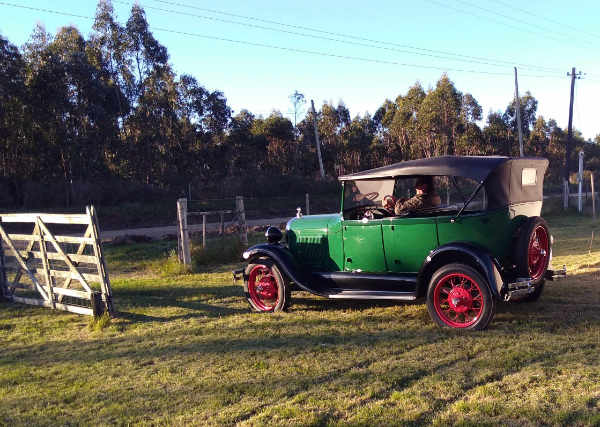
Next time – did I mention he also bought a Model T that he will begin restoring in a few weeks?