Jack of all, master of …

A German friend introduced me to the term “project fatigue,” and it describes perfectly the MEGO (my eyes glaze over) feeling I get with renovations and other work proceeding at glacial (lack of) speed.

Also, when I hire someone to do a job, it is not my job to tell them how to do it. Get on with it!

And so it was that I wasn’t paying particular attention when Martín put the sheetrock ceilings in our little country house a few years ago. He used wood instead of steel framing, which I thought poor judgment. In fact, the first batch of lumber delivered was so warped and twisted he had to send it all back. When I asked, he said that if steel framing gets bent, you can’t straighten it out again. OK, cast logic to the wind:

  1. Why should it get bent in the first place?
  2. What about the natural tendency of lumber to warp and twist – especially the low-grade stuff sold here?
  3. Oh, and what about bugs eating wood, which they really like to do here?

Anyway, I wasn’t there, and wasn’t paying attention, because I would have spotted this immediately. Anyone who has done anything with drywall would. In fact, you would find it incredible that someone would pretend to know what they were doing and do something so wrong.

Here’s one example of what’s happening everywhere:
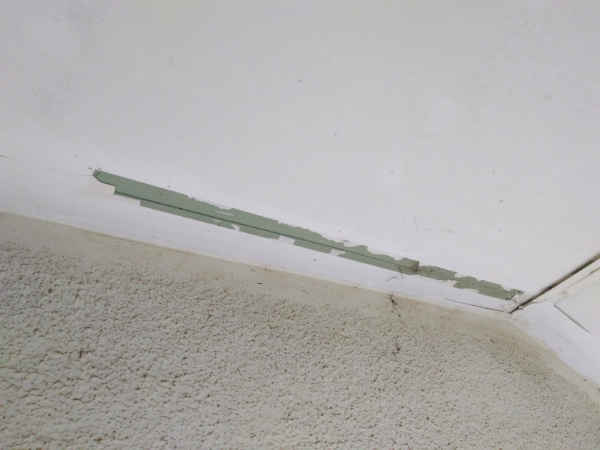
drywall error

The long edges of a sheet of drywall are tapered. To cover that joint, you use a 6″ knife and put a thin layer of “mud” (I’ll have to find out what that’s called here), then lay on top of it paper (or plastic mesh) “tape,” then the finish layer of mud on top of that.

What you don’t do is simply put the tape in the joint, and cover it with mud. Which is exactly what Martín – the jack of all trades – did here. What hasn’t fallen down, will.

Unfortunately, this is quite common here. Everybody’s a builder. Everybody’s an electrician. Everybody’s a plumber. If drywall is a solution, everyone knows how to do drywall.

Except that they don’t.

There are exceptions, but after nine years I am still amazed at the general Uruguayan acceptance of mediocrity. Chinese power tools with two-month guarantees come to mind. Vendors who advertise online, and take money for, products they don’t have in stock. Yet another occurrence last couple days: twice charged then revoked charge on my credit card without explanation. But I have an explanation: they discovered they simply didn’t have the product they advertised.

Es lo que hay. “That’s what it is.” Mediocrity. How unfortunate.
Well, duh.

Not long ago, we noticed our water bill beginning to skyrocket. We had plumbers here to install whole-house water filters outside. Checking their work, they pointed out a little spinning disk that I had never noticed in the middle of the water meter. It was going spin-spin stop-stop. We had a leak. After a bit of checking, it was clearly not their doing.

After digging a dozen holes along the length of the pipe going to the casita (little house behind), and finding no moisture, I called Enrique, a nice, mellow plumber from Peru. We determined there was a leak underneath the casita (i.e., impossible to fix), so he installed a cutoff valve. At length we discussed how to re-plumb outside, tap into the cold line on the exterior bathroom wall, all without breaking tile inside – we had a plan!

Alas, perhaps Enrique has been in Uruguay too long. I said I’d get back to him when the weather got a little more pleasant for outside work. This has been a mild winter, but it’s still winter. So, sun appears! And no response from Enrique to text messages; phone calls terminated before a chance to leave a message.

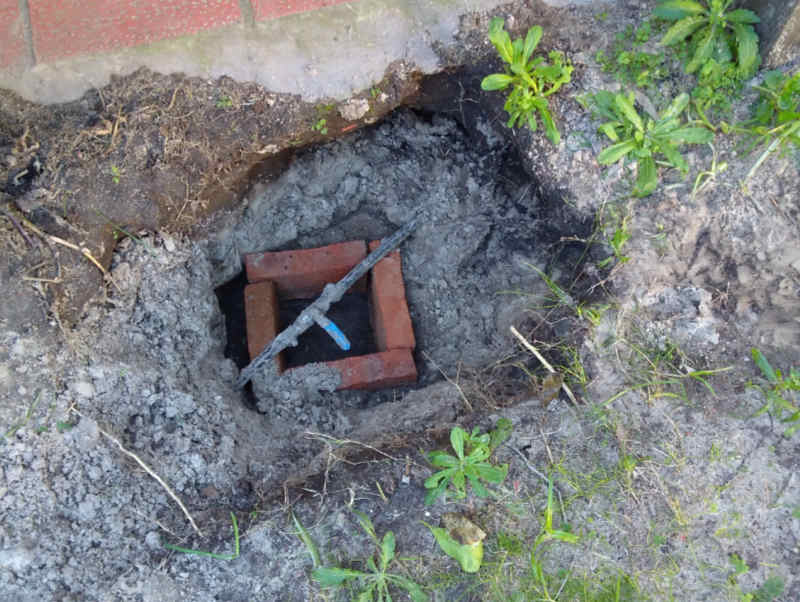
Well, we have other issues with the main house, so I sought the advice of Daniel, the guy who will be solving many of them. I had bought bricks, and was preparing to create a subterranean box around the valve.

water cutoff valve, Uruguay

This is how you do it, with mortar, and when you’ve built up to ground level there’s a nifty little concrete frame and cover that fir perfectly. But, I thought, if they need to re-route the tubes, maybe I shouldn’t do this first. I explained to Daniel the plan Enrique and I had come up with. He agreed with the overall plumbing plan, but hadn’t answered my question.

So I asked again. Well, he said, if we’re putting a new cutoff valve on the outside bathroom wall, we will simply remove this one.

(See title.)

Anyone need a few crappy Uruguayan bricks and a kilo of Portland cement?

Plumbing in Uruguay

Resolving a little plumbing issue in the country yesterday set off a cascading series of Uruguayan plumbing memories.

Some involve sheer incompetence, some … well, let’s start with the incompetence. If you’ve been with me a while, you might remember this gem from jack-of-all-trades Nestor (because anyone in Uruguay who sort of knows one trade thinks he knows every trade). The lower patch fills the first hole he made for the horizontal vent pipe above.

Uruguayan plumbing

A few years ago, a newcomer trenchantly reflected on Uruguayan plumbing, “Didn’t we see this in Pompeii?”

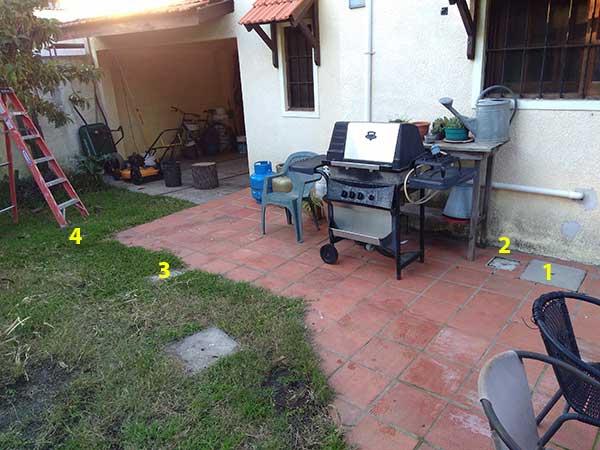
Yes, sweetie, just minus the PVC. Let’s trace the wastewater route from our kitchen. 1) First it goes into the 20 liter grasera that we had to buy to replace an 18 liter, perfectly functional, grasera. 2) It goes into another box. 3) It goes to another box. 4) It goes to another box. All of which are prone to clogging, of course, from grease that escapes the grasera..

Uruguayan plumbing

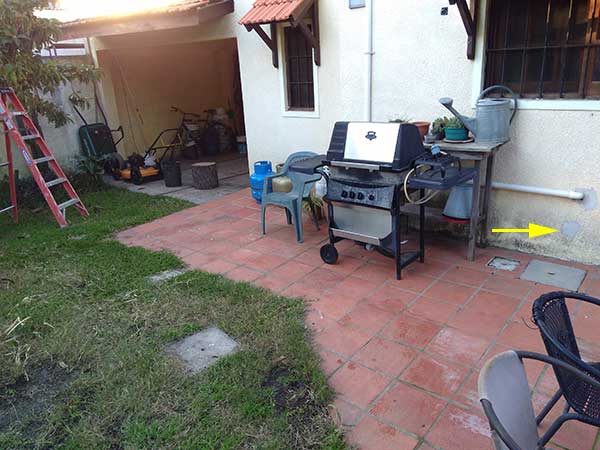
Before we get to box #5, I should point out that boxes 3 and 4 should not exist, but this being an owner-built house, the line went from box #2 to the big unmarked concrete top, to a septic tank not in the original plans. We only discovered this when we had to “regularize” our plans three years ago (a process which maybe will be finalized this year?).

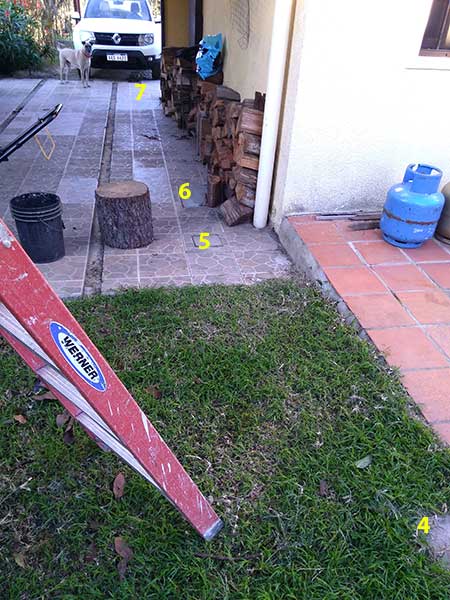
So from there the water goes to box 5, which should have been a right angle turn, to box 6, where the downspout from the upstairs bathroom and pipe from the downstairs one join the party, to box 7 …

Uruguayan plumbing

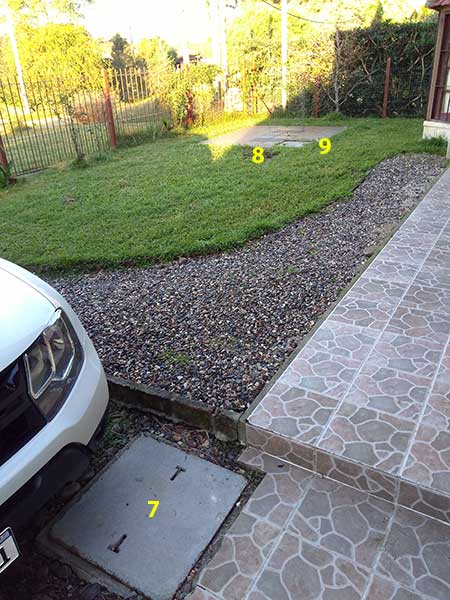
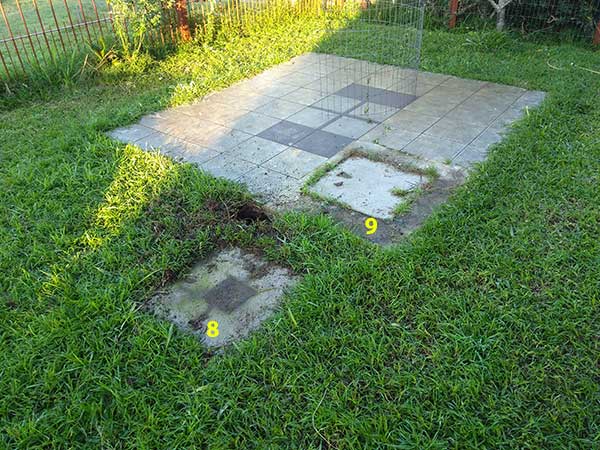
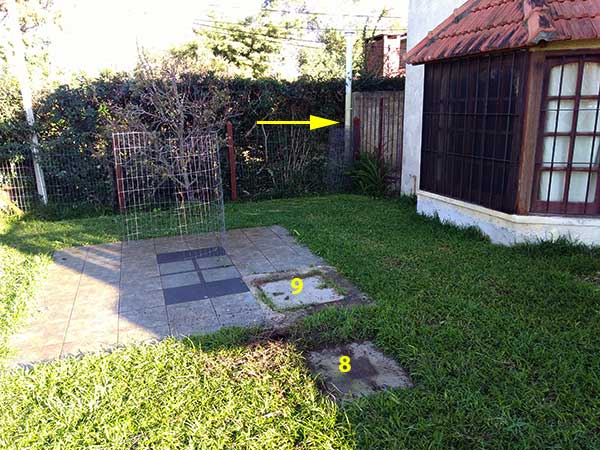
… where it makes another turn to box 8, and finally to (9) the septic tank.

Uruguayan plumbing

Wherein lie a couple more stories. You’ll notice a dark square in the top of box 8. That is where I filled the hole in it with concrete. When our erstwhile know-everything handyman Martín cleverly used leftover tiles to cover the septic tank, he somewhat less cleverly decided that all it needed was an opening big enough for the “barométrica” (tank pumping) truck’s hose.

Uruguayan plumbing

When we launched into the above-mentioned “regularization,” we had to pay someone else to undo his handiwork, because an inspector had to stick his head in there to confirm that the septic tank was actually connected to the vent pipe in the corner.

Uruguayan plumbing

That may seem ridiculous, but the same Martín cleverly solved friends’ hideously-out-of-code plumbing inspection problem by installing a couple of plumbing boxes in the yard that made sense to the inspector, but weren’t actually connected to each other. Or anything else.

But that’s not my story to tell.

Fast house construction

I have often commented on how long construction takes in Uruguay. Simple houses can take the better part of a year.

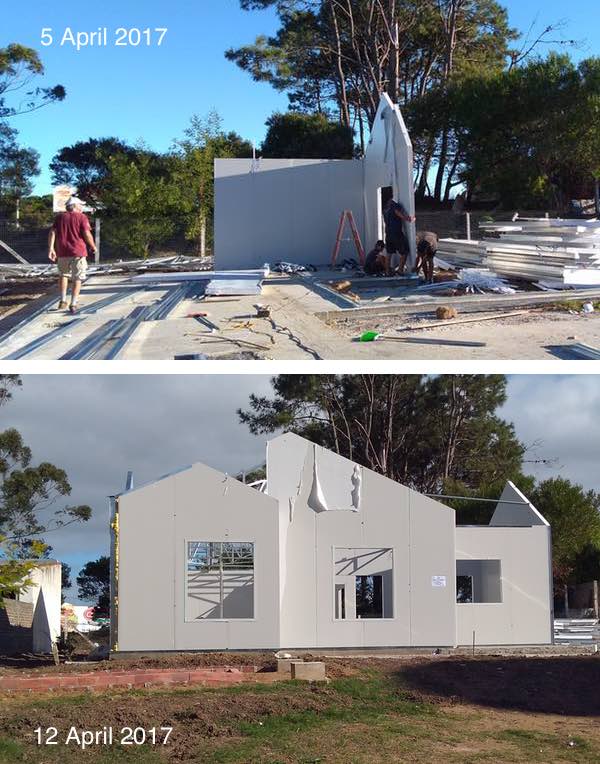
By contrast, using new technology, here’s the house Syd and Gundy are building as a rental.

super fast house construction with Isopanel

This is in fact a bit misleading because, being Easter week, the workers have only put in a few hours of work the last three days.

Isopanel – interesting stuff.

Waterproofing: busy day

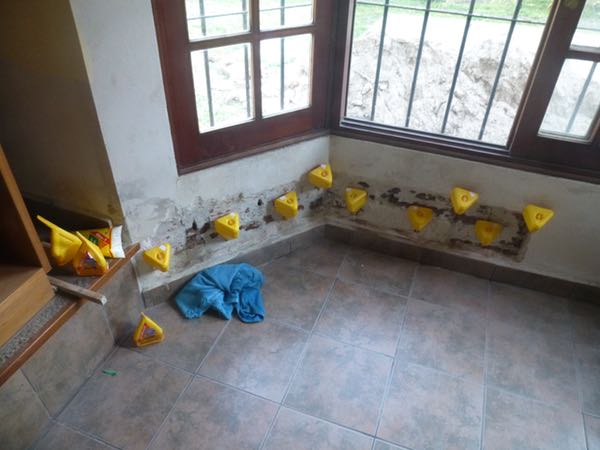
Since we’ve recently had painting done, we thought it time to try to address some persistent moisture problems on parts of the wall that couldn’t be painted. Inside, our new do-anything guy removed all the revoque (surface) of a section of wall, drilled lots of holes, and set bottles of Igol Infiltración, which eventually empty themselves into the surrounding brick and waterproof it. We hope.

waterproofing wall

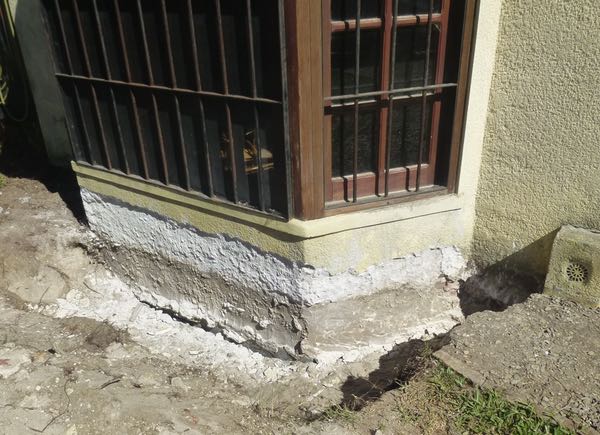
Outside, despite being almost directly below a valley in the roof where the most water pours off, the owner/builder apparently made no provision for waterproofing the subterranean part of the sunken living room wall. Even though fixed in place, the pretty-but-shitty window on the right allows water into the wall as well.

exposed bay window foundation

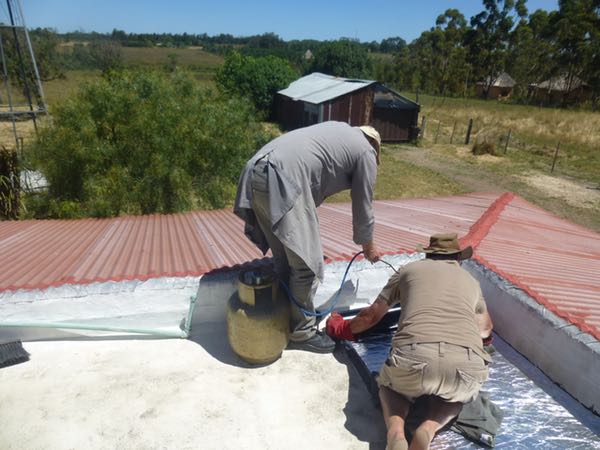
Meanwhile, our Namibian tenant in the campo sought advice from a local South African with lots of building experience, and the two launched into solving water problems on the flat roof there. Typical of Uruguayan construction, the bottom of the drain pipe was slightly above the lowest part of the roof, leaving pooled water to soak through the inevitable cracks in the concrete.

Waterproofing the roof, campo

I helped somewhat, but mostly watched and listened, trying to sort out what they were saying to each other in Afrikaans.

Between the to-and-froing, I managed to take Benji walking with all his buddies, and saw this decent-sized spider casually making its way across our path.

Modern vs. conventional construction in Uruguay

Friends are buying a lot and want to build a rental house. Recently they visited a construction expo in Montevideo and became fascinated with prefabricated houses imported from Australia. Today we went with them to view a couple of them.

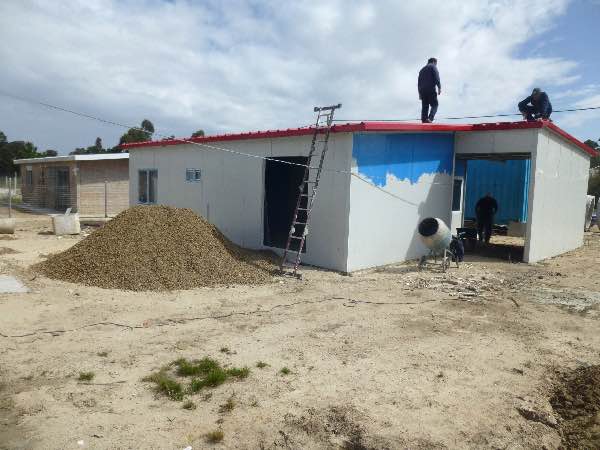
The prefab house in the foreground is built to the same plans as the single-brick house in the background. The one in the foreground is less than a month into construction, and will be complete in less than two months from start. The one in back took two years.

modern construction in Uruguay

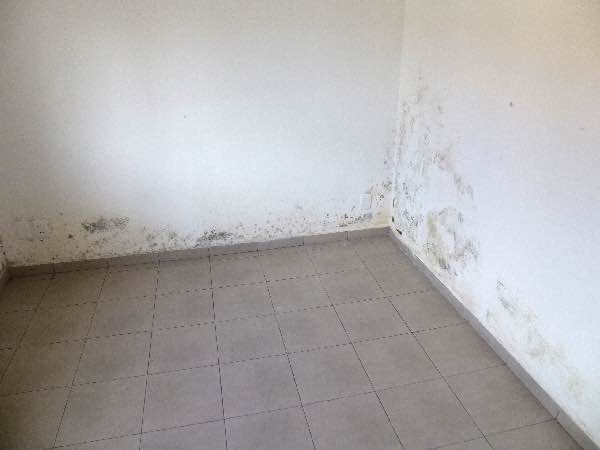
Additionally, the prefab is extremely well insulated. The vertical wall elements are filled with flammable styrofoam, but isolated from one another. In other words, each is its own cell, so even if one caught fire inside, it would not easily spread. Meanwhile, in the “wet” (traditional) construction house, which has never been occupied, the excessive moisture and lack of ventilation has created (typical) mold problems. Again, before people have even been living — and breathing — in that space.

bldg-5

I don’t have comparative costs, but two months versus two years, excellent insulation versus no insulation and moisture problems — should be a no-brainer, eh? Well, there’s something lacking in the warm-and-fuzzy department in the interiors of the prefabs.

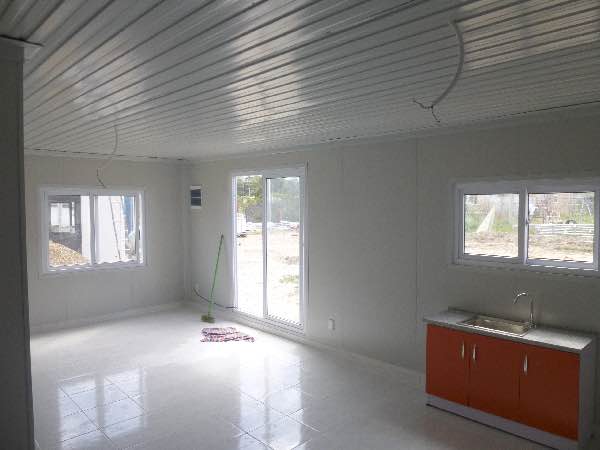
Interior, prefab house, Uruguay

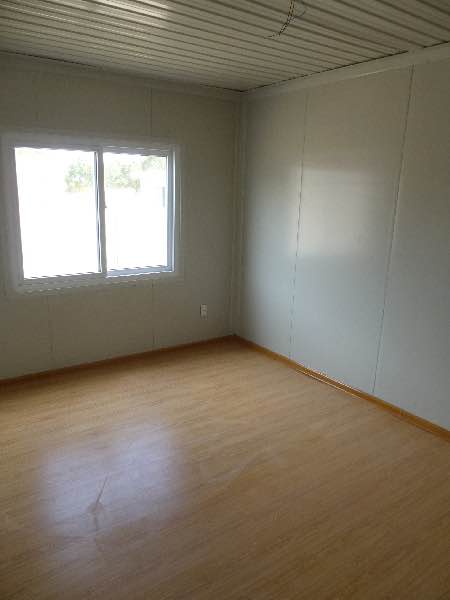
The “wood” floor doesn’t really remediate the shiny walls and industrial ceiling.

Interior, prefab house, Uruguay

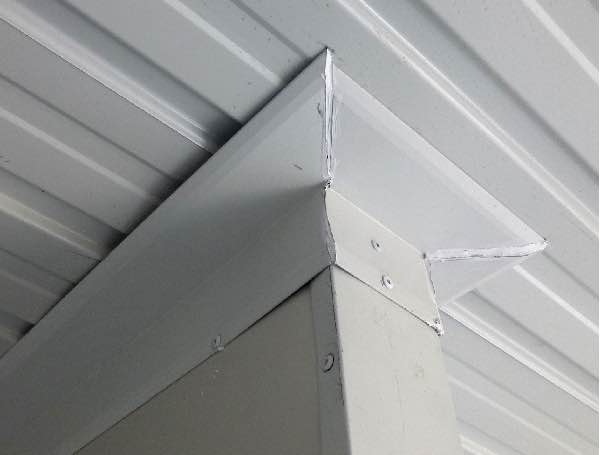
And then the details ….

Interior detail, prefab house, Uruguay

In the end, though, you must consider that this is “cheap for rental” construction. This could be done with an impressive crown molding, but in this case the owner doesn’t give a shit (no offense, Joe). In fact, there’s supposed to be a video on their site, but I didn’t find it on a quick perusal (tonight’s pizza night; I’m on duty). One could easily do a lambriz (thin tongue and groove) ceiling which would be much more simpatico.

You can make the walls much more attractive with textured paint. All a question of cost. Still, pretty exciting stuff, Isopanel.

Slow construction in Uruguay

Slow construction finally finished in Atlántida, Uruguay

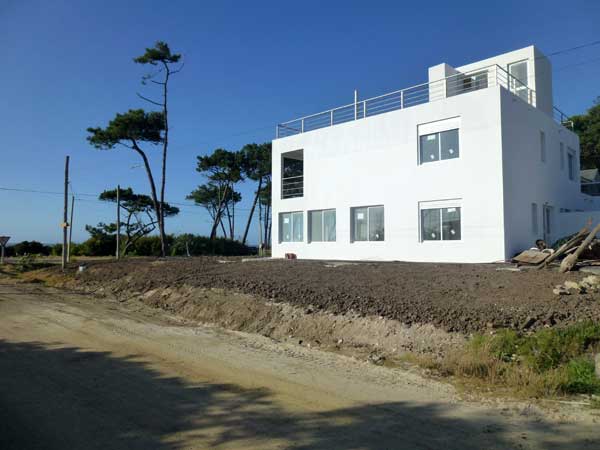
This attractive duplex on the Rambla (beachfront road) appears to be nearing completion after what seems to me an inordinately long time. I remember specifically because the owners, Argentines, rented the  El Nido Beach Hotel last summer, whether to house workers or run as a business I don’t know.

Anyway, as I have documented nearby in the past, by the time the place is ready for occupation the high season will have passed. Rents here are massively higher than the rest if the year, from 15 December through 15 March. So if you wanted to rent in the high season, you’d want to have it ready in December. Should be able to build a house in a year, no?

But then again I have no idea why they built it.

Quincho

quincho

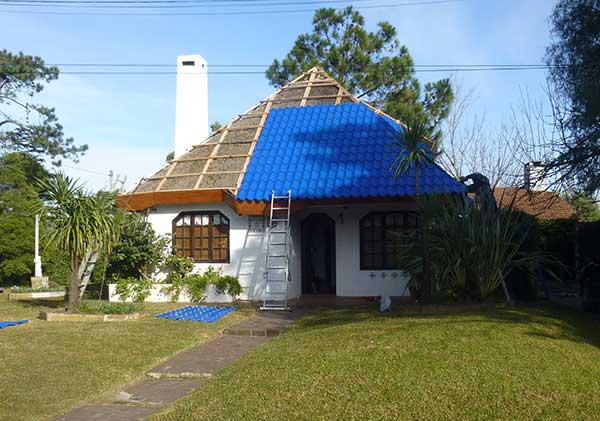
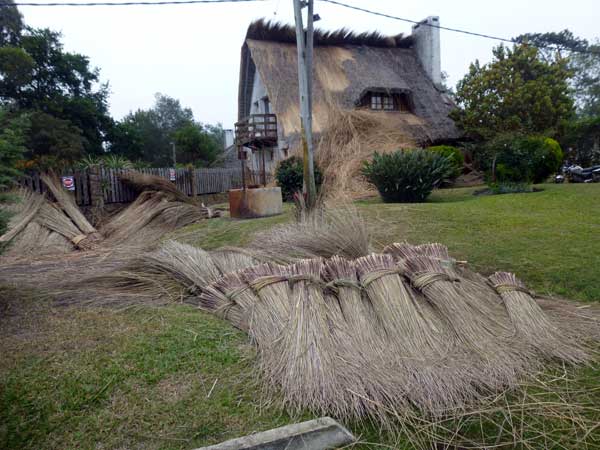
For six years, I’ve walked past this house whose past-prime quincho roof has reminded me of a mangy dog. It’s finally getting groomed, to stretch a simile. It appears the back half is nearing completion, and the facing side is being torn off.

What’s the deal with quincho? Glad you asked. Denise (“day-NEE-say”)  has answered your question exhaustively (and perhaps exhaustingly; we have different styles) here.