
Under construction, fair enough. And far away.
Still, makes me think of Uruguay.
An inquisitive old fart with a camera
Under construction, fair enough. And far away.
Still, makes me think of Uruguay.
You might expect to see ballot boxes in the election office. Going there to deal with some paperwork, there they are…
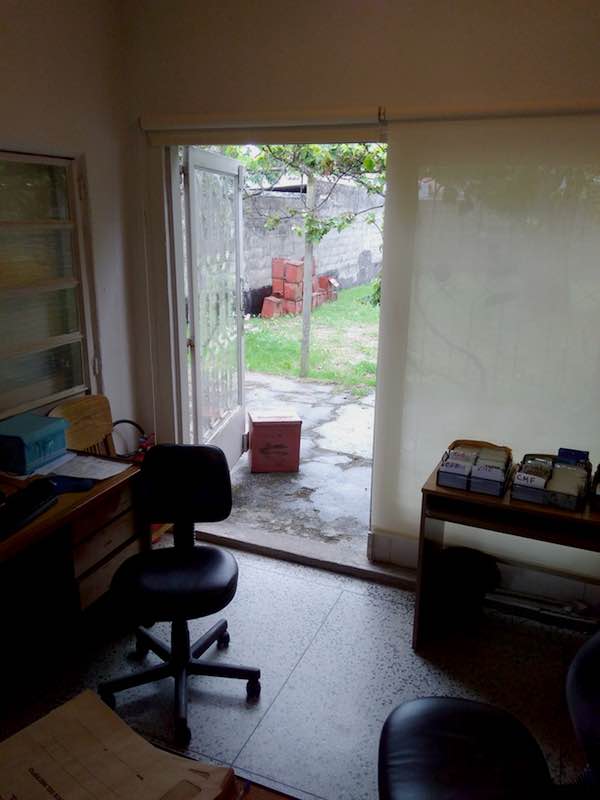
…piled in the back yard, and one being used as a doorstop.
But of course!
We got on well with Charles and Linda, the photographers from my last post, so I suggested we do the free walking tour of Montevideo, which I’d never done. The weather was forecast yesterday to be lovely, and it was.

The tour begins in Plaza Independencia, site of the fabulously overwrought Palacio Salvo, apparently once the tallest building in South America. Our tour guide, however, told us there’s Palacio Barolo in Buenos Aires, built a few years earlier to the slightly lesser height by the same architect.
I won’t bore you with a blow-by-blow, but here were a few noteworthy sightings.

Under “STOP,” someone has stenciled “de comer animales.” Stop eating animals. Optimistic soul: Uruguay has the highest per-capita annual beef consumption in the world.
In the Plaza Matriz or Plaza Constitución (take your pick, as you are welcome to do with Uruguay’s year of independence – maybe 1830 or maybe 1824 or…), street vendors have interesting historical items for sale.

But for North Carolinians Charles and Linda, it was the NC Highway Patrol patch that caught their eye. Is there really a market for this stuff in Montevideo? Apparently.

And then this: Happy arrival in Montevideo, showing a couple falling down marble stairs.
Is there a story behind this, or an inside joke?

Oh yes, and the interesting fence design in Plaza Zabala….
It took us three consecutive day trips to Montevideo to get our Uruguayan passports renewed (actually to get our Credenciales Cívicas updated, a process gratuitously complexified by various functionaries in different government offices) – but we’re now good for ten years, yay! The latter two days involved lunch at new places: Lisandro, offering a variety of sandwiches and salads, but better yet, a peaceful location in crazy Carrasco, and Estrecho, similar fare but better, on Sarandí, the busy walking street in Ciudad Vieja. (Fun to note that Lisandro’s web site offers the address of their other location in Zonamerica as “Driving Rage,” which could, in this country, well be a Freudian slip.)
Yesterday, in Estrecho, the waitress gave us tourist map.

At first glance, it seemed promising.
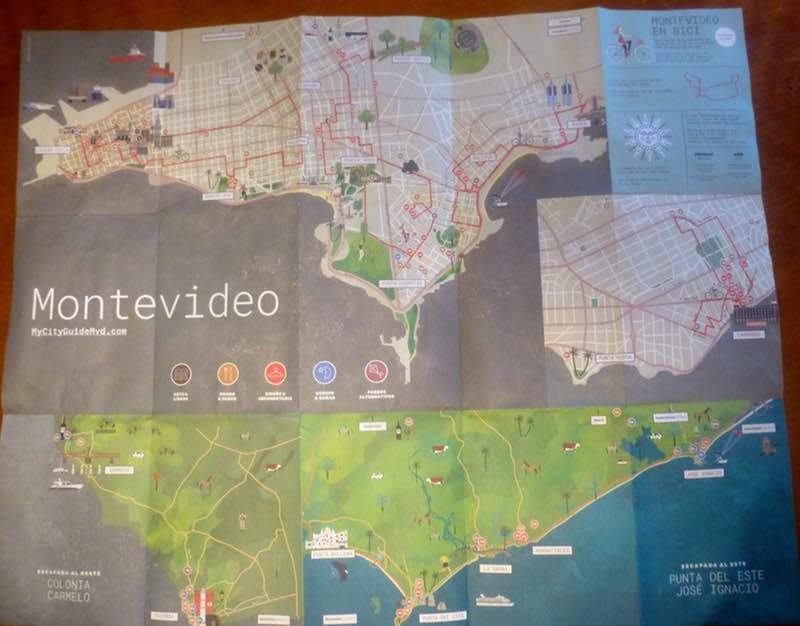
But then I looked closer.

I guess the idea is you find a bike and make your way, maze-like, through this circuit that just kinda looks like it was laid out to accommodate the sponsoring restaurants and stores. Since we were recently in the area, I looked closer and quickly found a couple that gave addresses nowhere near their Carrasco locations.

On the flip side, this:

Postage-stamp sized listings of exactly 100 businesses, with details in 6-point type.
In terms of design, it’s attractive, and not particularly informative. It might be interesting to follow some of these routes, but I find nothing compelling about them. Nor would I settle on any of the sponsoring restaurants without learning more about them.
In the end, though, it’s got maps. And I love maps!
Just me and Mocha the Dog, wandering around some places we haven’t been recently.

There’s a story here — true or not.
Today we celebrated our 30th wedding anniversary a couple days late, after trying to resolve an import issue which I will probably write about tomorrow, in the furrows of Latin American bureaucracy. It was a very reasonable (~USD 25 each) gourmet lunch at Alquimista, #1 of Montevideo restaurants according to tripadvisor.com.
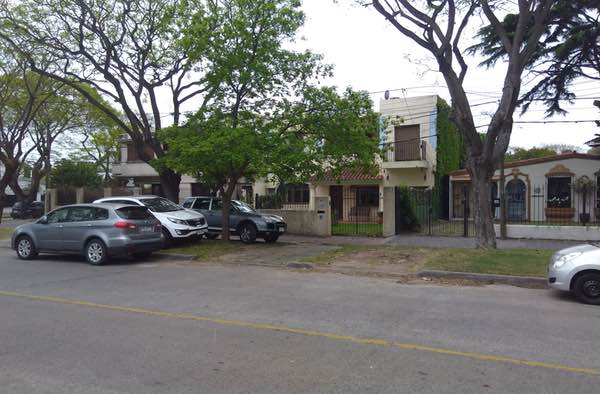
Exiting, I noticed this unique take on parallel parking nearby. Carrasco (which I’ve talked about here and here) is visually appealing, upscale, and in general hell for parking. And, lovely as it appears, maybe one would want to think twice about living in an expensive neighborhood where electrical fencing is commonplace.
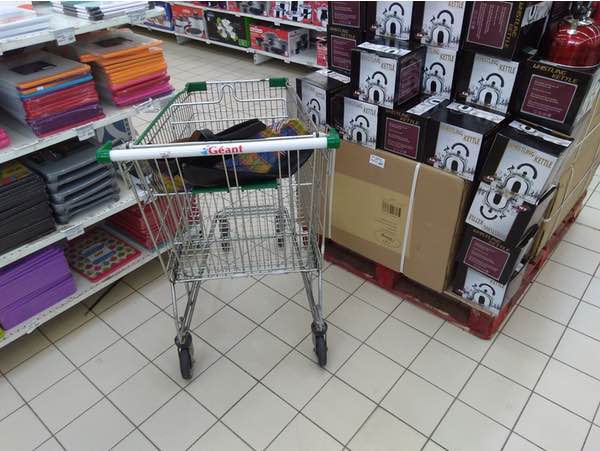
And then there’s the supermarket Géant, where store display are ingeniously engineered to prevent passage of customers. But then, they also have the FILO shopping cart system. It’s not my position to label them idiots, but, given a label-maker….
I’ve been running longer than usual lately, so I’ll revert to “short and…” – well, come to think of it, talking about septic systems probably doesn’t qualify as “sweet.” In fact, it wasn’t at all when someone finally stayed in our little refurbished farm house and had to cover the bathroom floor drain with plastic wrap because of the smell.
When we finally got around to examining the mechanics, the problem was quite obvious. The toilet (which of course has a water trap built into it) dumps into a (how Pompeain!) concrete box. The sitzbad drain goes into the bathroom floor drain, then to this same box outside.

So think about it: the residue from the toilet flows through this box to the septic tank (pozo negro), which then creates smelly gas that wafts its way back up the same pipe and follows the path of least resistance. The toilet is blocked by a water trap, and the concrete lid is more or less airtight, goes where does it go? Up the pipe to the floor drain, of course!
The solution was simple, and took just a few minutes: stick in a cut-off sifón (kitchen sink thingie) and make a little trap. The water in the bottom of the “U” stops gas in its tracks. (“Stop gas in its tracks!” I should be in advertising.) Anything to the right of the “U” I could cut off, but I left just because. You. Never. Know.

Since I didn’t post it in my September 2013 Sitzbad post, I want to mention that the plumbing fail I describe here was balanced by ingenuity, a solution to the “geyser” problem of the floor drain when emptying the sitzbad. The next day Martín returned with one of his daughter’s glass marbles, dropped it into the bath drain, and – pim pam pum – problem solved! The marble reduces the flow by 75%, and it works!
I’ve mentioned before (I’m sure) that Uruguayans can be incredibly resourceful. Had we actually been using the farmhouse with its one bathroom, I have no doubt Martín would have sorted this, no doubt even more elegantly.
On the other hand, in testing this, when I went into the bathroom to turn on the shower/sitzbad water, one of the slate tiles on the step of his sitzbad creation came loose and dropped to the floor.
Of course.
My friend Burkhard, of German descent from Namibia, moved from a rather remote part of the interior of Uruguay to a place not far from our little country property. And immediately started projects. One of which was buying a Ford Model A.
To restore.
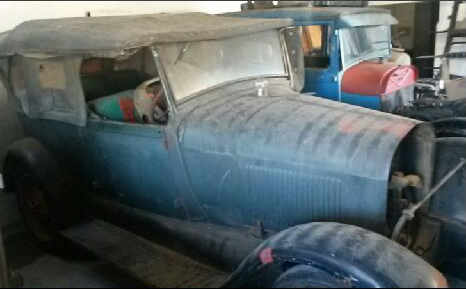
Which meant taking the whole thing apart. No, I mean really apart.
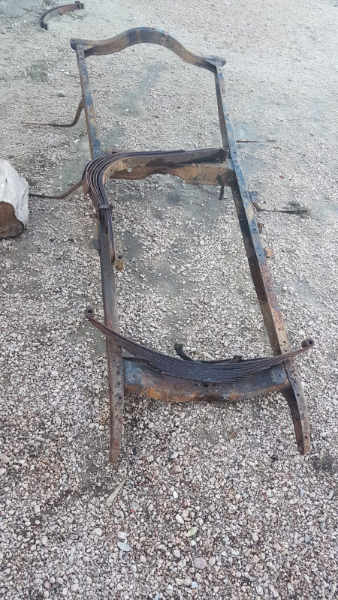
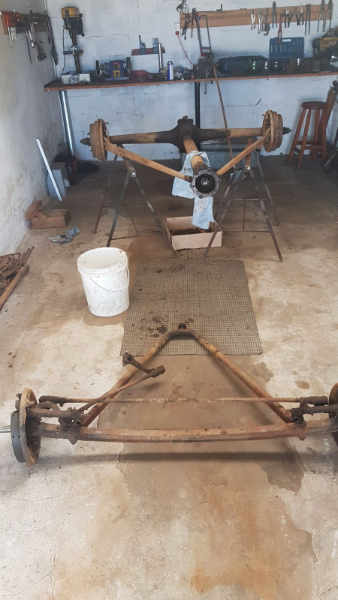
And from three engines that looked like this, creating one with the best parts from each. He substituted adjustable valves – a later innovation (i.e., not original) that apparently saved days of labor.

And then, of course, one has to put the whole thing back together.
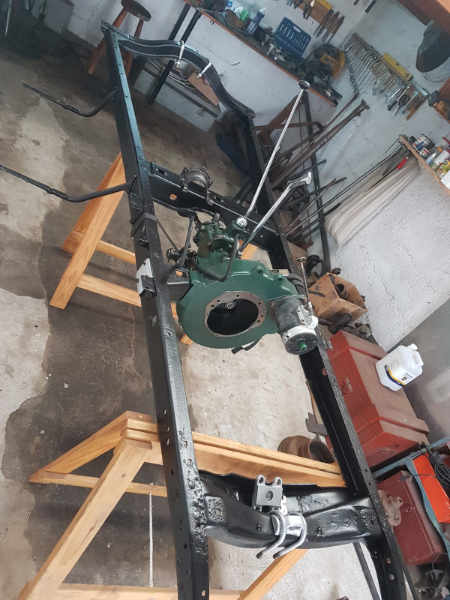
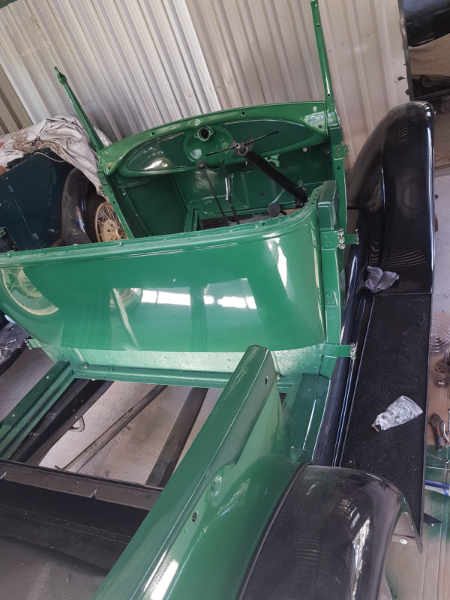

Today it had its first public-road debut. Having been a farmer all his life in Africa, he knew about windmills, and had helped with ours on our barely-used chacra (14+ acres/5.6 hectares). He mentioned that it probably needed lubrication, and since I was halfway through mowing the knee-high grass, and he was offering, we arranged to meet there this afternoon.
And there he was!

He also helped me find a plumbing solution for an annoying oversight from our Uruguayan “of course I know everything” contractor Martín, and then putt-putt-putt was on his way home before he had to use the vehicle’s lights, which are humorously (as long as you’re not driving in the dark) dim.
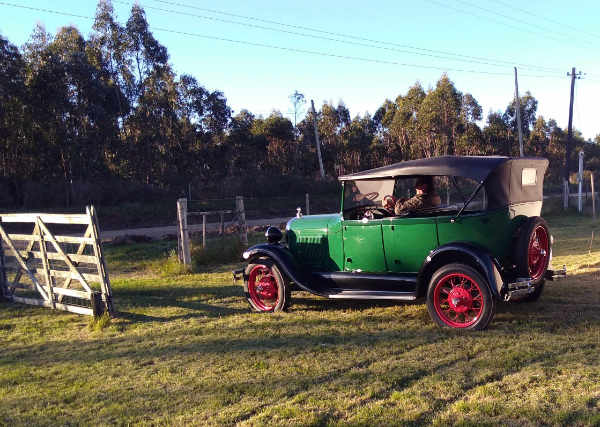
Next time – did I mention he also bought a Model T that he will begin restoring in a few weeks?
There was something that didn’t seem right about that new dog-walk garbage dump we found a few days ago. Besides, of course, the whole concept of dragging stuff to discard it in the middle of nowhere when trash containers are ubiquitous.
To wit: two of the discarded windshields were unbroken.

Two days later, presumably still are, though no longer discarded.
I first encountered the term troglodyte when I lived in Malta, school year 1980-81. It connoted a type of brutish, neanderthal behavior of the lower-functioning Maltese, a connotation not politically correct in modern ‘Murkan Millenial Anti-Stoic society, but hey.
“Troglodyte” actually refers to cave dwellers, and in the sandy area we walk dogs, caves – despite the fixation of ever-digging dog Kiya – really don’t exist. Can’t exist.
Yet you encounter stuff like this:
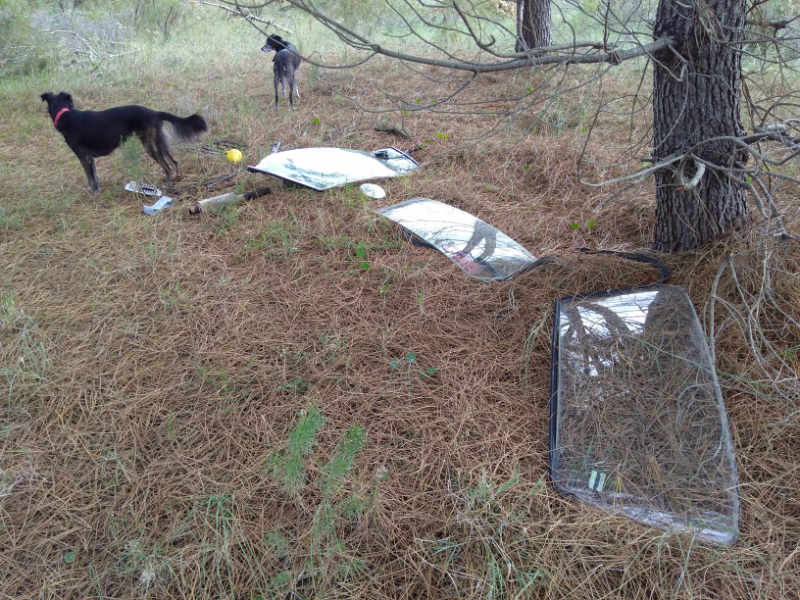
Appeared yesterday: three car windshields. a yellow funnel, a yellow play soccer ball, a few other bits of garbage. Fortunately, the glass not shattered as in the previous dump of household goods, but who knows – give it a few days?
Let me add perspective. This (Syd may correct me) is where this appeared:
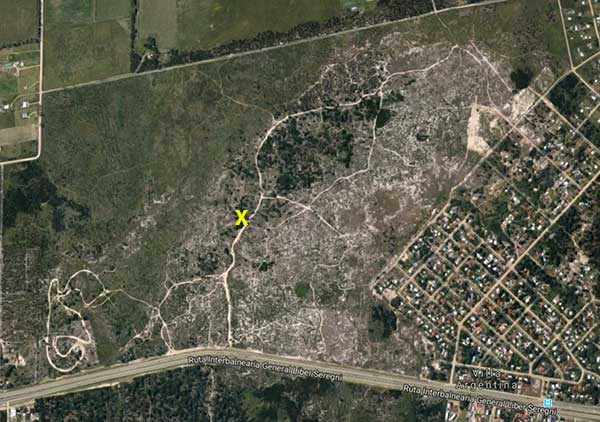
In other words, someone with a cart and horse took a deliberate 10-15 minute ride into “no man’s land” to dump materials that will not biodegrade, and which would have been removed, immediately or eventually, if deposited closer to dwellings.
What can possibly be the thinking here?
Troglodytes.