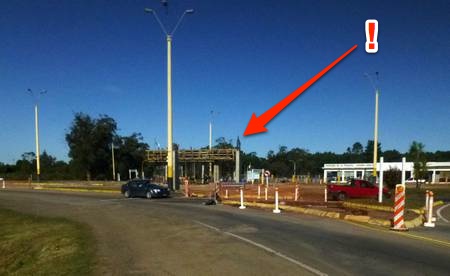
What a difference a day makes…

…when that day includes a lot of rain. This first summer we’ll learn whether the tajamar will retain enough water to stock it with fish. Apparently after disturbing the soil to create the pond, the initial seepage of water through the (already almost impermeable) soil seals it further, so that subsequent water loss is almost entirely through evaporation.

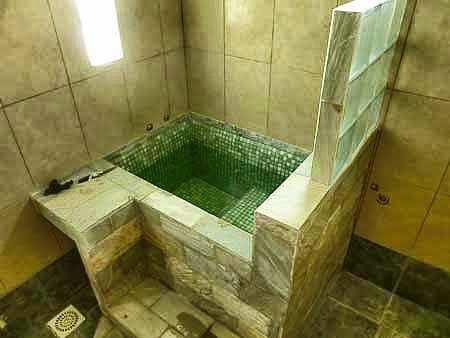
The sitzbad

Bath I designed for our country house, Uruguay

Given a bathroom space that didn’t allow for a full-size bath tub, we recalled the sitz bad of my wife’s apartment in Frankfurt. I made a wood model of the seat, and the albeñil Martín went to town. No doubt this will end up as the single most expensive item of construction, but we’ve lived with a place to soak for almost seven years, and will install a solar hot water heater when I get around to buying one.

Of course, there’s always got to be a surprise, and in this case it comes through the semi-Medieval plumbing they do here. The draining water from the bath (this was its first test) goes into that little floor drain, then exits the house. Except that it doesn’t go into that little box; it floods into that little box, under considerable pressure, of course flooding the bathroom if you don’t slow it down. Not a show-stopper, and not unsolvable, and fortunately the floors consist of tile over concrete, so even if it were to flood the adjoining room it would simply be an inconvenience.

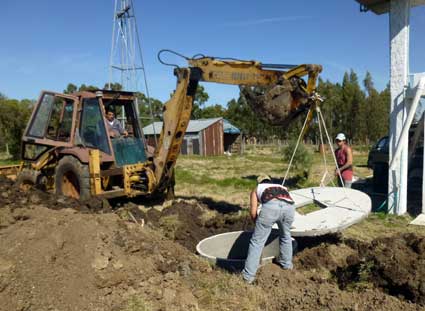
Pozo negro

Insatllation of setpic system, rural Uruguay

“Black well,” or septic tank. The first part is three rings deep; the second one ring deep. It will receive water from the bottom of the first tank, and when it overflows go into a pipe 60 meters or so slightly downhill to a sewage lagoon, in which we’ll plant papyrus, and around which we’ll plant some willow or eucalyptus trees that love water.

The soil is completely impermeable. If you dig a hole 50 cm deep and fill it with water, it will still be full a week later. A septic field would be useless. A friend suggested a mound system, running perforated pipe through a mound of sand topped by soil.

Perforated pipe? They didn’t even sell that in Mexico. And I don’t feel like spending hours (or paying someone to spend hours) drilling holes in plastic pipe. This is what they do in the country, and it works.

A new bridge

Venturing east recently, we noticed some odd construction: in La Floresta at Ruta 35, what had been traffic lights in the middle of nowhere had become a roundabout. Turns out they’re building a traffic overpass, only the third between Montevideo and Punta Del Este, and replacing one of only four traffic lights between the mandatory toll stops.
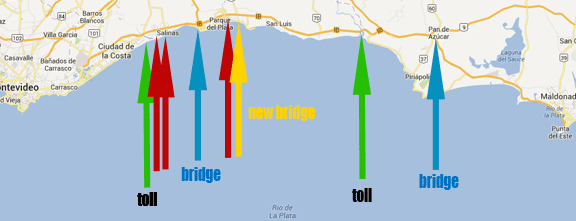
Why there? Ruta 35 does not have that much traffic. However, examining the traffic lights (red arrows) from left (Montevideo) to right (Punta del Este):

  1. Neptunia: nothing but a small residential area on the north side.
  2. Salinas: the town’s iconic arch wold need to be removed.
  3. Parque del Plata: nothing but a small residential area on the north side.

In La Floresta, no problems, wide open, through road to Soca and beyond.

So they’re building it there because they can. That’s good news for anybody wanting to hit the road east, because after the Parque del Plata light (new since we moved here) things are pretty wide open. Unfortunately, the space west of Parque del Plata is not wide open, and heavily populated, but the people racing between Montevideo and Punta act as though it’s their god-given right to drive as fast as they can past things like this and this and this.

Punta del Este license plates begin with B. Montevideo license plates begin with S. BS drivers are not the only offenders (BA also comes to mind: Buenos Aires), but it was not a local car in this scene.
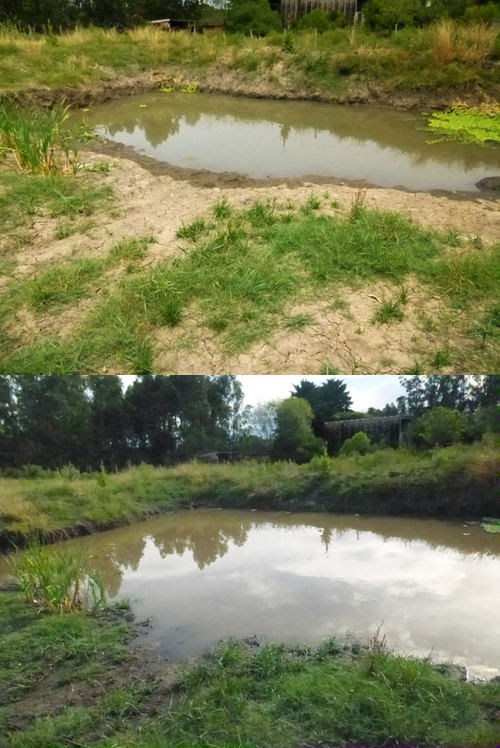
Quick tour of the volunteer garden

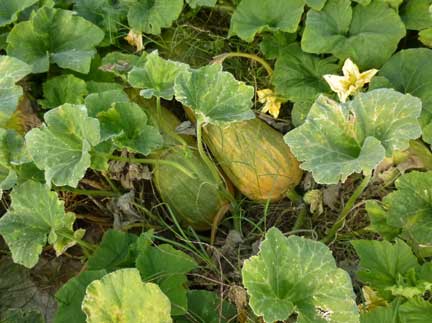
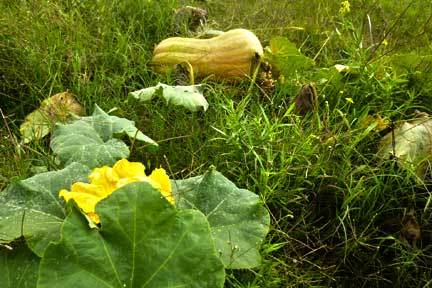
A couple of large zapallo (squash), each about 16″/40cm long:

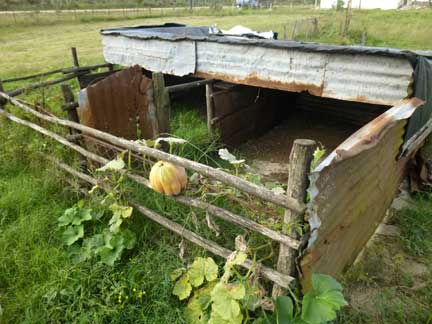
 One I only spotted from the road the other day, growing behind the chiquero (pigpen; unoccupied). It had wedged itself into the fence; I removed it, maybe damaged stem. If so, it becomes dinner.

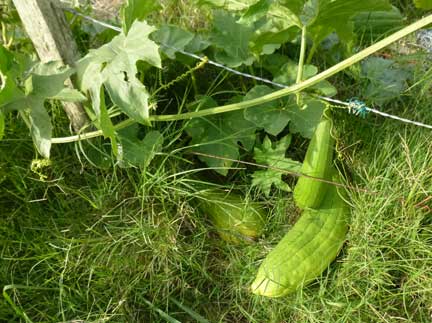
 Finally, two of the loofahs (which I did  plant), joined on the left by an even larger zapallo, which I didn’t.

Comfrey!

Saw this nifty little video yesterday, and remembered the comfrey (Spanish: consuelda) I transplanted last year from a friend’s place after they raved about it. It immediately wilted and looked dead. Don’t worry, she said, it will come back! Indeed it did.

As soon as I finished the video, I dug some up and took it to the campo.

comfrey
Spread to your heart’s content!

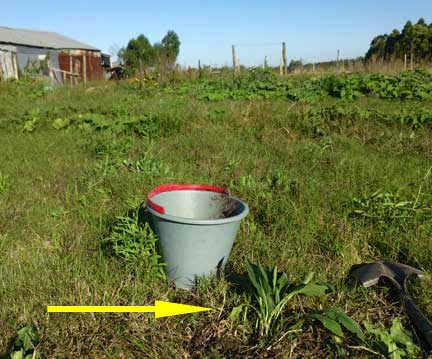
This is looking south (remember, here the sun’s in the north) toward my ragtag garden dominated by zapallos that I didn’t plant.

Goal for next year: grow stuff I actually plant, other than tomatoes and loofahs.

It’s a gourd! It’s a squash! It’s zapallo!

squash

My volunteer garden gave us a zapallo like this for dinner last night. Deliciously smooth and sweet, unlike others that we thought were of the same variety.

On this plant, they start out looking (well, sort of) and tasting like zucchini, then they get big and long, and even bigger, and if you leave it until the stem dries out, they will keep all year in a dry place (except that they didn’t last year).

Do an image search for zapallo and you’ll see a boggling array of shapes and colors, including some that look like pumpkins, which is how the word translates. Those with very orange flesh are called zapallo cabutia. All very confusing.

Plus that word is pronounced sa-PAZH-o here.

Related: Monster squash

¡Estoy rico!

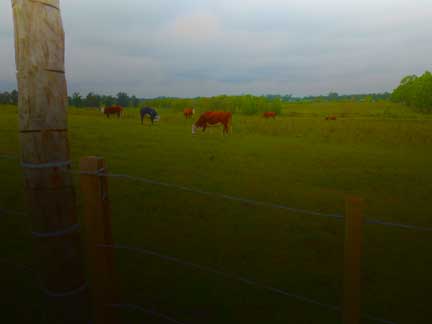
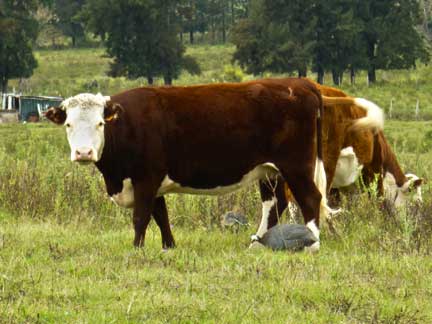
Even agressive Photoshop filters don’t make them particularly interesting.

Actually, they belong to my neighbor, whose two remaining guinea hens were pecking at the feet of one of them, which is almost interesting. In a limited way, on an off day.

Cow gaze: you can almost sense the intense cerebral activity.


Fence permit?

No, you cannot install that fence because…

…well, depending where you live, you might think the statement continues, because you don’t have a proper permit.

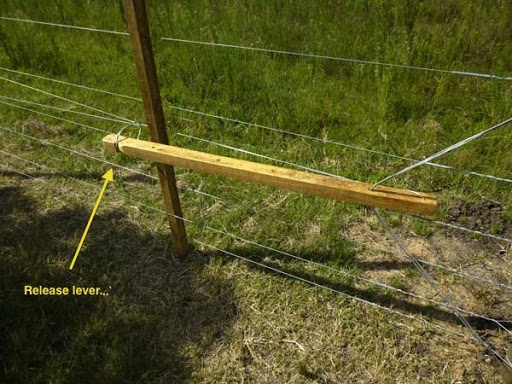
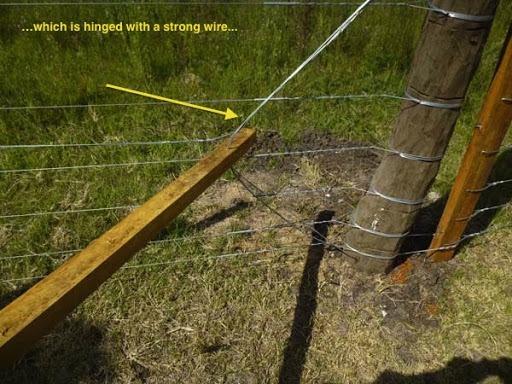
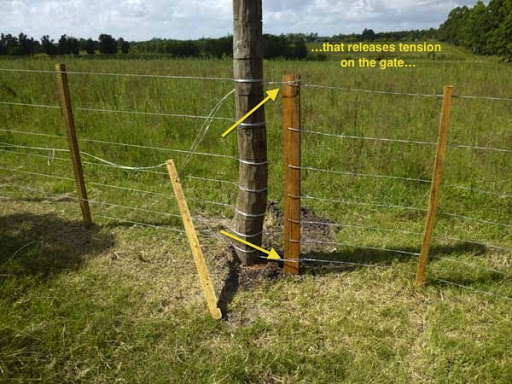
The passageway for cows and machinery, in which I planted fruit trees that will have to move, included a gate only on the road, leaving the back open. To prevent the cows in the back from destroying the fruit trees, I cut out a section of (useless) fence elsewhere, and dragged it to the offending gap, but I could not install it.

Because immediately two neighbors showed up, and next thing I know they had done it for me.