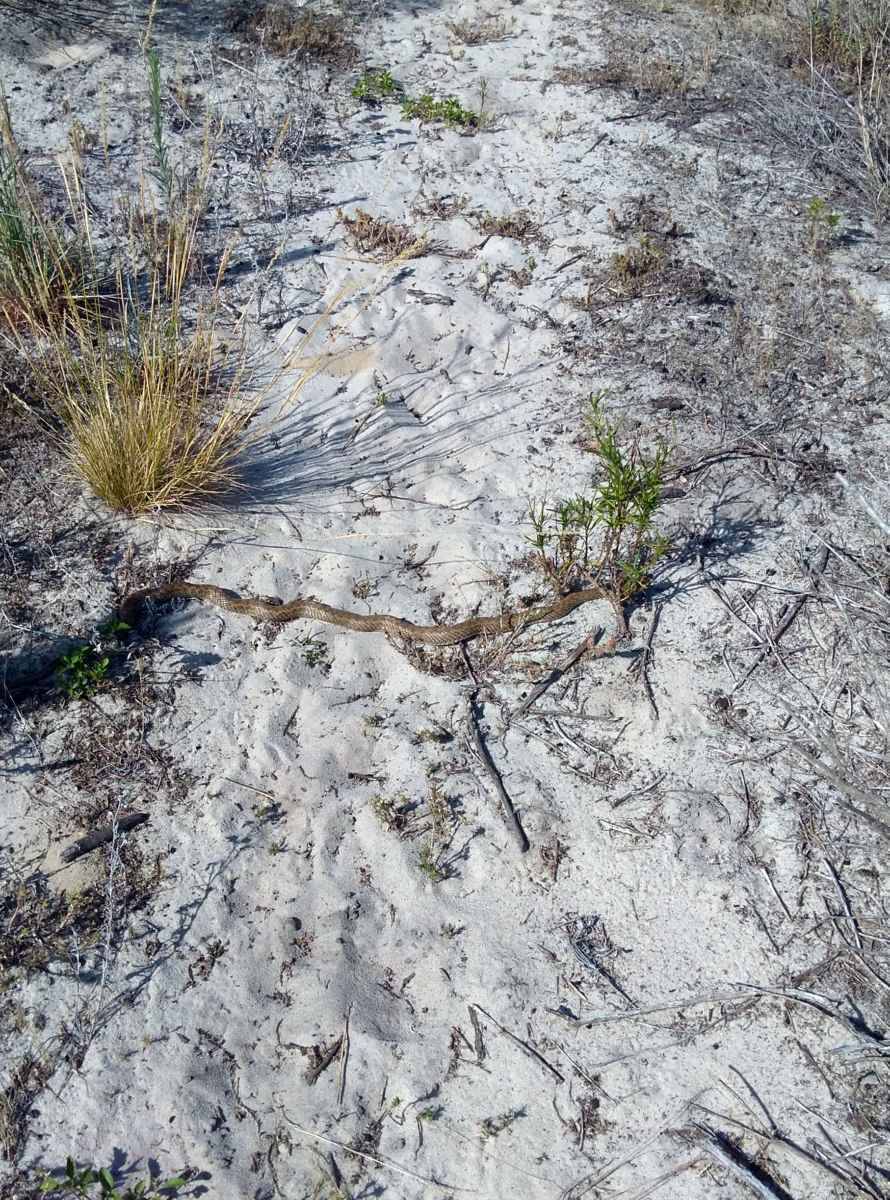
Blocking the path today: Culebra Marrón – Clelia rustica. Never aggressive, though we didn’t know that at the time. Probably a meter long.
An inquisitive old fart with a camera
Blocking the path today: Culebra Marrón – Clelia rustica. Never aggressive, though we didn’t know that at the time. Probably a meter long.
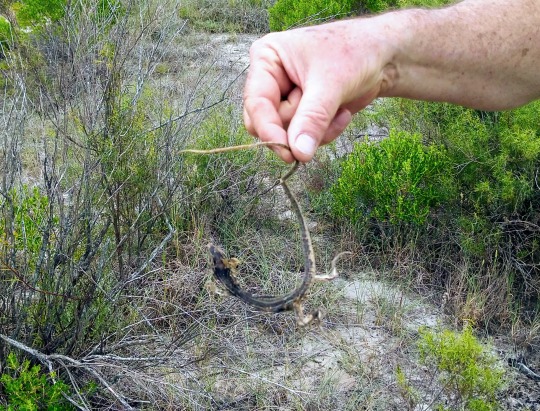
Unfortunately for Lea the Lizard Chasing Dog, it was already quite dead. Its tail broke off moments after taking this picture, an impressive escape move from something that isn’t even alive.
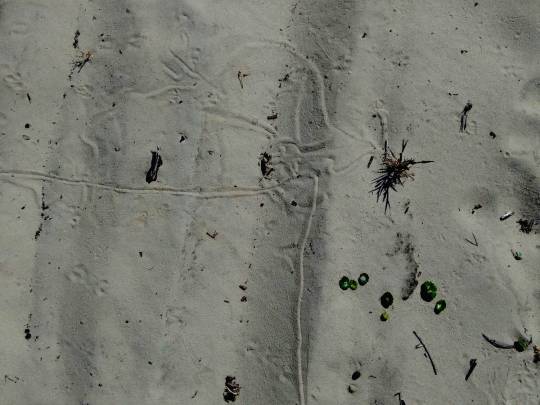
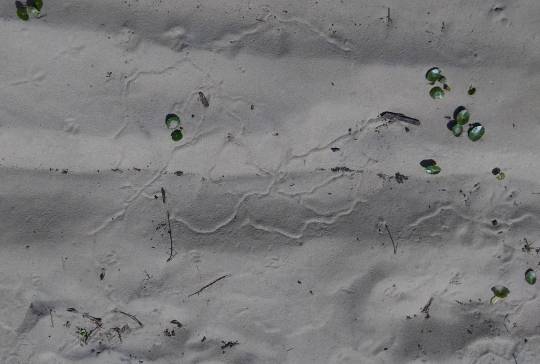
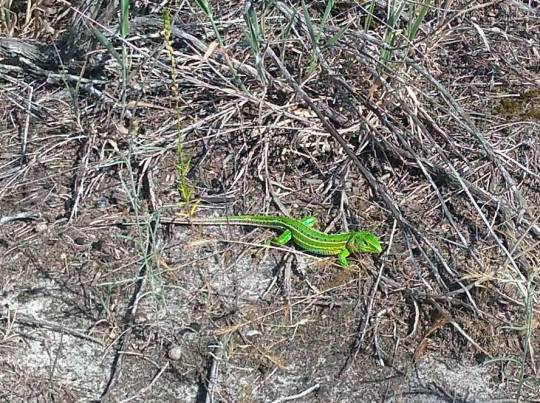
Normally little lizards blend with the background and scurry away as soon as you spot them. Not this one today. And not that I would have caught him, but looked like he’d make a cool pet. Happily Lea, the lizard-hunting dog, was not close by and not paying attention.
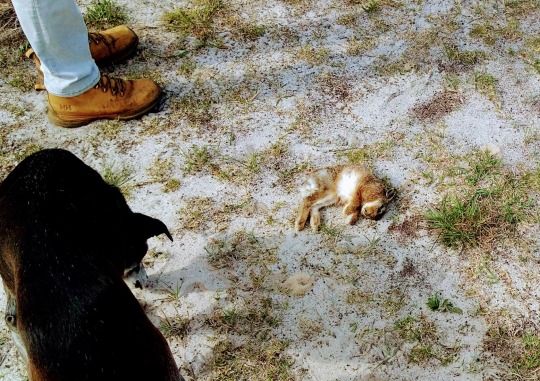
In the past few years of walking dogs almost daily — six to eight of them — they have only caught (and of course killed) three rabbits, two of them young and obviously inexperienced. One of those little ones was just a few days ago. And we have seen many, many chases, some spectacular, some almost farcical. We’re always happy when the rabbits get away.
But what killed this little one today, no idea. We always know when there’s a chase, because the dogs yelp. Not a sound today, and no blood. Both baby rabbits the dogs caught previously were quickly torn to pieces.
So, another little mystery.
Stepped out the back door to find this. Awesome the way snakes move!
Unusual fuss last night; dogs wouldn’t come in. Bandito the Shih Tzu was burrowing impossibly into the aloe vera, backed by chain link fence, until I had to swat at him with a flashlight to flush him. He went inside, I went inside. Then Susan announced that Mocha was inside, she not seeing, as I did, something a foot long hanging from his mouth.
My first thought was a rat, but he jumped on the couch and deposited a young comedreja (possum). “Dead,” I said, but Susan reminded me how well they play dead, so I grabbed it by the tail with a piece of paper towel and deposited it outside the fence, where our dogs couldn’t get at it.
Alas, the morning light revealed that it was not, after all, playing dead.
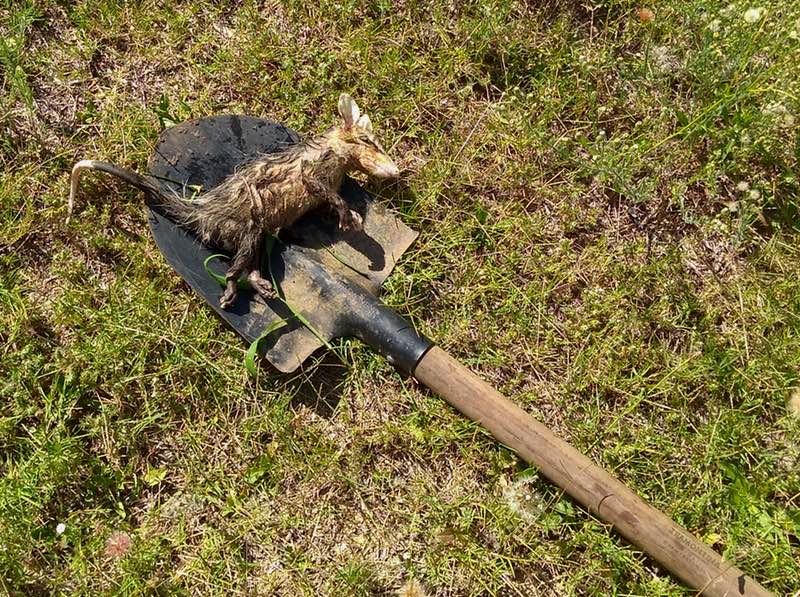
It’s not the first, but a little less mysterious than the last.
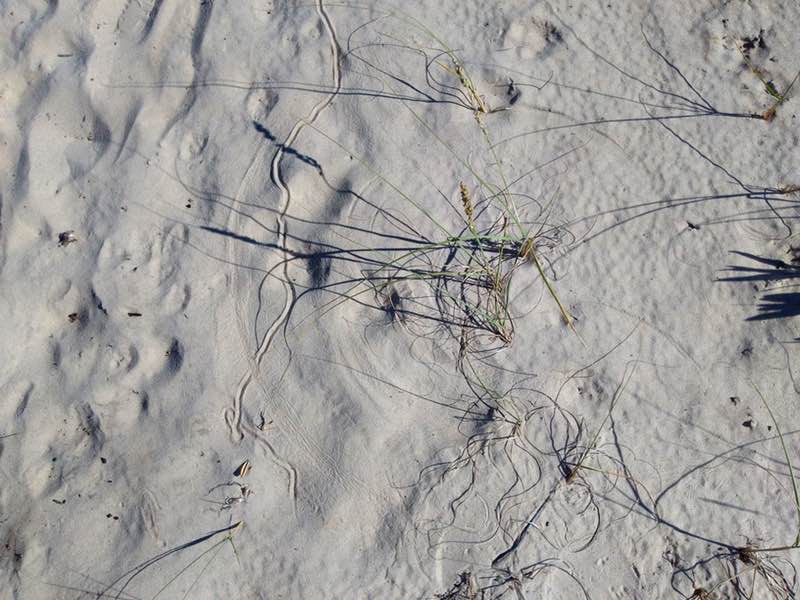
I’m not sure what left this trail, but I get a kick out of the little loop-de-loop lower left. Maybe the whatever-little-critter version of turning around as you head out the front door because you forgot the car key, only to realize it’s in your hand.
This from yesterday. As last time, almost off the trail. Definitely alive, but very sluggish — I gently nudged it with a stick. Syd yelled at his dogs to keep them away from it. Happily, none really noticed snake nor yelling. And regardless, managed not to step on it.
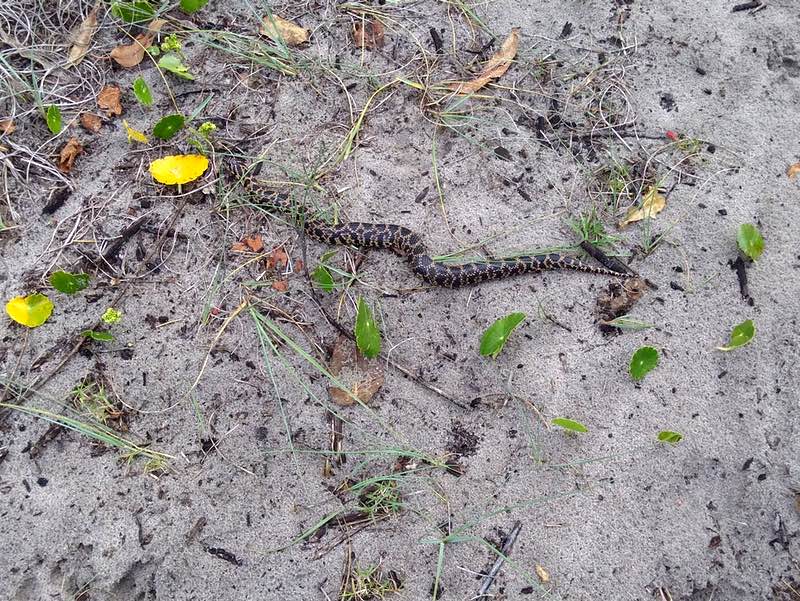
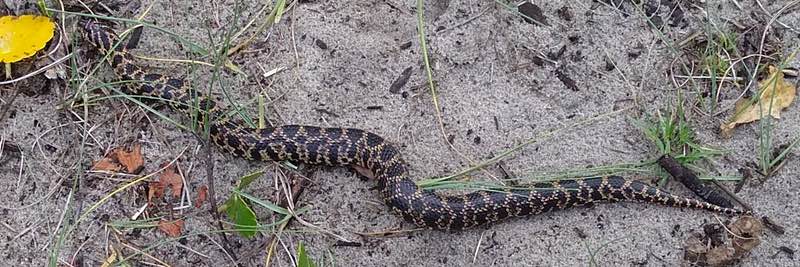
Here’s the last one (30 September) — different coloration:
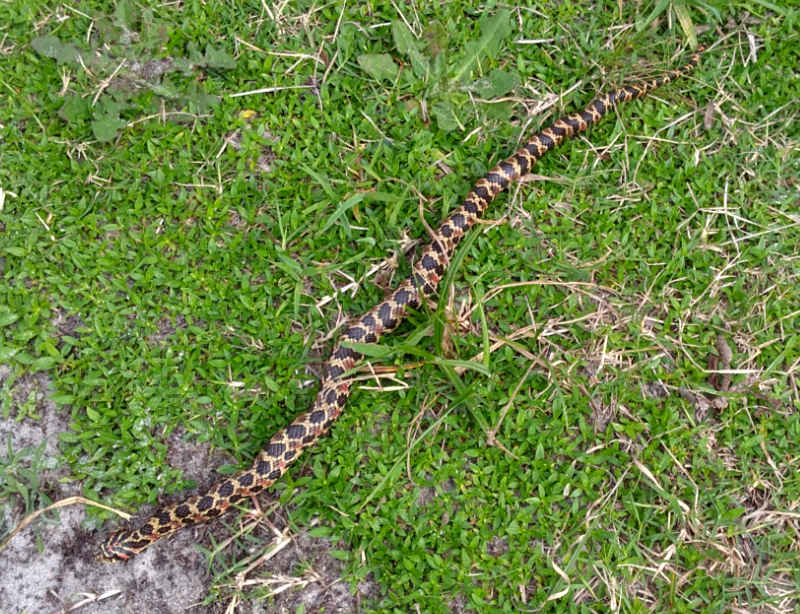
And this from November 2016 — Falsa Crucera de Hocico Respingado – Lystrophis dorbignyi (the tail is a giveaway):
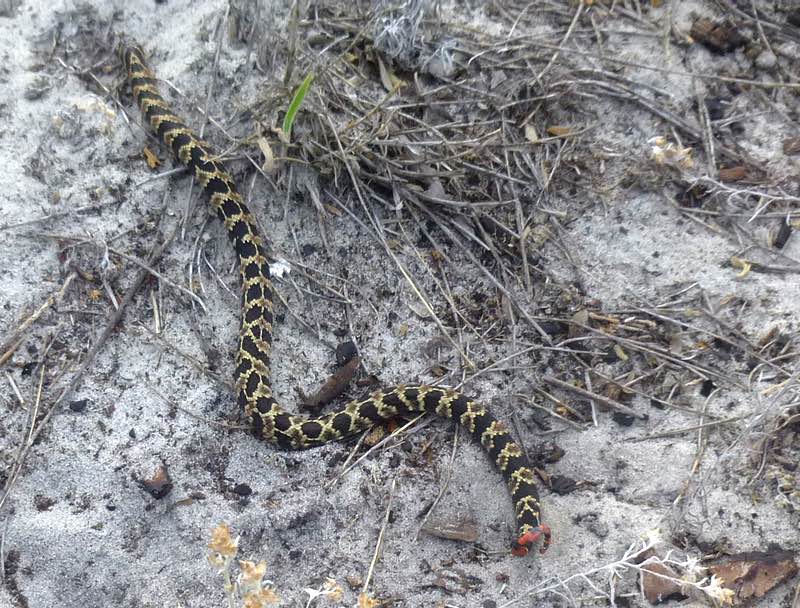
And this from last November — Falsa Coral – Oxyrhopus rhombifer rhombifer (?):
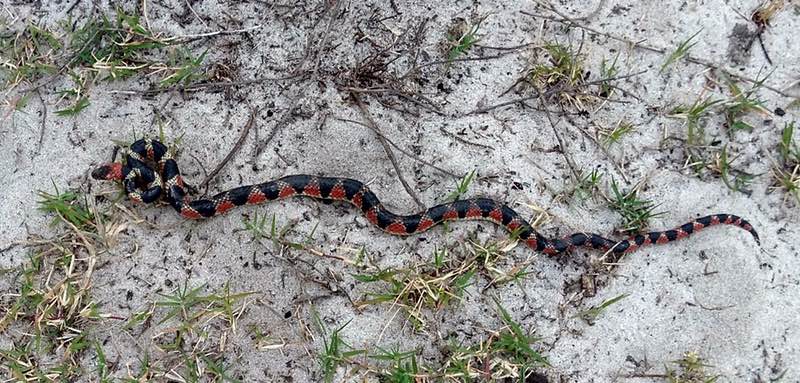
I’m not particularly into snakes, but it presents an interesting challenge to figure out “who’s who” in the local snake world.
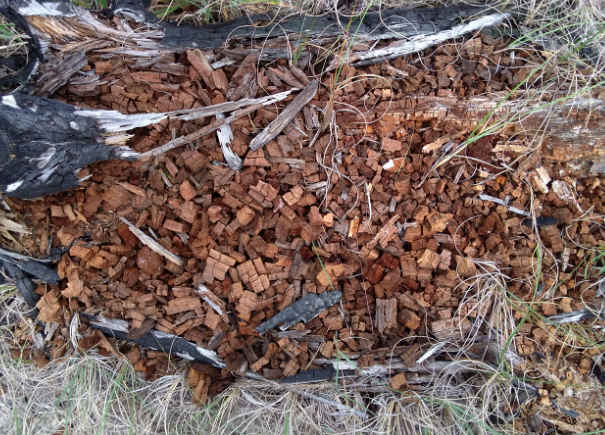
I’ve walked by this many times, but this day it caught my attention: burned-out (from the fire that deforested our dog-walk area) trunk of a pine tree. Charred outer bark, and inside the wood is disintegrating in rectilinear chunks. Huh?
Then, a snake. OK, just a snake – but no, the air was quite cool; the sun was quite hot, and the sky was blue dotted with puffy clouds, and it was lying still, almost into the sandy trail. We tried to keep the dogs from noticing it – and they didn’t – but because Syd and I stopped to look at it, three dogs came back, curious about the unusual human behavior. One almost danced on top of it, but amazingly none stepped on it. And still it didn’t move.
My best guess is it got to the side of the trail in lovely radiant heat from the sun, but when a cloud blocked the sun the cool air took over, its energy went away. I am not a biologist, much less a herpetologist. If you know more, I’d be interested to hear if I’ve got a handle on this.
It appears to be Lystrophis dorbignyi, or South American hognose snake.