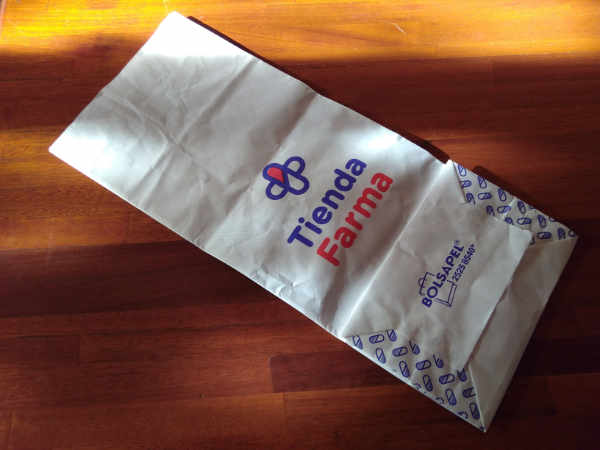
Sometime last week, I had to pick up something at our friendly local pharmacy. Almost everywhere I shop other than supermarkets, people know I prefer not to take a plastic bag if I can avoid it. So I prepared to put in my pocket the “puppy aspirin” I had just bought (can’t bring myself to tell that story just yet), the smiling little man behind the counter proudly waved a paper bag, something I’d never seen before!
Then, at the farmacia in Tienda Inglesa, the same thing, again first paper bag I’ve ever seen there.
I was reminded of the early 80s in the US, and the supermarket checkout question: paper or plastic?
Was it the same in Uruguay? Did there used to be paper bags for groceries?
Because here’s a strange thing: Plastic bags are made from oil. Uruguay has no oil. Paper bags are made from trees. Uruguay has not only an abundance of trees; it also has pulp mills.
So why are plastic bags ubiquitous in Uruguay “Natural?”
If you search this site, you can find plenty of photos of rain damage, flooded roads, etc. But the rain was so intense this morning that we actually had a couple of inches of standing water in our back yard at one point. It’s even more amazing when you consider that we live at the beach, and under the grass there lies merely a few inches of soil, and then just sand.
I’ve got some video, but I have to learn a new video editing program before I can stitch it together, so that will be a tomorrow thing.
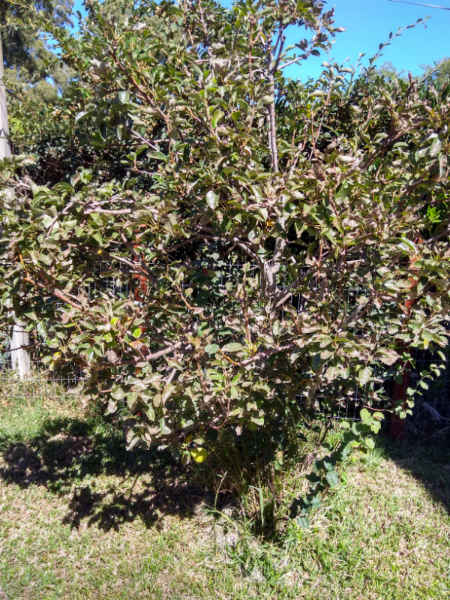
No, not a partridge. A pear. One and only one single lonely pear, which will be our entire harvest from this tree this year – if we’re lucky and the birds don’t get to it first.
The few hundred acres of scrub bushes and pine trees we where we walk dogs has little in the way of stunning beauty, and sometimes glaring examples of human ugliness, but it does not have thousands of people like the beach.
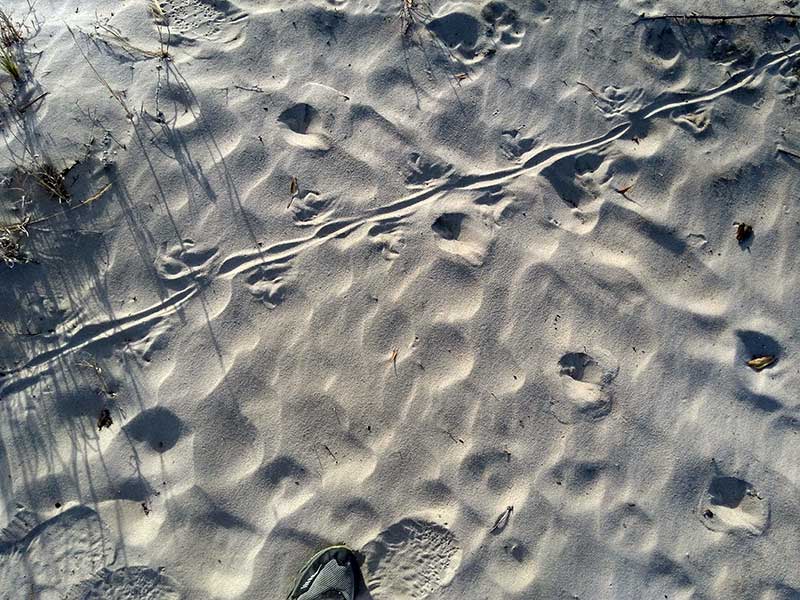
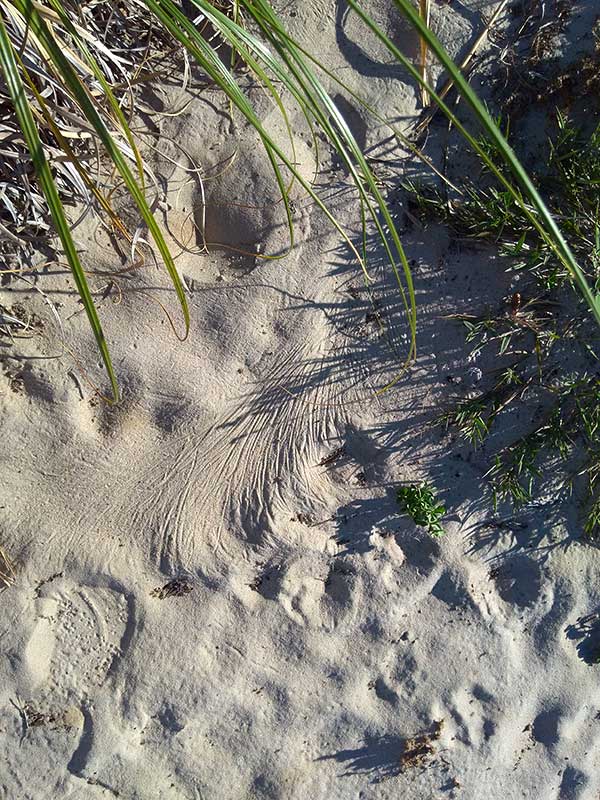
And it almost always has fascinating little discoveries, like these lines in the sand.
They must have been caused by wind and the grass, but how exactly they managed to make those outward curves was not at all clear.
I haven’t been to the beach with Benji frequently since we started walking with Syd and his five dogs in the wastelands (literally) of Villa Argentina norte. Variety of reasons: conversations with Syd tend to be considerably more interesting than conversations with Benji; Benji usually gets more sustained running given all the other dogs including rabbit scout Jordy; and I don’t have to throw a stick into the waves 20 or 30 times in succession.
But from time to time I am reminded of the age-honored saying that location is everything.
As in, we encounter no cows on the beach.
This was Benji yesterday, halfway through our walk. It may be just the exaggerated olfactory experience, but Syd and both thought Benji stayed closer to us for the rest of the walk than he ever has before. Excruciatingly close. Being able to see and not smell this, I must say he achieved a remarkable extent of coverage.
After two soap bath yesterday evening, and 20-30 plunges into the waves to retrieve a stick, it was only after he dried off that our living room didn’t smell like a barn.
So, what’s new on the beach?
I have posted before about the boardwalks that were poorly designed and maintenance-free. Now in Las Toscas (we live on the border) appears one built with posts that extend vertically to a metal handrail. Progress!
Meanwhile, at the end of Circunvalacion, the boardwalk solution (B) has become unusable, while problem it addressed (A) has grown 2-3 times larger.
Seen from the other side: the boardwalk (B) is completely buried, while beyond (A) the dunes are completely blown away because of traffic through the gap.
Coming back from the beach, I note a number of wine cartons at the overflowing recycling bin — all with corks carefully replaced. Which means that someone at the recycling center will have to remove them, one by one, so the glass can be recycled.
Over the past couple months, trucks have dumped dirt at the park we pass through on the way back. Red arrows mark the vertical poles that are all that remains of the goal posts. The person who cuts the grass has carefully mowed around the mound of dirt (and rubble).
Walking dogs yesterday, we got into a discussion of bugs, as in garden variety. Syd and Gundy had a bunch of green spiders, and he wondered what they were, and whether they would hurt his tomato plants. He also mentioned a long green beetle with long antennae with balls on them. They were all over the blackberries, but apparently not harming anything.
Returning 45 minutes later, within a few meters of his front gate, returning, one landed on his arm, as if to say, “Welcome home!”
Uruguay “sort of” legalized marijuana at the end of 2013. Being a place where free-market is generally considered a bad thing, and government somehow a creator of wealth, the experiment has proceeded with predictable ham-fisted bureaucracy. The government controls all production, licenses growers and buyers, limits the amount they can buy in a month, etc. At present there are maybe 16 pharmacies (all in Montevideo AFAIK) where one can buy marijuana, and they have had their bank accounts closed because of the ham-fisted and arrogant United States federal government. This echoes the contradiction between state and federal laws in the U.S.: marijuana is legal in California and Nevada, but if you transport it across the border you’re committing a federal offense.
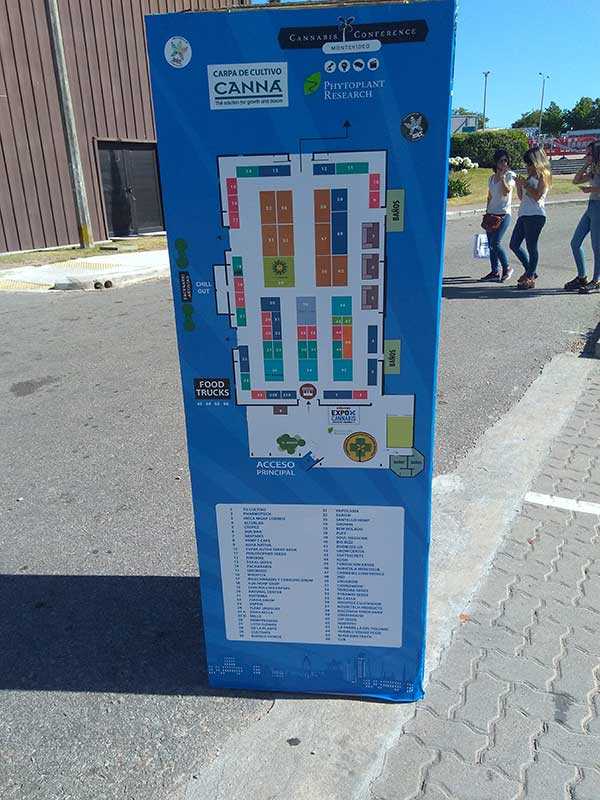
However, there is good news: Hemp Planting to Triple in Uruguay. And the Expo Cannabis has gone from rinky-dink three years ago (according to Syd) to quite impressive.
As you might guess, most of the crowd was younger than yours truly.
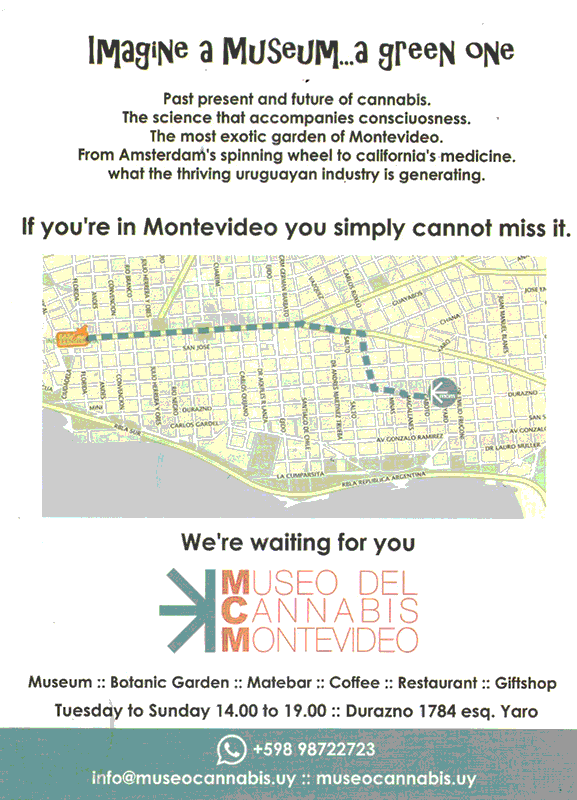
The first display inside the door showed a variety of products including hemp oil, and dog care products that Syd really wanted to buy. Not for sale? It took me an embarrassingly long time to realize the display was for the Museo del Cannabis Montevideo.
Nearby, a display of plants.
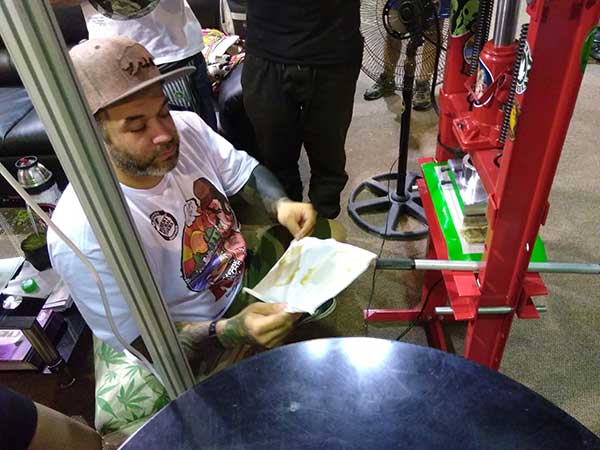
We quickly noticed a number of booths had hydraulic presses. We were a bit mystified, then watched a demonstration of extracting cannabis oil with heat and pressure — far safer than using toxic solvents, which then have to be boiled off.
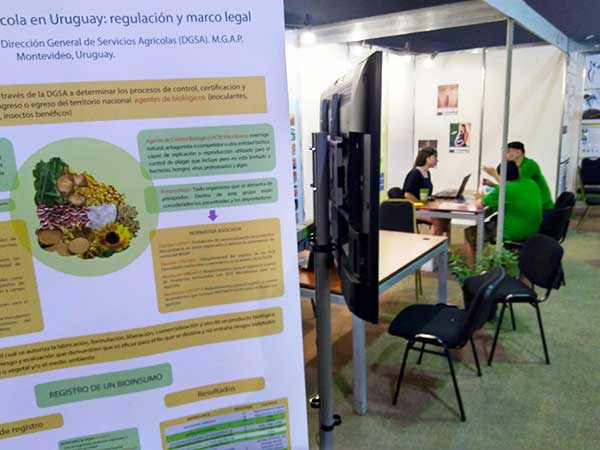
Many booths were selling seeds and growing apparatus, and the government was there with a booth where you could register with the authorities. Several booths centered on medicine and healing, as did a number of the presentations/panel discussions.
I started asking questions about seeds when I saw “AUTO“ in some of their names (autofloreciente). Fascinating stuff.
My only regret is that I didn’t ask more questions, because in the car on the way back, discussing what we had seen, we had plenty more.