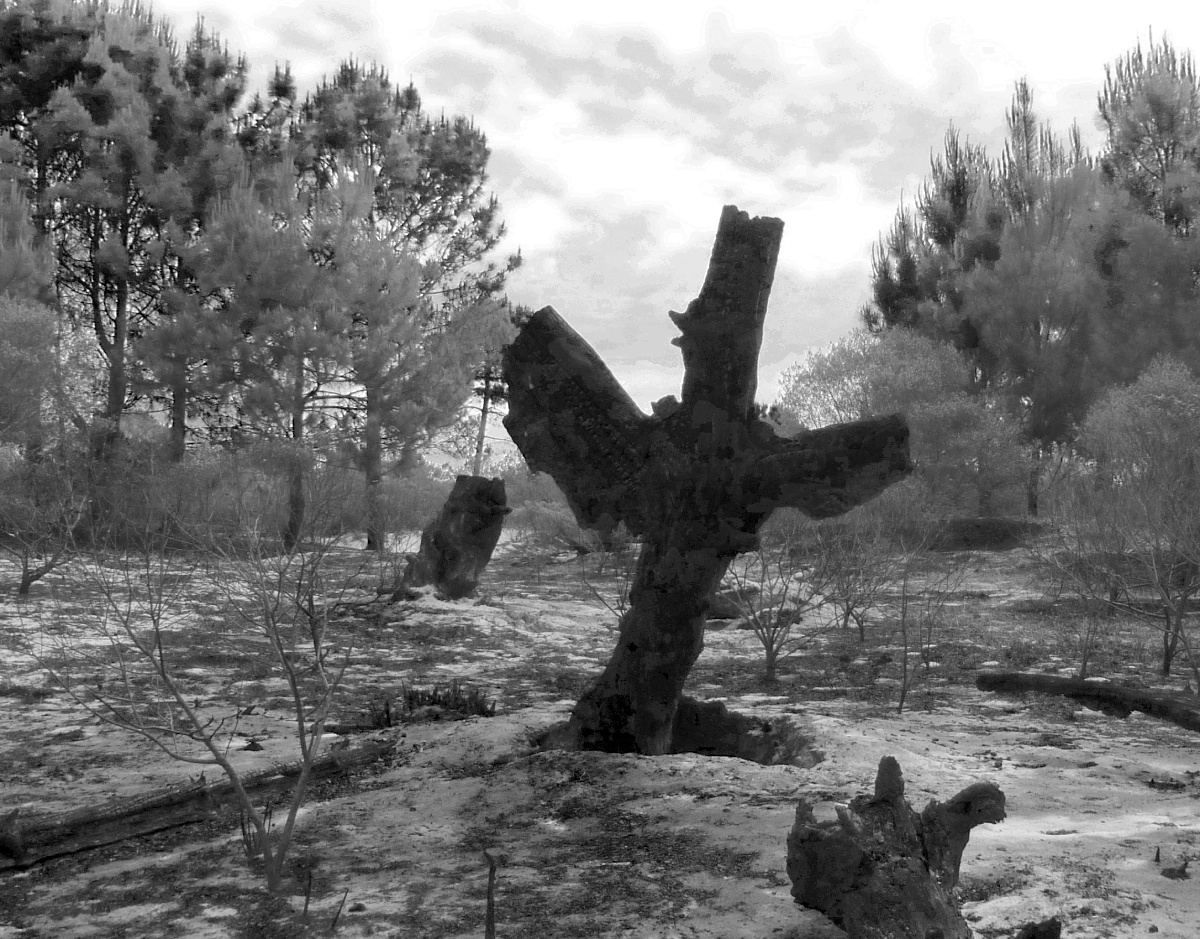
Burned “boo!” tree
An inquisitive old fart with a camera
General observations, generally during dog walks
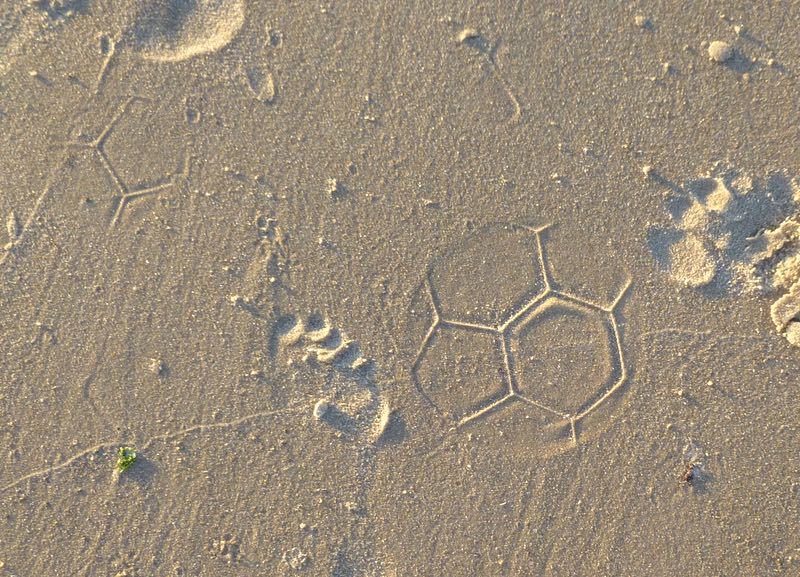
Beach. Uruguay. Of course.
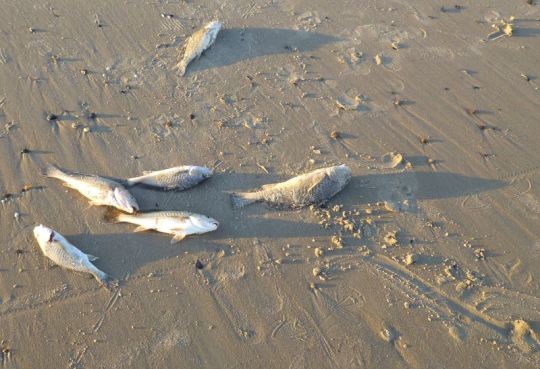
Beach. Uruguay. Fisherman catches fish too small. Doesn’t think, “I’ll throw them back, so they can get bigger.” No, leaves them to die and rot on the sand.
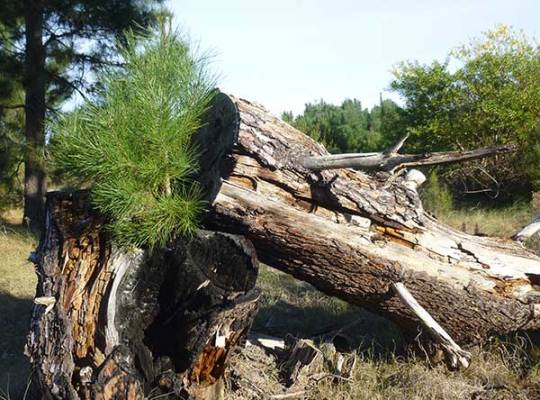
11 June 2016: This afternoon, walking a slightly different route than normal, I spotted a pine tree starting over — lots of trees were lost to fire several years ago. You have to wonder how much of the existing root system feeds this. Or did it sprout from seed in the rotting trunk? I’ll have to look more closely.
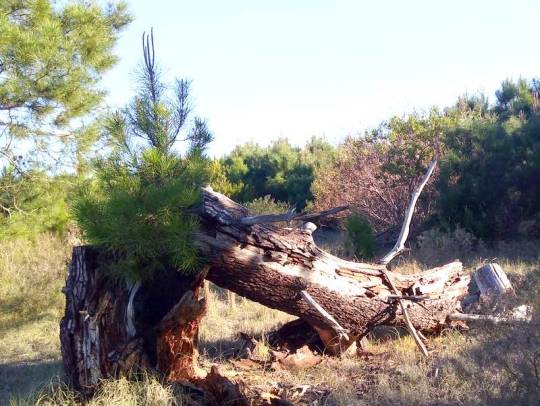
5 May 2017: Pine trees don’t regrow from stumps, unlike eucalyptus trees. But you wouldn’t know that from looking at this. Apparently a pine cone sprouted inside the rotting stump. How it fares as the stump continues to rot will be interesting to watch!
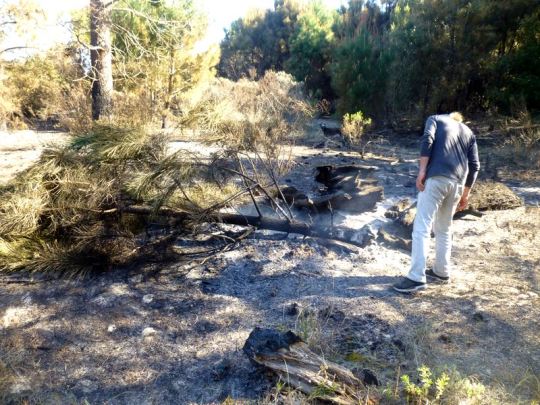
3-½ years later, our hopes of seeing the root structure ended. The rotting host stump burned, consuming the roots of the young tree, now four meters tall.
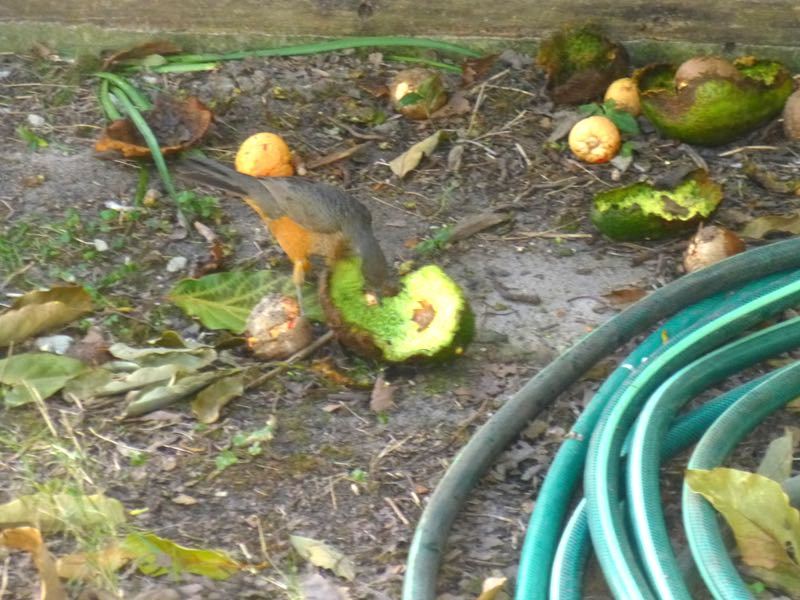
In previous years, we thought it was a comedreja (possum) eating our avocados. Nope – this year it’s birds. As you can see they’re doing a fine job. I must say, though, unlike some other birds, they are very thorough. Nothing goes to waste.
So I guess if the birds are happy, I am as well.
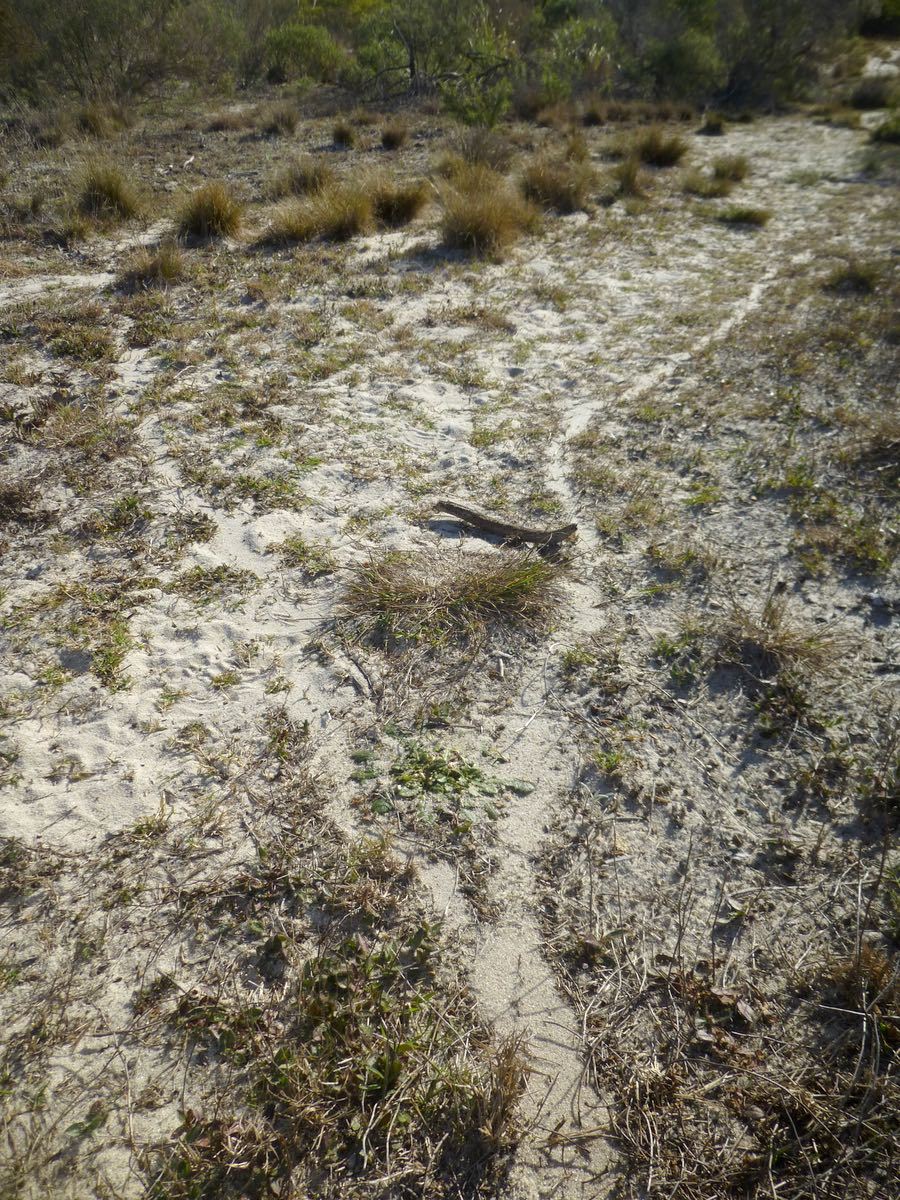
The fork in the ant highway: I have seen many, many leaf-cutter ant trails, but I’m not aware that I’ve ever seen a fork in one.
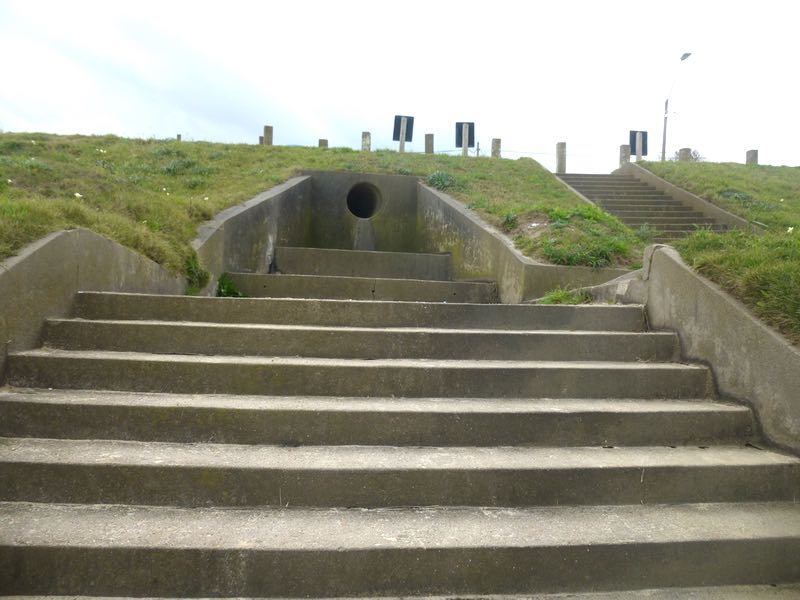
Long walk on the beach today. I see the storm drain feeds into the stairs to the beach. This could be interesting on a rainy day.
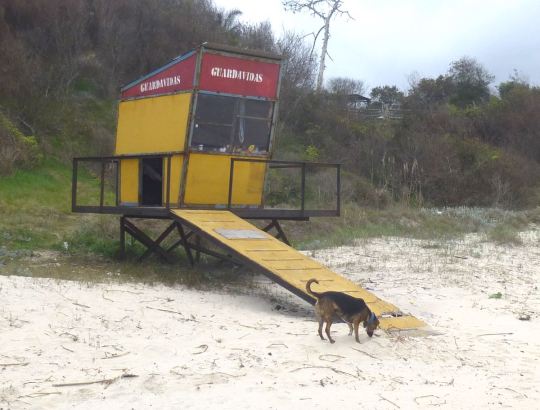
This life guard stand has a distinctly lived-in look. I didn’t investigate further.
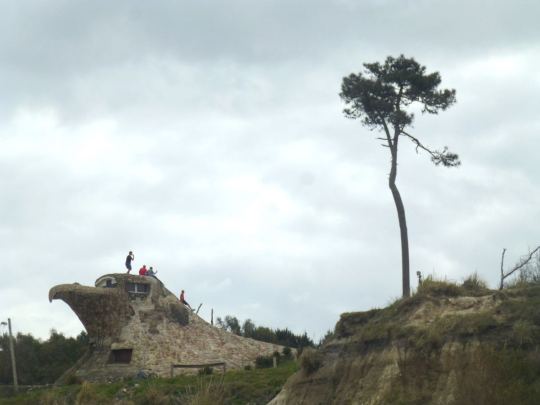
Some boys were hanging out on top of El Águila, a local tourist attraction. I’d never seen anybody on top of it before.
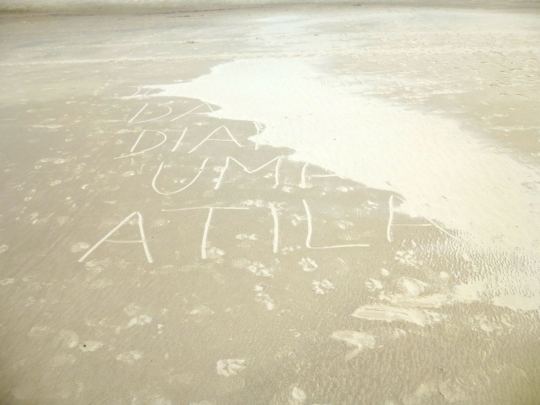
The wind decided to censor someone’s message in the sand.
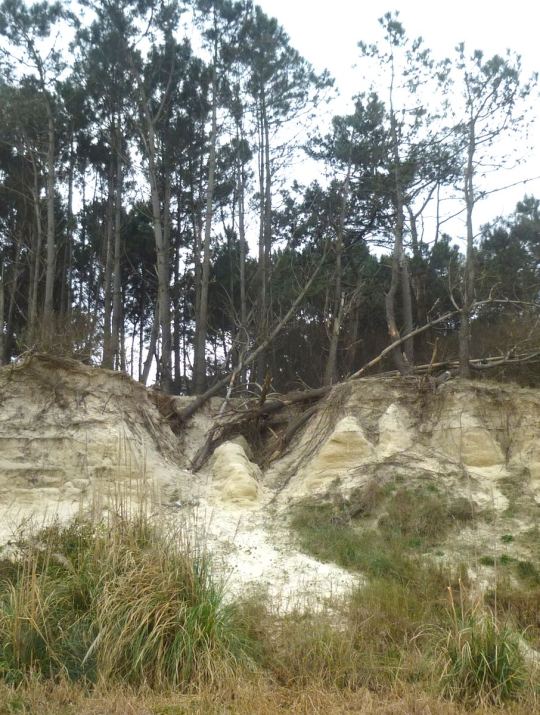
Erosion had taken out some trees.
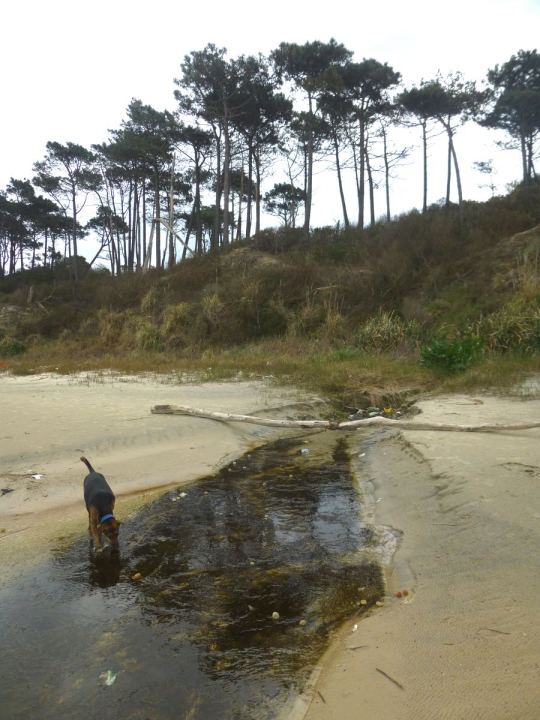
Apparently a makeshift bridge for times when there’s more water?
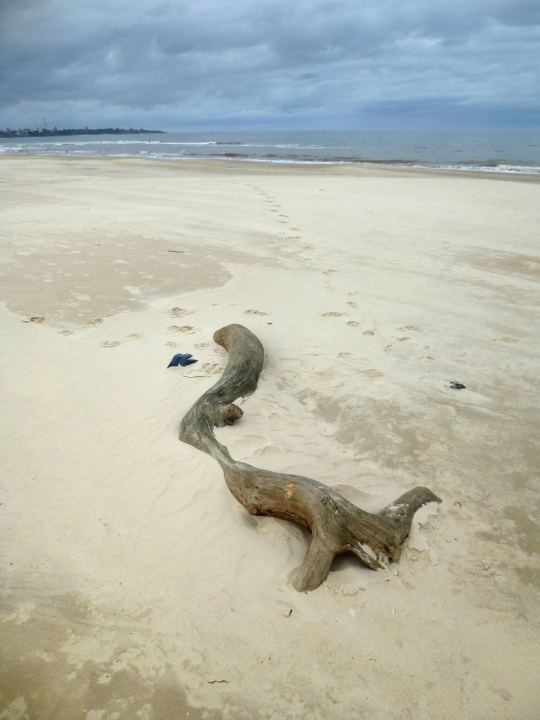
Half-buried driftwood with dog prints leading toward the water.
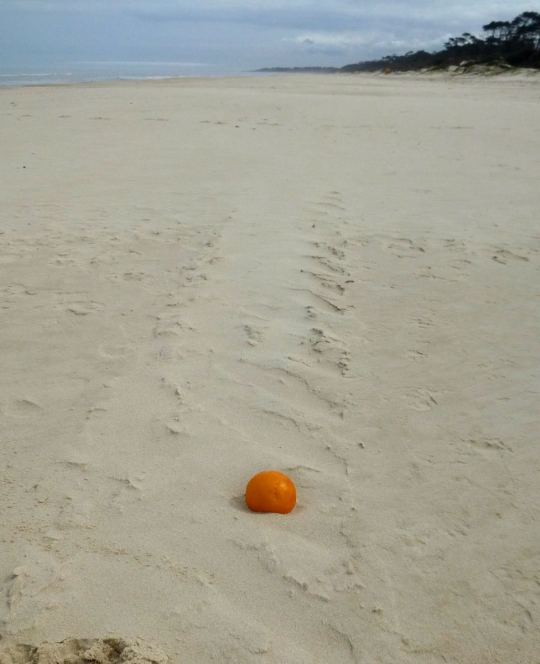
Somewhat inexplicably, an orange on a vast stretch of empty beach. I threw it a couple times and the dog chased it, but didn’t want to pick it up. On the third throw, the orange broke in two when it hit the sand, and kept rolling.
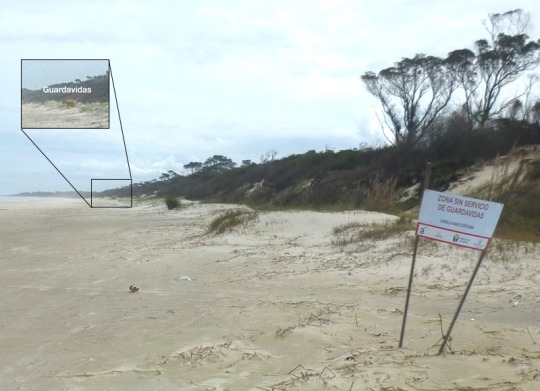
A sign warns that this is the end of the lifeguard protection area. The lifeguard shack is at least a half kilometer away. Have to wonder how fast those guys can run?
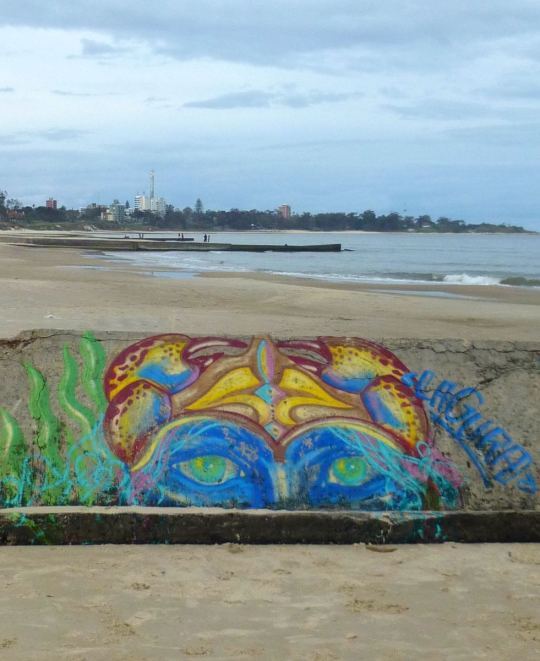
Heading back towards town.
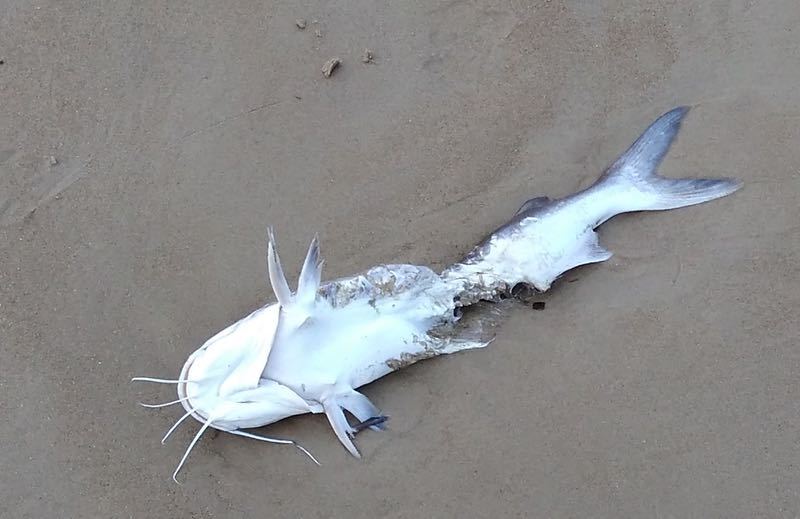
Pimelodus albicans Valenciennes, 1840 (common name “moncholo” or “bagre blanco”) is an endemic species of the family Pimelodidae in the Río de la Plata basin.
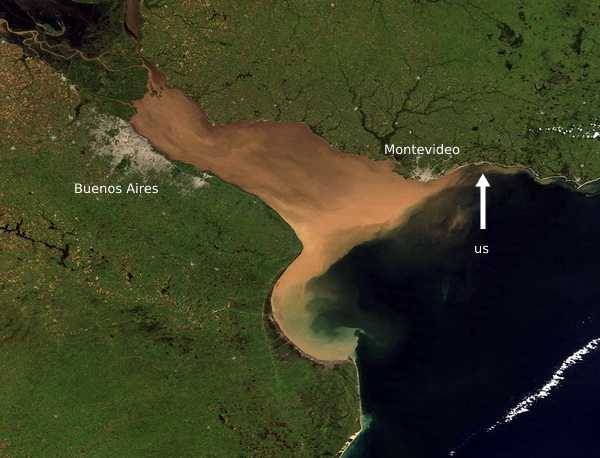
We live in a zone of shifting salt and fresh water. From time to time, fish are caught out of their element and end up dead on the beach. In this case, relatively few, but there have been a couple of times when the beach is carpeted with dead fish, their eyes pecked out by the birds. After three days, unless they’ve somehow washed away, you don’t want to go anywhere near the beach.
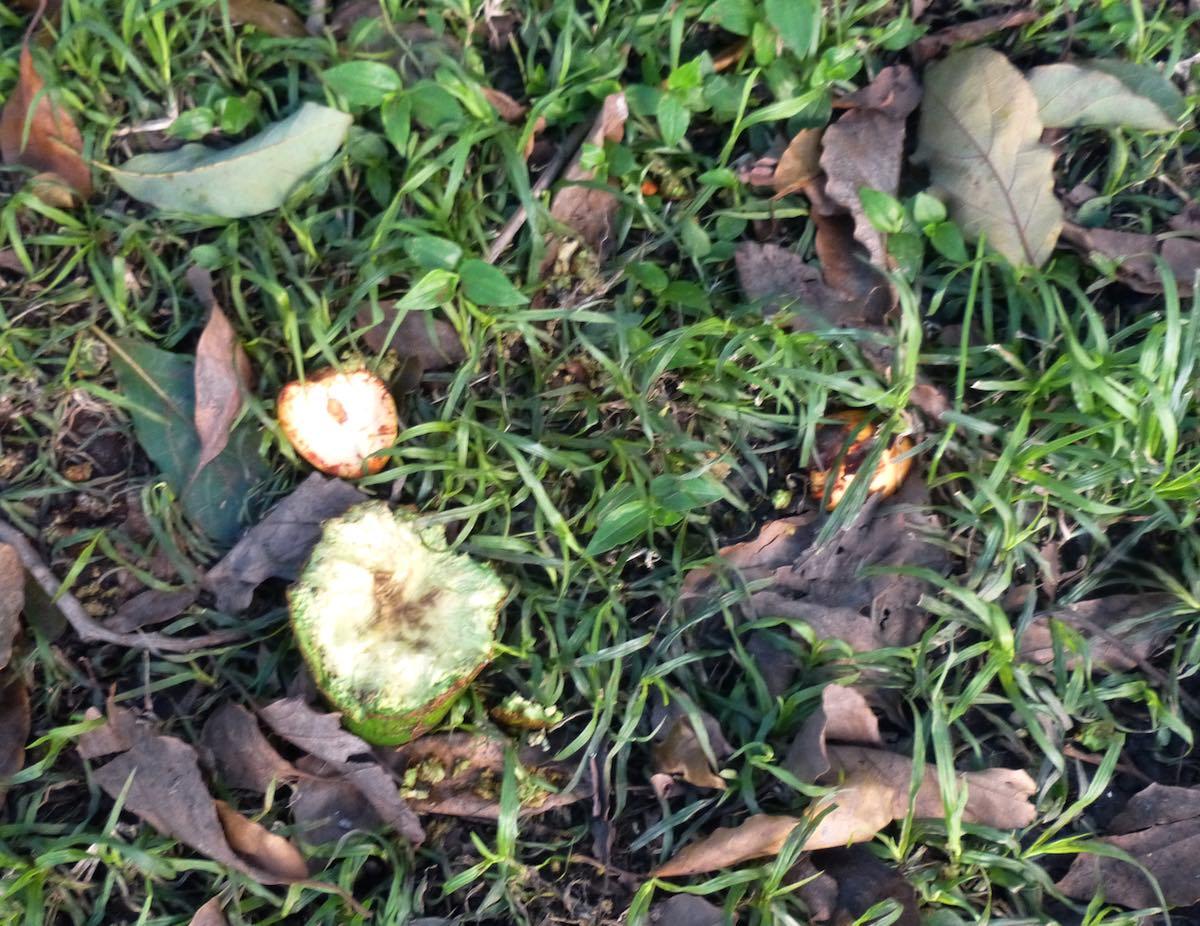
One day, a large avocado is cut from the tree, maybe 660g (1 lb 5 oz). Trusting the dogs won’t eat it – very bad for them – I leave it, instead of getting rid of it. The next day a bit more is eaten, and the same the next day. Have the possum and I reached an understanding?

Lovely day for a walk
I picked up a fallen avocado, bounced it once in my hand, and said “396 grams.”
And then…
