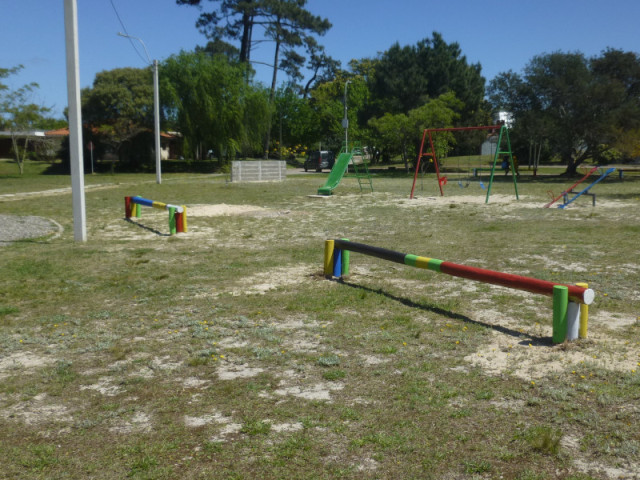
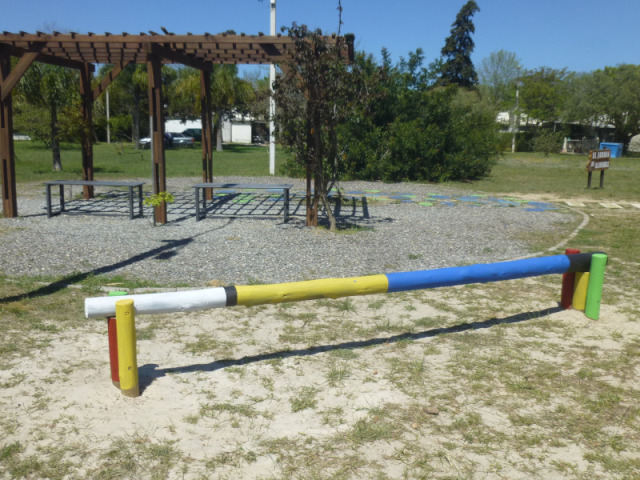
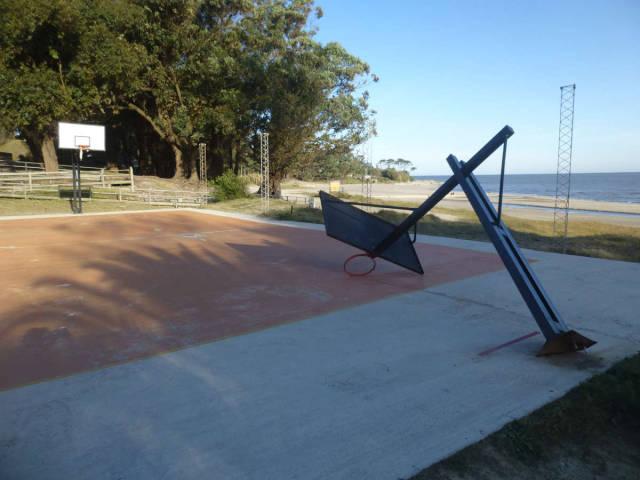
Last weekend there was a flurry of activity in our local park, building these things.
It’s not clear to me what they’re supposed to be, but I’ve seen people sitting on them. Maybe balance beams?
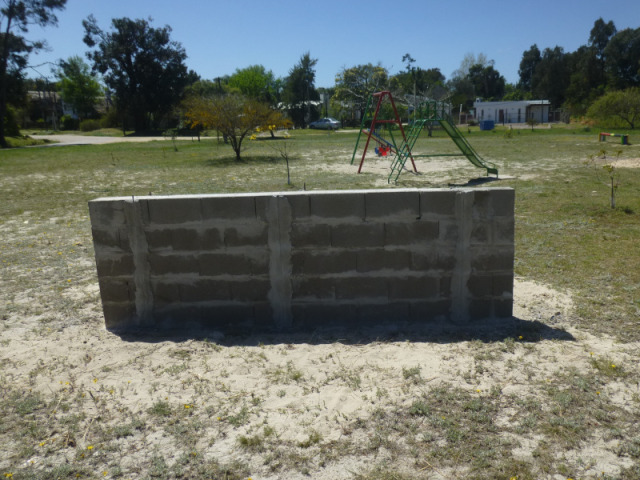
And then there’s this: a concrete block wall. What’s this all about? Well, I guess one could make the argument that I might know if I actually read the Whatsapp neighborhood group messages.
For anyone who doesn’t use Whatsapp, this means there have been 2,928 messages since I last looked. Hmmm….
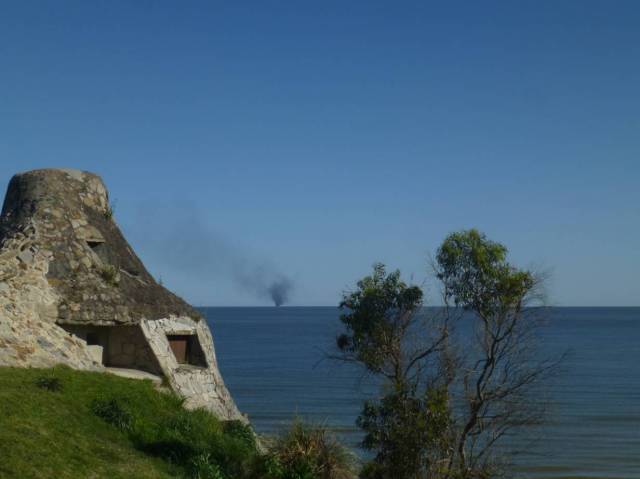
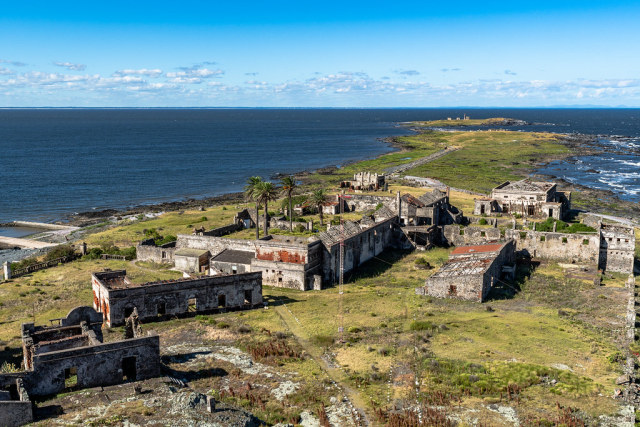
Toward the end of the dog walk (inland from the coast highway), we saw some black smoke, and we couldn’t figure out where it might be coming from. It was in the direction of the origin of two forest fires where we walk. And it seemed farther away than the beach. So on the way home I stopped at El Águila, one of several eccentric local constructions, and there it was. I asked the car park attendant if it was a boat. He assured me it was. I don’t remember where the island is, I said, He again assured me it was a boat.
But I checked when I got home, traced my line of sight, and lo and behold, it very well could have been the Isla de Flores. Which begs the question: what is there that could burn?
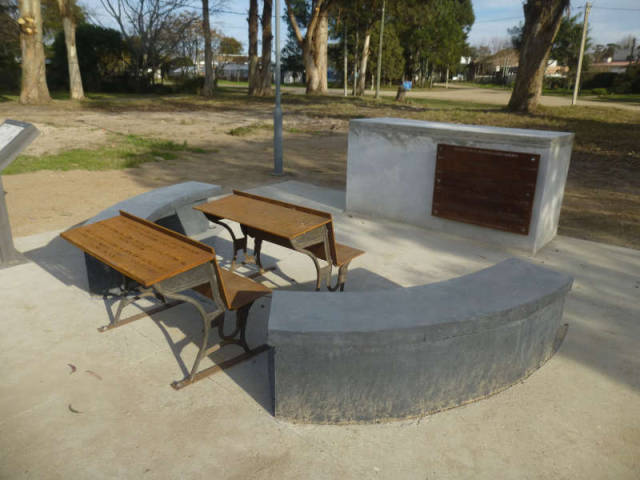
I recently saw a concrete pad and what looked like a large electrical box and thought The hell? They’re putting up a cell tower in the middle of a high school?
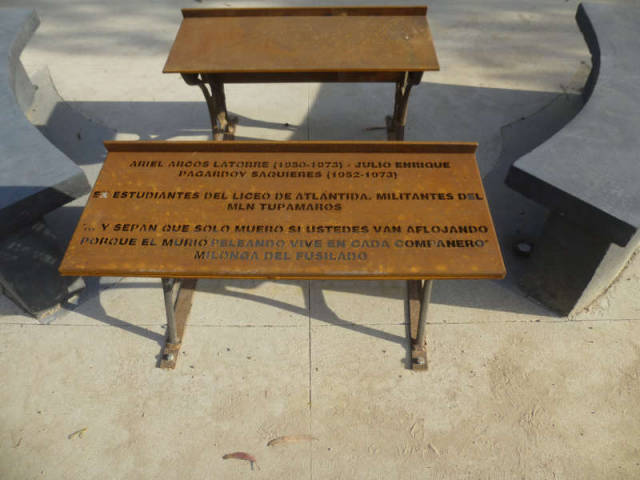
Students of the Atlantida High School. Militants of MLN Tupamaros.
“…and you should know that I only die if you loosen up because he died fighting and he lives in every comrade”.
Looks like a plaque was meant to be installed to the left, or fell off, or something.
And, holding true to much graphic design in Latin America, the plaque telling the story – made from letters cut through rusty steel – is basically illegible.
Here’s the story:
This Saturday 14th, Day of the Student Martyrs, a Memorial in Homage to Ariel Arcos (24 years old) and Enrique Pagardoy (21 years old) (Detained and Disappeared, students of the locality and members of the MLN) was inaugurated.
The initiative arose from a group of neighbors of the area as a symbol of resistance.
The physical space was called “Espacio de la Memoria Luisa Cuesta” (Luisa Cuesta Memory Space) located at Circunvalación Avenue and 30th Street (on the premises of Gimnasio Liceo N°1 Atlántida Gymnasium).
The memorial – made up of old school benches made of iron and a stone with a commemorative plaque – is intended to commemorate these students who disappeared in Chile in 1973, during the civil-military dictatorship that several countries in the region were going through.
In charge of the ribbon cutting was Mrs. Virginia Pagardoy (Enrique Pagardoy’s sister) who resides in Atlantida.
“There is one thing that is clear: hate is like a virus that gets inside and there is a way to fight it that is very simple – also very hard – and that is with love, which is what one breathes here,” said Mayor Yamandú Orsi, referring to the group of neighbors who had the initiative to install the memorial.
“We want this space to be a place of reflection, of contact with this history of resistance of our people, history that like many were silenced during the terror of the dark years.”
“We cannot build a future without memory”; were some of the most significant phrases of a very emotional afternoon.
You may recall a few weeks ago when I unraveled the mystery of the amphitheater. I was puzzled that I only noticed the obvious drain when looking at it in a satellite photo.
I’m even more puzzled now, after returning to inspect it.
It’s huge! Probably five meters across and three high.
So of course I had to go through it. This is the view from the other end. I didn’t even notice the painting on the walls until I loked at the photo. Obstacles and debris had my full attention.
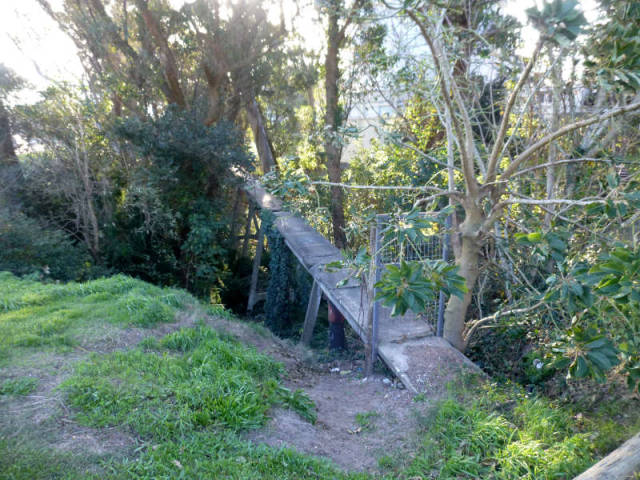
And here’s that pedestrian bridge and its highest. I couldn’t really determine if there was anything to prevent a person from falling off the side. There might have been some wires.
Our normal dog walk cancelled, I took Mocha on the beach all the way into town. There I was reminded of this strange fenced-off footbridge, part of its deck missing.
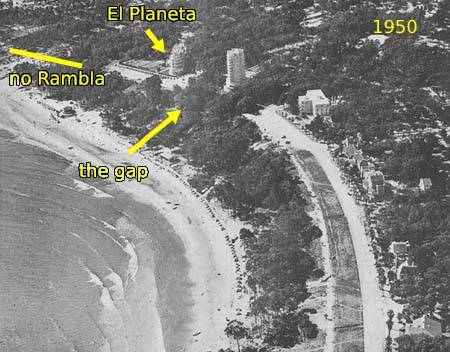
From the road you can see it through the trees, ending across the road from the iconic (no longer hotel) El Planeta, built in 1939 in six months, offering central heating and hot water throughout. De luxe for 1939 Uruguay!
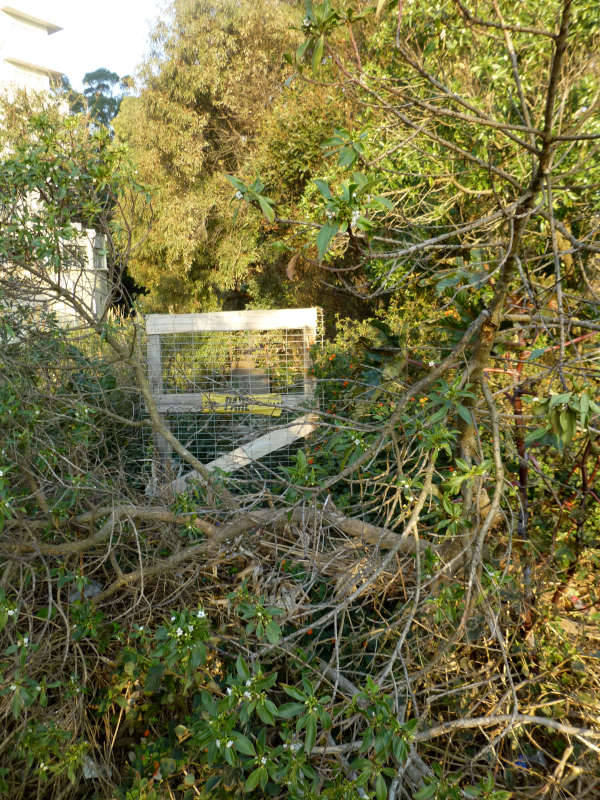
At the far end of the footbridge there’s a pile of branches, and it’s again fenced off.
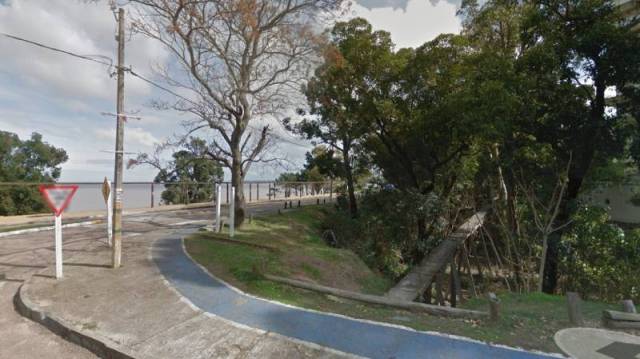
You can see how close it is to the road (and you can see that, in 2015 per Google Street View, you could freely access the bridge, which never occurred to me). So why would someone choose the footbridge instead of just using the road?
Which gave me an idea.
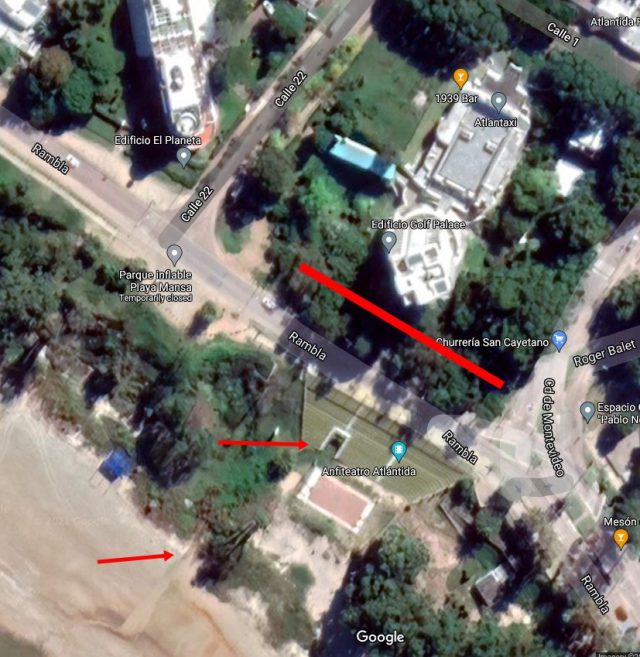
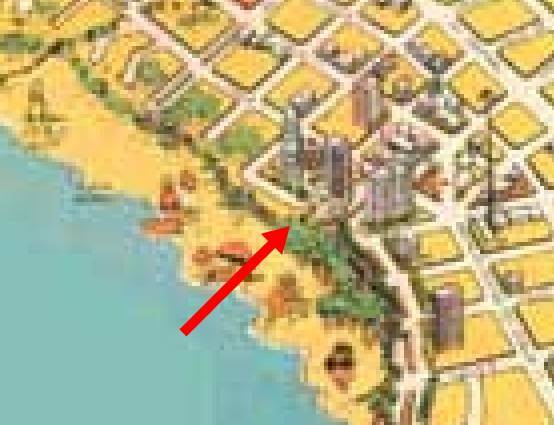
What if the road was added later? The red line represents the footbridge. From above, the amphitheater looks a lot like a dam. And there’s apparently (I have never noticed it) a huge drain, and signs of drainage onto the beach (arrows).
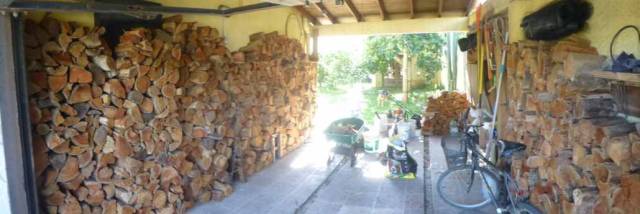
On this very day a year ago, I did the same thing i did today: finished stacking firewood in the garage. This year the minimum for delivery is 3,500 kg, up from 3,000 last year. Yes, that’s a lot of wood.
What was just a huge empty round grassy area has been planted over the years with a variety of trees, many of them identified with wooden signs. In the last year it got upgraded with an arbor with steel benches…every time I’m there I take the hanging trash bucket and empty it in nearby trash and recycle bins…and…
…a play area with slide, swings, and seesaws. And it gets used!
In the other direction, a family gathered in the shade of a tree, the father kicking a ball with his very young son.
And in the last couple days, in the shade of some anacahuita trees, a concrete picnic table and benches have appeared.