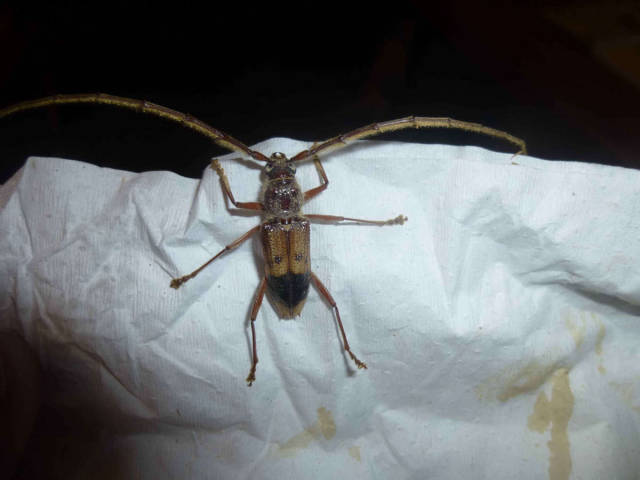
A bug our dog found in the firewood near the stove. I was able to get it outside before he initiated an asymmetric play session with it.
An inquisitive old fart with a camera
A bug our dog found in the firewood near the stove. I was able to get it outside before he initiated an asymmetric play session with it.

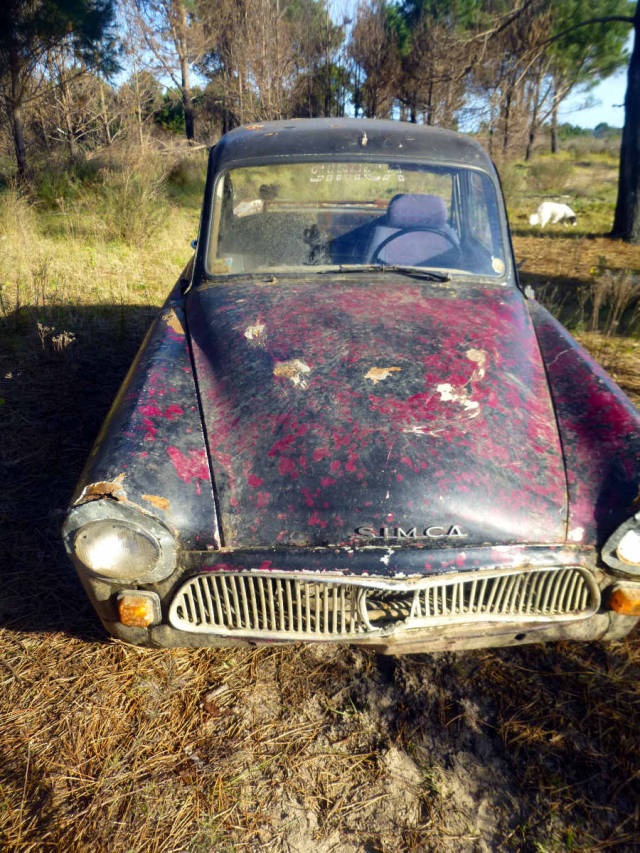

I don’t think the Simca we saw parked in the woods today is en route to restoration. This model was the best-selling car in France in 1956.
_____
Simca (Société Industrielle de Mécanique et Carrosserie Automobile; Mechanical and Automotive Body Manufacturing Company) was a French automaker, founded in November 1934 by Fiat and directed from July 1935 to May 1963 by Italian Henri Pigozzi. Simca was affiliated with Fiat and, after Simca bought Ford’s French activities, became increasingly controlled by the Chrysler Group. In 1970, Simca became a subsidiary and brand of Chrysler Europe, ending its period as an independent company. Simca disappeared in 1978, when Chrysler divested its European operations to another French automaker, PSA Peugeot Citroën. PSA replaced the Simca brand with Talbot after a short period when some models were badged as Simca-Talbots.
During most of its post-war activity, Simca was one of the biggest automobile manufacturers in France. The Simca 1100 was for some time the best-selling car in France, while the Simca 1307 and Simca Horizon won the coveted European Car of the Year title in 1976 and 1978, respectively—these models were badge engineered as products of other marques in some countries. For instance the Simca 1307 was sold in Britain as the Chrysler Alpine, and the Horizon was also sold under the Chrysler brand.
Simca vehicles were also manufactured by Simca do Brasil in São Bernardo do Campo, Brazil, and Barreiros (another Chrysler subsidiary) in Spain. They were also assembled in Australia, Chile, Colombia and the Netherlands during the Chrysler era. In Argentina, Simca had a small partnership with Metalmecánica SAIC (better known as de Carlo) for the production of the Simca Ariane in 1965.
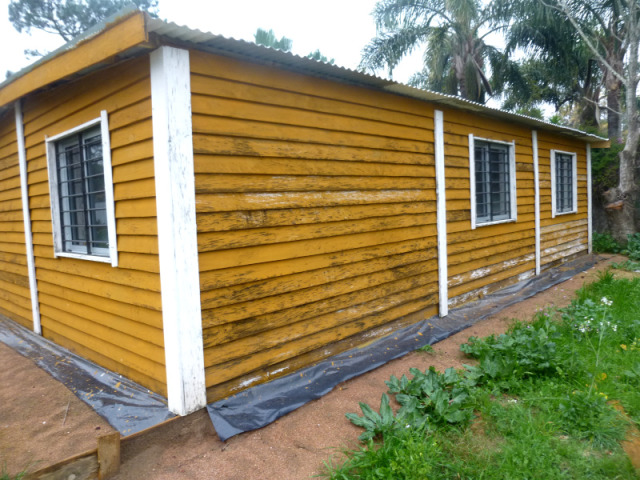
Here’s the back of that brand new house I presented on June 8th. Lovely.
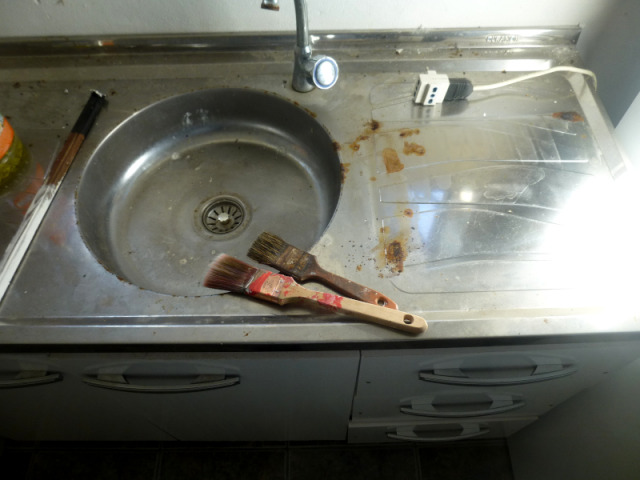
Here’s a “stainless” steel kitchen sink that’s a few years old, barely used except for a few months. No complaints: we let friends stay in our place in exchange for taking care of what they thought it needed, including a kitchen sink, and we knew this was very cheap. But still. Those dots to the left of the paint brushes are rust as well.

Spotted the other day walking my dog: carefully laid out plastic (“nylon” in the local parlance) with gravel carefully placed on top of it.
I think I will need to go back and find out what exactly was the concept.
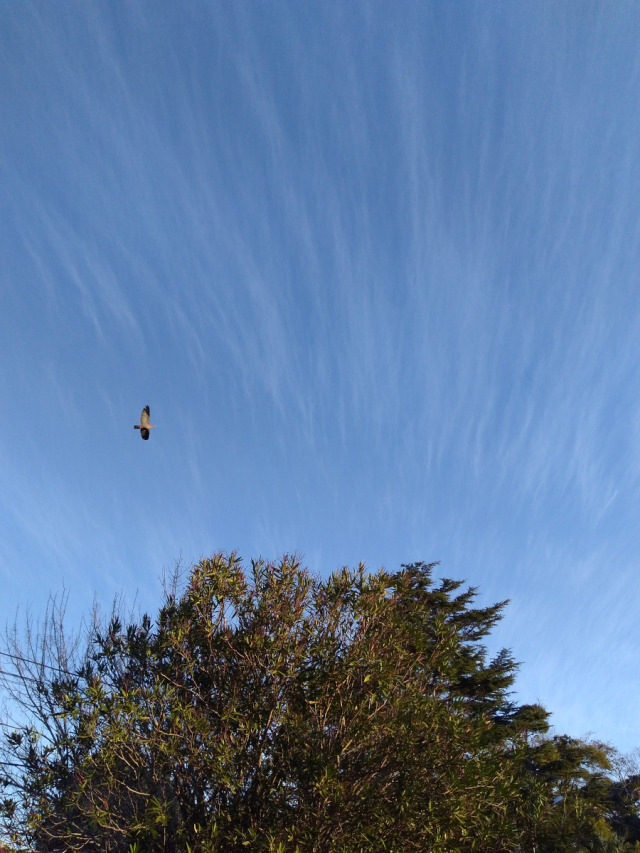
Walking the dog in town, I liked the way the sky seemed to be like energy extending from the tree. The pigeon was a happy accident.

Tree and clouds at the beginning of today’s dog walk.


First frost of the year. Very pronounced in the neighbor’s front yard, but the camera thought it more interesting to focus on the branches of the closer bush. Oh yeah, and something about having left it in macro mode the last time I took a picture.
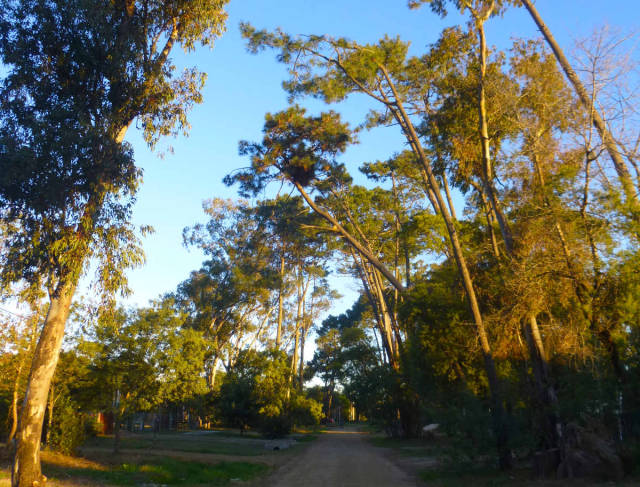
Yesterday these still trees were pretty in the afternoon light with a cloudless sky. The last time I walked here it was cloudy, with strong and gusty winds…I felt a little uncomfortable, for some reason.

We’ve has three days of jackhammer noise. The back corner of the neighbors’ was a parillera, covered cooking area, with a bathroom. Behind the tree on the right is another small building. Not clear what it is or what they’re doing with it. I asked the foreman today and he told me they’re adding a 42m² addition to the main house. You can see the ground they’re clearing to pour concrete. So all the work is in back, out of sight of the road.

And yet they’ve put up a temporary privacy fence in the front. In time, I suppose the purpose of the fence will become clear.
Or not. That red thing is the volquete, which they’ve filled with rubble three days in a row.