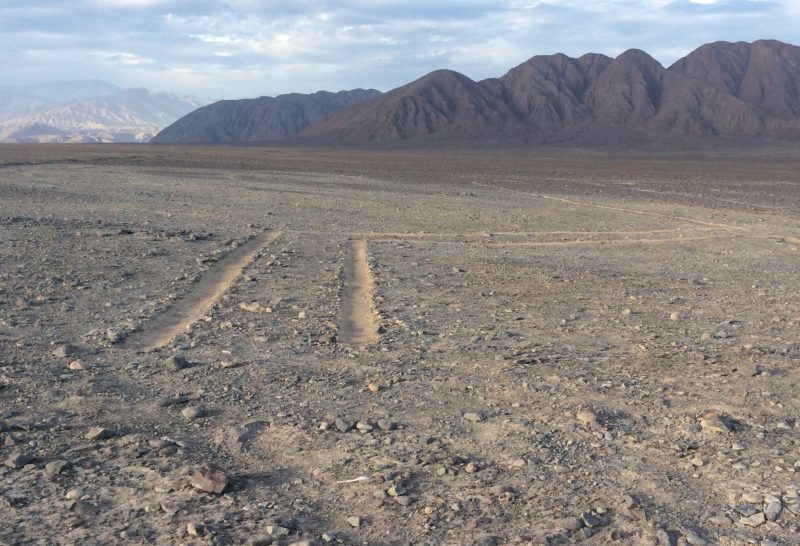
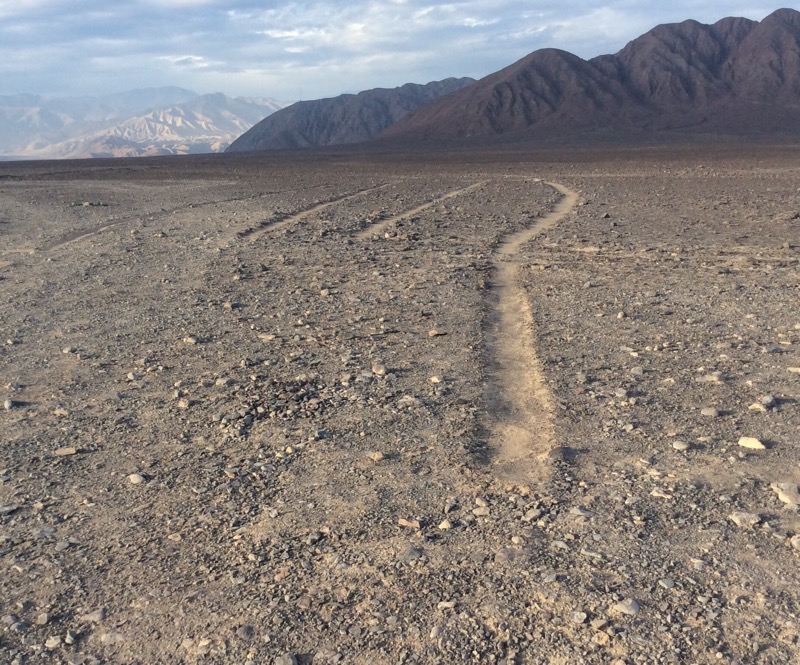
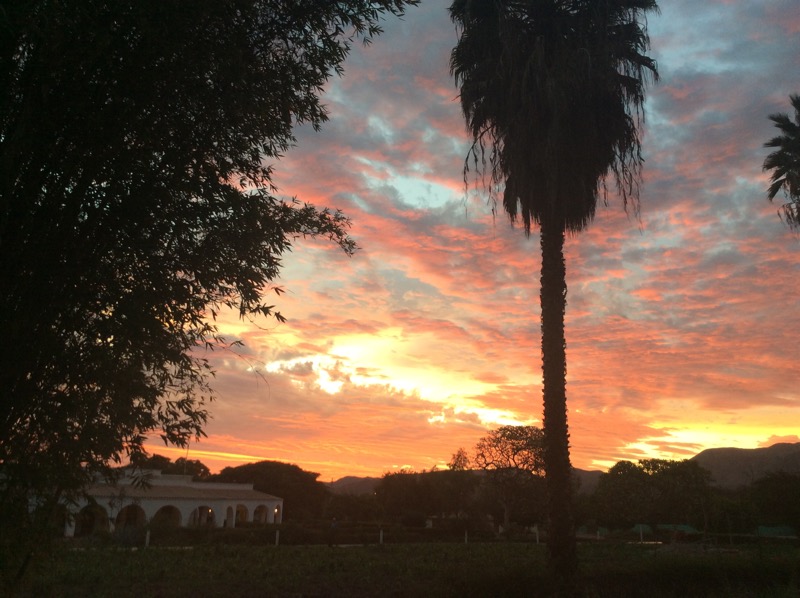
Sunset at Nasca, Peru
An inquisitive old fart with a camera
Sunset at Nasca, Peru
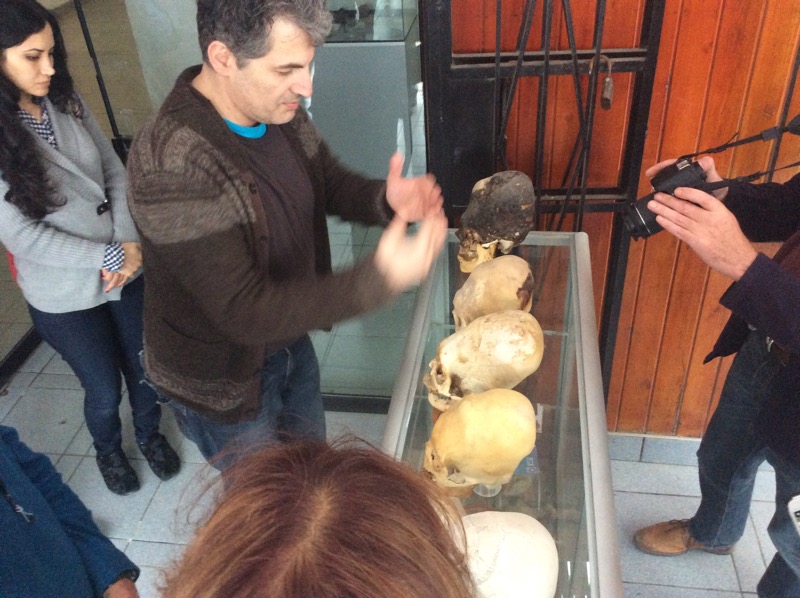
Museum with elongated skulls. Want a better look? Sure! Your tour guide puts on rubber gloves, opens the case, and takes them out to the front porch where the light is better. The closest is a normal human skull ( maybe 500 years old) for comparison:
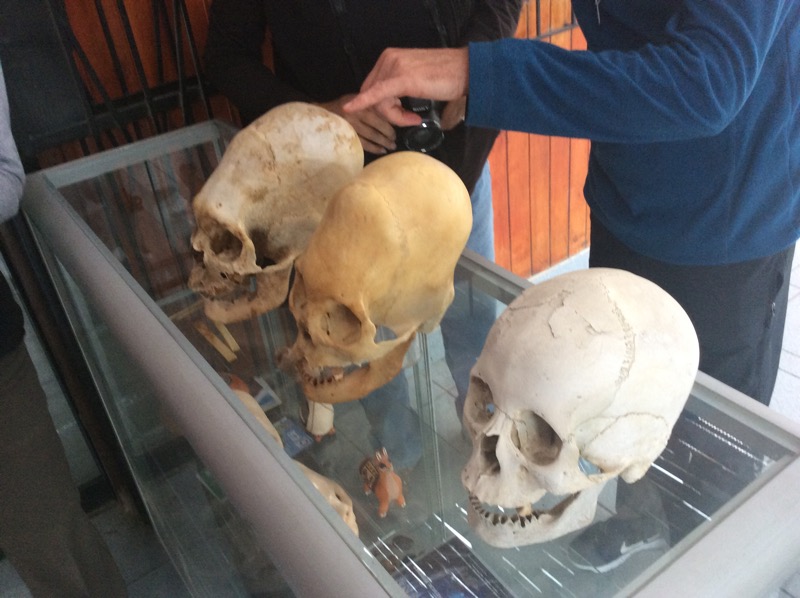
An MD on the tour discusses anomalies in the sutures of the elongated skulls:
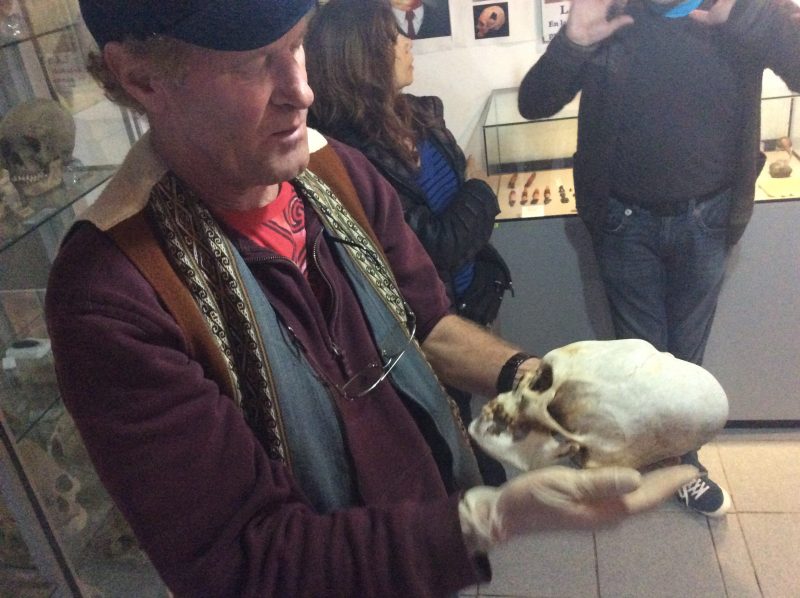
Tour guide Brien Foerster shows a skull he found and donated to the little museum in Paracas, Peru:
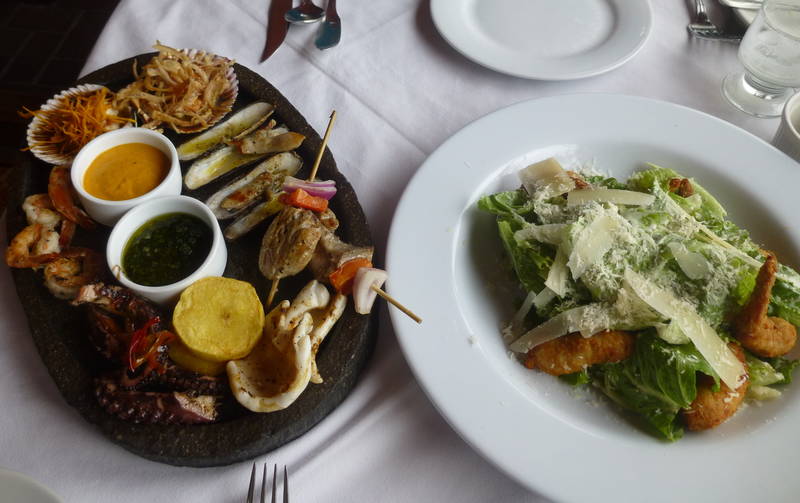
No, I do not intend to go all Instagramy, but for the benefit of my seafood-deprived friends in Uruguay. On the left, shrimp, octopus, potato thingies, squid, tuna, razor clams, and scallops. Chimichurri and a delightful picante sauce. On the right, Cesar salad with corn-battered prawns. All exquisitely prepared. A bit under USD 30.

By which I mean, of course, what’s wrong with putting wheels on a totally burned-out VW Fusca and towing it home instead of writing it off?
Who knows, maybe it’s a collectible.

“IDEAL PARA LAS VACACIONES//INTEGRARLO A COLECCIÓN//CLUBES DE AUTOMOVILES CLASICOS. HAY QUE VERLO!!” (You have to see it!)
Someone’s going to pay USD 12,500 for a 39 year old VW Beetle to take on vacation?
See for yourself. They’re not all that ridiculous, but the prices are still pretty horrific.

No, you didn’t ask, come to think of it. I snapped this a couple days ago, wondering “how on earth can I fit this into a blog post?”
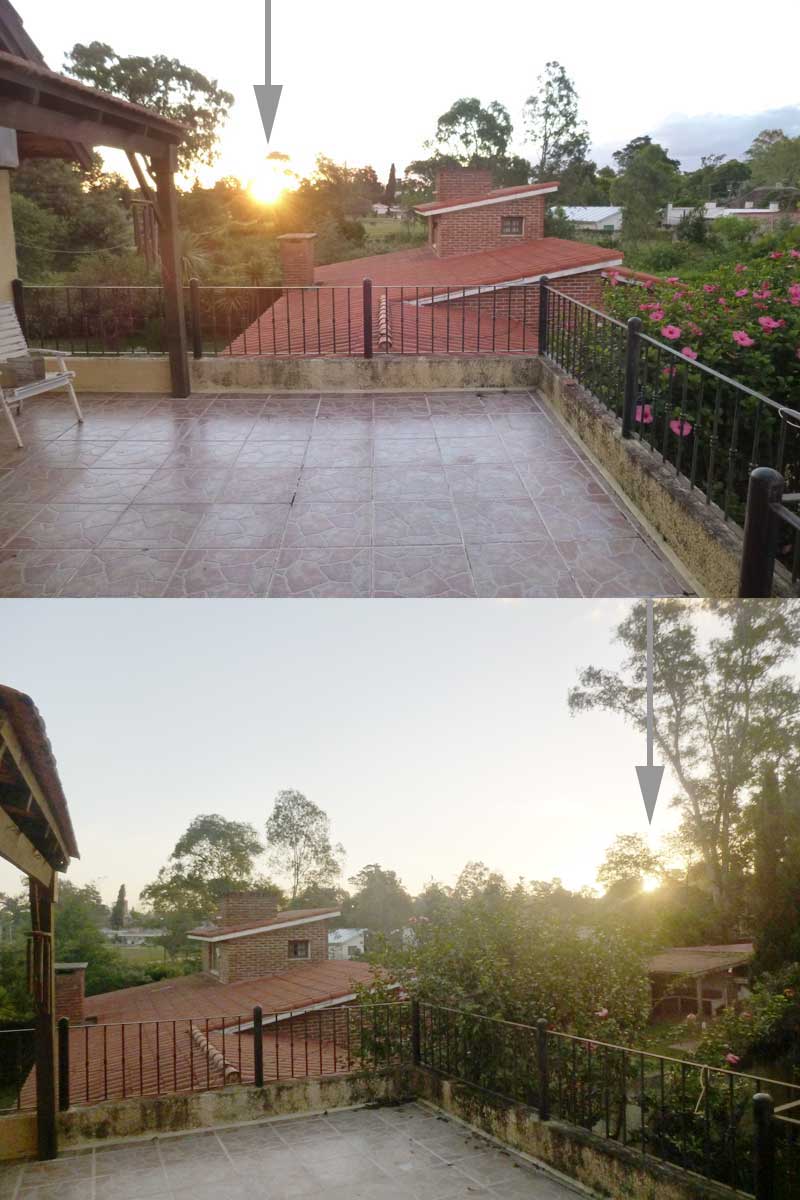
Just because I remembered this year 😉
We’re at 34’46” south, roughly equivalent to Charlotte, North Carolina, Bakersfield California, southern Cyprus, Kabul, Hiroshima in the north.
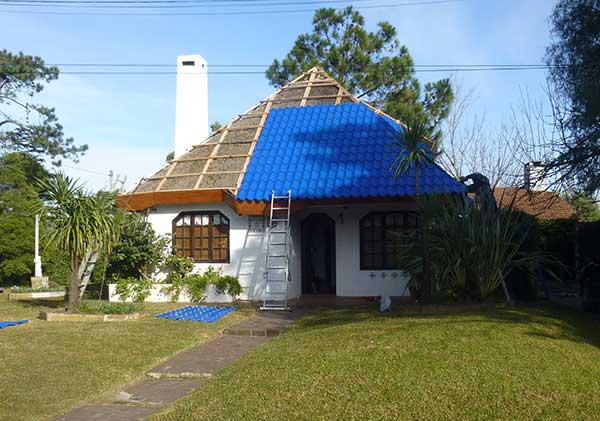
A few weeks ago, I correctly guessed the end result of roof work being done on a charming quincho (thatched roof) house nearby. The sheet metal panels do come in different colors, including one similar to clay tiles. Maybe it’s just me, but bright blue feels like a charm-killer.
We attended and 18th birthday party last night. We were told there would be pizza, but I couldn’t have guessed how — cooked not in an oven, but on the parrilla / traditional grill. I explained parrilla — well, sort of — long ago. The fire is one one side, and the coals are raked under the grill, which typically can be raised or lowered. Doing an asado with meat this way takes hours, but with pizza it’s hella more efficient than trying to to do them in the kitchen oven.

Pizza after pizza was delivered to family and friends at the big outside table: Hawaiian, mushroom and cheese, gorgonzola, mussels. All delicious. The combination of the nearby fire, hot pizza, and wine did a nice job of making the chill go away.
Our host, Marcelo, told me that he had tried doing pizza on the grill and it turned out a mess. So here’s the secret: put the plain crust over the embers until one side is done, then remove, turn over and add toppings, and cook over embers again.
As they prepared to leave, the cooks gave out the quintessential Uruguayan marketing tool: refrigerator magnets. Yes, this is what they do for a living!

PS — can you guess the only business that doesn’t give out magnets? See here.
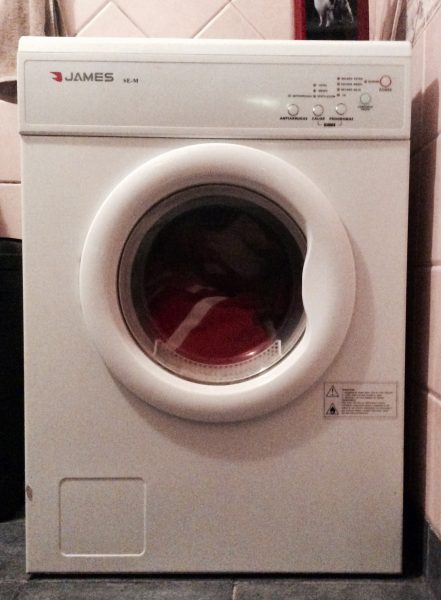
I’ve taken apart this beast several times, most recently to replace the belt, but when it ceased producing heat recently I felt a bit out of my league, and called the appliance repair people, for whom I had several phone numbers. But now one: I guess it’s now the appliance repair guy.
Whatever, from his high-speed mumbling on the phone Friday I got the idea he would be here Saturday afternoon. A bit after 5 PM Saturday, I called again. I can’t say for sure why, but this time the high-speed mumbling left a warm fuzzy feeling.
And a few minutes later, a 30 year-old car pulled into the driveway. Repairman, maybe older than the car, maybe not, with MSC (company name) jacket and toolbox comes through the front door (“Con permiso”). Removes top of clothes drier, starts extracting burned plastic bits, explains in high-speed mumbling that iit’s a burned connector. He’ll replace, but it happens again we’ll have to replace the heating element. Which I had assumed was the problem to begin with.
OK, it wasn’t quite that direct. In addition to having to ask him to repeat everything (something which, I’m happy to report, rarely happens to me by now), I was puzzled by “la resistencia.” Perhaps a bit of cognitive dissonance trying to conflate Latin American political history with appliance repair, then the shoulda-been obvious chimed in. “La resistencia” means the resistence heating element (think wire that, instead of conducting electricity, resists it, turning the electrical energy into heat).
Delighted at my own slightly-delayed ascertainment of the relatively obvious, I shared with him that English term is “element.” Of course, it’s not exactly: it would be “heating element,” or better, “resistance heating element,” Fortunately, my attempt to excuse my ignorance proved uninteresting and irrelevant, and with a brief feint of interest from him, that was done.
The clothes drier works again. Maybe not for long. But the appliance guy came to our house, and fixed the clothes drier, and it cost US$10 total.
So, thinking back to when I called Sears repair in the late 1990s, gave them the model number of my mother’s clothes drier, and said the belt was broken, and they showed (with no parts) to determine the model number and diagnose broken belt—for $49—so, just curious, what would this episode cost now in North America, Europe, Australia, South Africa?
Since he couldn’t go today with all of Syd’s dogs, I walked him around the neighborhood. Fortunately there were no cars!