
Time to start parking inside?
An inquisitive old fart with a camera
As I mentioned in my last post, my best efforts were for naught when it came to re-installing the tire after I installed an inner tube on the hand truck/dolly. The tire I inherited simply did not behave like the ones in YouTube videos. I’m pretty strong, but it just wasn’t happening.
Because Syd mentioned the gomería (tire shop; translates as “gum,” unh huh) on Ruta 11, I stopped by there this afternoon. They don’t know me — I went maybe there once six years ago — and the place was crazy busy. No sign of an office. How long would I have to wait before someone noticed me — and then how long before they could get around to it? I was in no hurry, and would happily have left the hand truck there for, well, whenever.
But a kid (anything under 35 is a kid at this point) noticed me. I quickly explained in Spanish that I’d installed an inner tube, but no way could get the tire back on.
Whatever he was doing, he stopped. Tried to do the job by himself with big-ass tire pry bars they have (an order of magnitude larger than the screwdrivers I have), called over another worker to help him, and it took them a couple of minutes, working together, to fight the tire back onto the rim. Nice! Wasn’t just my incompetence!
In the process (don’t ask me how) the other (non-tube) tire lost all its air. No matter. He filled both, passed the rig back to me.
How much do I owe you?, I asked.
He simply waved me off.
Please remind me of this the next time I complain about business in Uruguay.
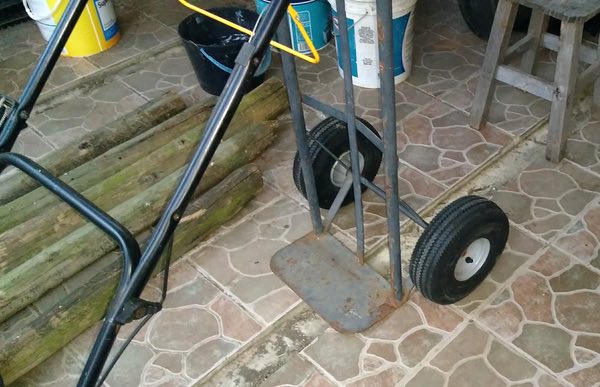
I bought a hand truck (dolly) a couple years ago from some departing Americans. They warned that one of the tires loses air over time, an issue I tried to deal with a couple times at local tire places. Eventually, though, to no avail. With no inner tube, you can’t get air back in with something as slow as a bicycle pump.
So I brought an inner tube back from the US, since I happened to be going and was an easy add-on to an existing free-shipping order.
It took a bit of work to get the tire lose, and then putting the tube in was no big deal. But getting the tire back on? Impossible!
Then I found this wonderful video. My solution! But I needed some C-clamps, which understandably are called “G” clamps here.

So I immediately set to work with them, and …
… *sigh* later I’ll be taking the hand truck to the local tire place, to see if they have a way to get the tire over the rim.
The “G” clamps will prove themselves useful in other ways, no doubt.
No complaining today about doing business in Uruguay!
I asked our butcher to save some bones for the dogs. Usually I end up with 6-8 kilos. But today they only had 2.5 kilos .

Not enough to bother charging me for, apparently.
Nice!
We just bought some fresh mushrooms at Tienda Inglesa. The good news is that, since we moved here, they are usually available. Bad news is that they’re kind of ridiculously expensive — USD $7.50/pound. But they sell side by side with another imported brand that sell for almost 70% more. Have to wonder why anyone would pay that, but hey.
So here’s what we bought:
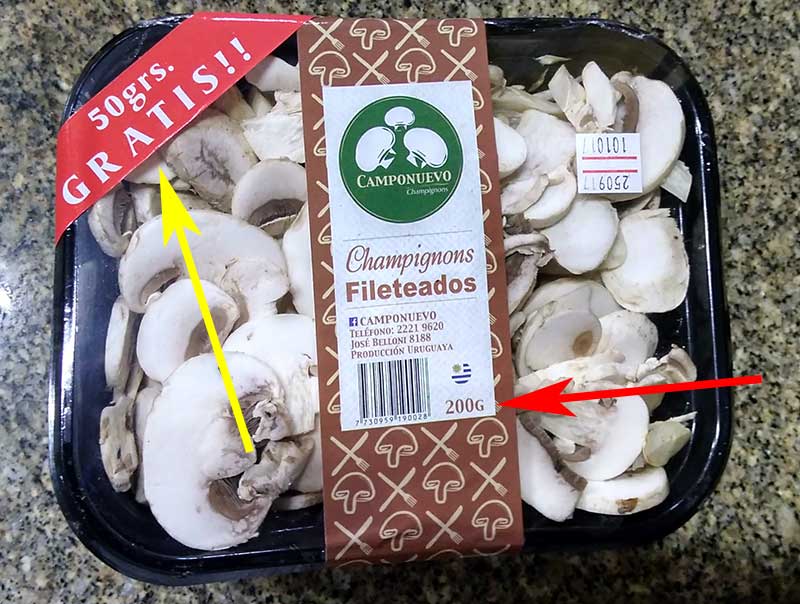
200 grams! 50 grams free! So we paid for only 150 grams?
Well, no — from the Tienda Inglesa web site:
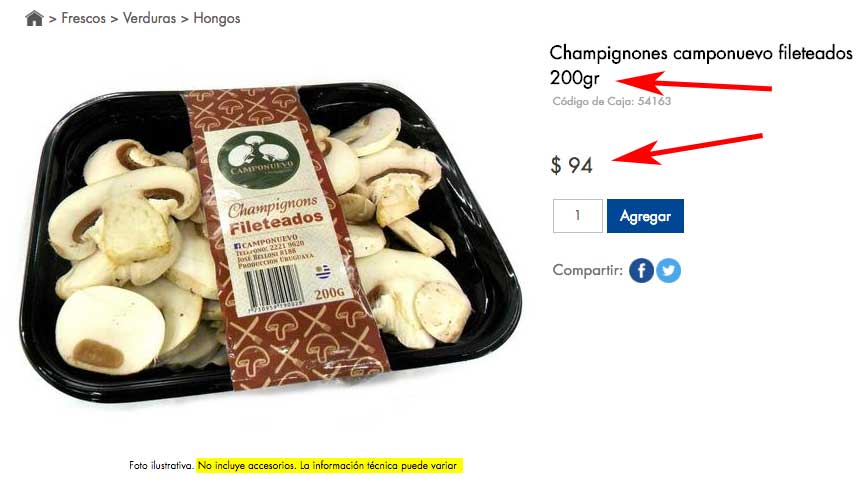
And what did we pay?
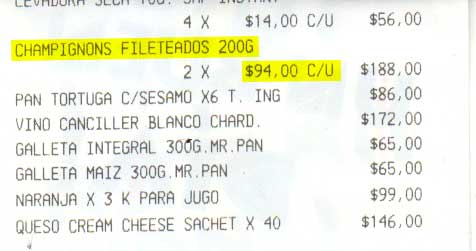
94 pesos for 200 grams, as advertised. Yet we somehow got 50 grams free, paying 94 pesos for 200 grams?
Bill Hicks had a routine* in which he said, “If anyone here is in advertising or marketing, kill yourself … seriously, though, if you are, do.” I found that a little strong when I first encountered it.
But when I consider that these people are trying to convince me they’re giving me something for free when I pay the same for the same amount that I paid last week — well, thank you, Bill Hicks, and you marketers, kill yourself. Seriously. You’ll be doing your soul, and the rest of us, a favor.
*no link, because being Bill Hicks, it contains considerable profanity, but easy to find.
Leaf cutter ants are annoying. They’re worse than annoying; they’re horrible. They can strip a tree of all its leaves overnight, as I have seen more than once with young trees I have planted in Uruguay.
At the same time, they are rather awesome to watch up close.
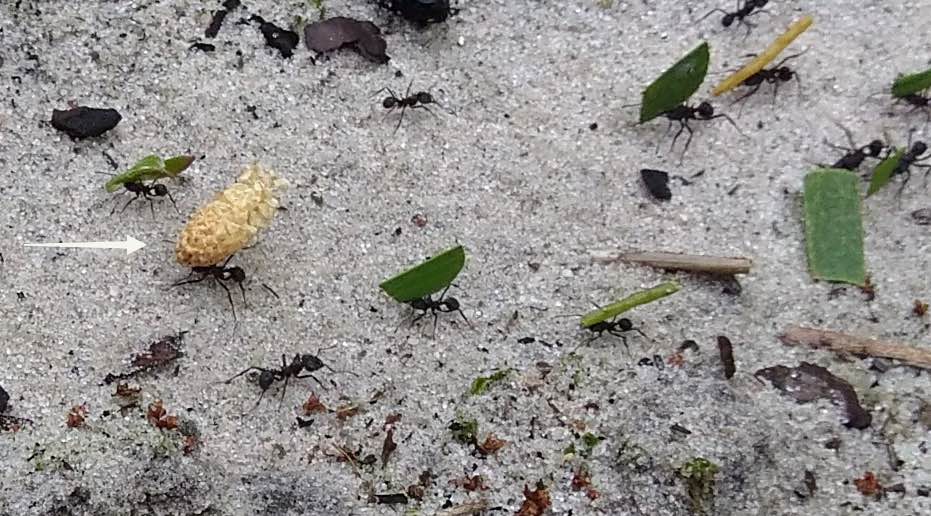
We were particularly impressed with a procession of fresh eucalyptus harvest that crossed our path today. Check out the ant with the flower in particular.
And check out how close he came to not making it across the path!
I walked the few blocks to town today to take a bus to pick up our car from the mechanic, who spent the last couple days doing a couple hours’ work.
I saw this gnarly tree at the bus stop, then realized I had also never noticed the “expo” lot behind it, in the middle of town, where I have also never seen any activity. I’ll be watching it now for any signs of life.
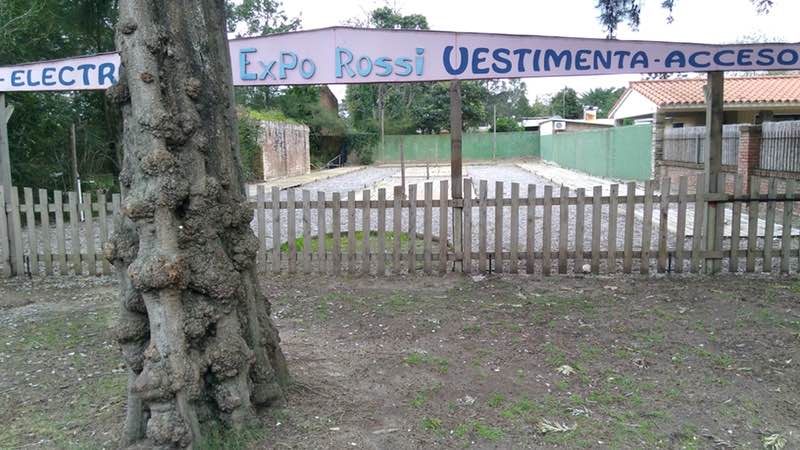
It’s a pleasant treat, walking instead of riding a bike or driving, having time to see things I wouldn’t otherwise.
Of course, not having a muscular 30 kg leashed dog doing his best to dislocate my shoulder as I walk is also a pleasant treat.
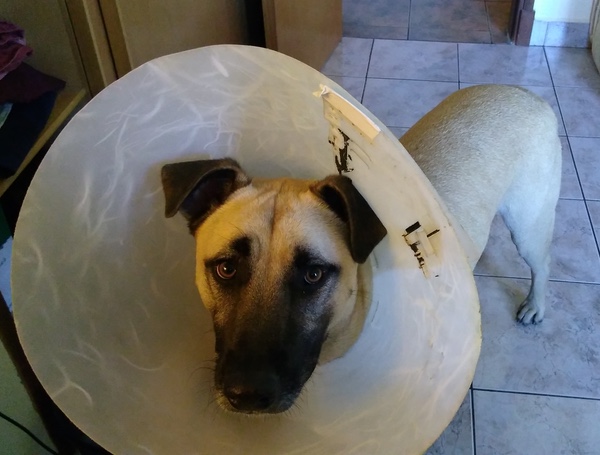
As is avoiding the occasional interaction with loose dogs of irresponsible locals, which recently required preventing said dog access to certain parts of his anatomy for over a week.
I’ll spare you the details.
You’re welcome.
Knowing my fondness for quirky Uruguayan handwriting, Syd sent along this gem:

1 something times maybe 20, or 20 liters, and one of the worst attempts at a 9 that I’ve seen yet. His annotations are in dark red, but why stop there? What’s with the month scribble? And since when is a 7 simply a crossed 1?
What’s starting to make sense is that this handwriting actually mirrors the way many Uruguayans speak. Not all, but many, especially the important people like electricians, mechanics, and plumbers: largely incomprehensible mumbles to a non-native.
Alas, I didn’t pick up handwriting samples in Colombia, Peru, or Bolivia, where they speak clearly, so I’ll just have to hypothesize for now that they also write legibly. Seems a stretch, but you never know.
As I thought everyone knew, grass-fed beef is superior to feedlot beef in every way. And the wonderful thing in Uruguay is that most cattle are grass-fed. There are some feedlot operations, but from what I gather, they tend to be smaller than their North American counterparts, and duration of cattle poisoning shorter .
Poisoning? Yes. On a feedlot, cows stop eating grass, which their bodies are designed for, and are fed massive quantities of (genetically modified, herbicide resistant) corn, barley, soybeans, and other grains that seriously mess up their digestive systems. They also get loads of antibiotics and growth hormones. They spend the last six months of their lives wandering around in their own excrement, with not a blade of grass in sight. But getting fat, fast, which boosts corporate profits.
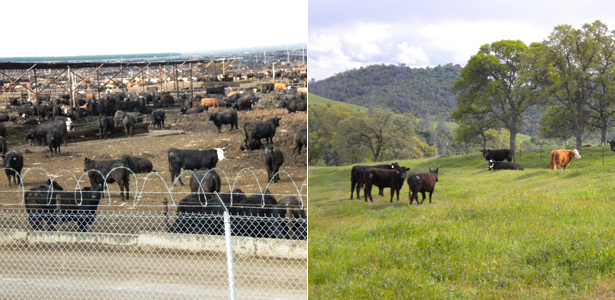
In North America,
“Many are choosing to follow organic practices in their herd management, which are clearly healthier and more humane for the animals. The good news is that meat from those animals is free of antibiotics, steroids, hormones, pesticides, herbicides and other potentially toxic substances. The bad news is that it can take nearly two years to bring those animals to market on grass.
“Studies have shown that an animal’s diet can have an impact on the nutritional content of the meat on the consumer’s table. Grass-fed meat has been shown to contain less fat, more beneficial fatty acids, and more vitamins and to be a good source of a variety of nutrients. According to a study published in the Journal of Animal Science in 2009, eating grass-fed beef provides many benefits to consumers:
Source: Grass-Fed vs. Feedlot Beef – What’s the difference?
So what’s this got to do with Uruguay? Profoundly marching in the wrong direction, and proudly advertising the fact. Here’s the current flier from Tienda Inglesa:

Unbelievable? I expect consumers here will swallow this whole, and embrace this “modern” idea as a good thing, just as dousing the entire countryside in glyphosate seems like a perfectly good thing to do.
They’ll figure it out eventually. Or not.
Start: Connecticut, USA
End: Republic to the east of the Uruguay River (República Oriental del Uruguay)
My lovely and enthusiastic niece delivered to me to the Norwalk, Connecticut, station of Metro-North, so I could catch a train to New York. Despite having lived 20+ years nearby, I walked under the tracks heading to New York, past the “ticket machines on platform” signs, and asked several people — all of whom seemed like they should know — how to buy a ticket.
They were clueless. And of course I was asking on the Boston-bound side of the tracks. OK, reverse, walk tall; nobody’s noticing that you’re a complete idiot.

Anyway, on to Grand Central Terminal.
From there, a sensible person would shell out USD $18 for the JFK airport shuttle and be done with it. But, no: after a substantial hike through tunnels and stairs, for a mere USD $3 the #7 subway takes you three stops north to Court Street, where after a bunch more walking you can change to the E to Sutphin Boulevard in Queens, then navigate upstairs a few levels to the AirTrain.
For extra credit, do all of the above carrying 70 pounds (~32 kg) of luggage. No wheels! Good workout!
The AirTrain is a brilliant aspect of JFK travel that allows you to travel, free, from any of the terminals to as far as Federal Station, where rental cars and hotel shuttles congregate.
It also extends slightly further to Sutphin Boulevard, and alas, forward or reverse, that one extra stop costs you USD $6. For about three minutes of travel.
So, pim pum pam (weird Uruguayan expression), the hotel shuttle delivers me to the Howard Johnson motel from Federal Station, walk a block to buy Indian takeout — lamb curry, consisting of a bunch of rice, a bunch of curry sauce, and a bone with lots of meat. It was delicious! After eating from the bone, go to bathroom sink, open faucets with elbows, wash off totally greasy hands. And a bottle of wine from the neighboring establishment, possibly owned by the same people, who popped the cork for me — nice touch.
Alarm at 4:30 AM, quick shower and off to JFK for a 5-1/2 hour flight to Bogotá, Colombia, where I’ll have a 10-hour layover, which I’m looking forward to, since Syd says Bogotá’s OK.
As promised, it’s possible to park my carry-on bag at the airport in Bogotá. I find an info center with a map of the city, not particularly insightful. Head to the taxis — Syd told me they were very reasonable; half-hour trip cost about USD $10 (if he recalled) — so I wasn’t too concerned. Dapper 50-ish guy named Alfonso approaches me, says he’s Uber. OK, not traditional cab. Of course, Uber is Uber: internet. So this is bullshit. Regardless, Alfonso tells me he’s been a tour guide for 26 years. He speaks some English, but we default to Spanish and it’s a delight to converse with someone who doesn’t talk as though his mouth is jammed-full of dulce de leche (sorry, Uruguay). Many insights; backs off the sales pitch for extended tour after the third time (“It’s my job, no?”). I don’t want to be stuck in a car all day. Let me wander around!
Later, I ask police in Plaza Bolívar: taxi to airport costs 15,000. I paid 45,000 to Alfonso — actually 50 (~USD $18), since he claimed once we arrived that the price was 55. Doesn’t bother me; it was an interesting experience and conversation, even if many of his “facts” were not entirely factual. And besides, in travels to 50+ countries, I’m pretty sure there is none where I got everything right the first time.
So: impressive gold museum, lots of wandering around in circles, a decent and very cheap lunch, and people who answer questions in Spanish I can understand. No mumbling! No dropped S’s! Unfortunately the Botero Museum was closed, but I saw several of his sculptures in public places.

A pleasant (I guess) surprise at the Gold Museum was my first senior discount: free entrance. And, leaving, an information desk employee leaves her post to retrieve for me a card for the TransMilenio after I inquired about getting a bus back to the airport. She rides her bike now; doesn’t need it. So all I have to do is load 2,200 pesos (USD 0.80) on it and ZOOM! to the airport. Along the way, I asked a fellow-passenger soldier, who consulted a young bohemian-looking guy, who confirmed that I was not on the bus to the airport, but needed #86, so I thanked them, stepped off the bus at the next stop and onto the one directly behind it. ZOOM! Amazingly efficient.


The 6-hour flight on to Montevideo was fairly uneventful, amusingly punctuated from time to time by the little old lady (probably my age, come to think of it) sitting next to me, who couldn’t figure out the seat-back entertainment system, how to turn on the overhead light, where to plug in headphones, how to unbuckle her seat belt, and apparently had some issues making sense of the bathroom which, happily, did not involve me.
* * *